Commercial HVAC
Commercial HVAC Repair in St. Louis, MO
Commercial HVAC repair in St. Louis is about keeping a working space open: staff comfortable, customers staying and lease duties met. Kenan Corporation repairs light commercial heating and cooling for offices, retail and small restaurants, and gives a clear, upfront quote before work starts.
- 4.6★ on Google29 reviews
- A+ BBB ratingNot BBB accredited
- Founded in 2010Repair-first advice
- Open 24 hoursCall any time
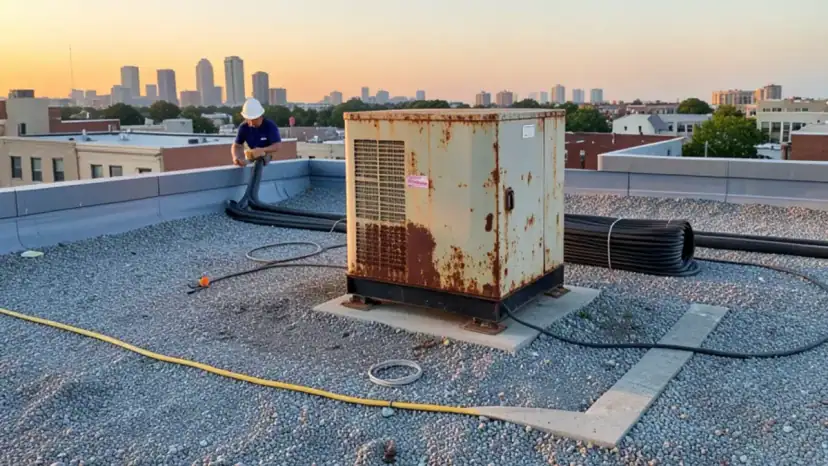
Commercial HVAC repair starts with the question of what the outage costs you each hour. A dead rooftop unit in an office means uncomfortable staff, in a shop it means customers who leave, and in a small restaurant it means a dining room and kitchen that cannot run. Kenan Corporation diagnoses the failed part, explains it in plain language and gives a clear, upfront quote before any work begins.
What does a failed HVAC unit cost a working business?
Downtime costs more than the repair when the space cannot operate. Three risks are worth naming before you call.
- Staff and customers. OSHA has no specific temperature standard for offices, but it recommends keeping them between 68 and 76°F and says employers must protect workers from temperature extremes.
- Lease duties. Your lease sets who repairs the equipment, who is told first and who pays. Missing a notice clause can turn a repair into a dispute.
- Repeat failures. The U.S. Department of Energy's FEMP guide reports that more than 55 percent of maintenance activity in the average facility is still reactive. Repeat breakdowns usually trace back to something a record or a scheduled visit would have caught.
A repair that also identifies what else is wearing out beats a quick patch.
What should you gather before you call?
Gather five things and the first visit goes faster. None of them require technical knowledge.
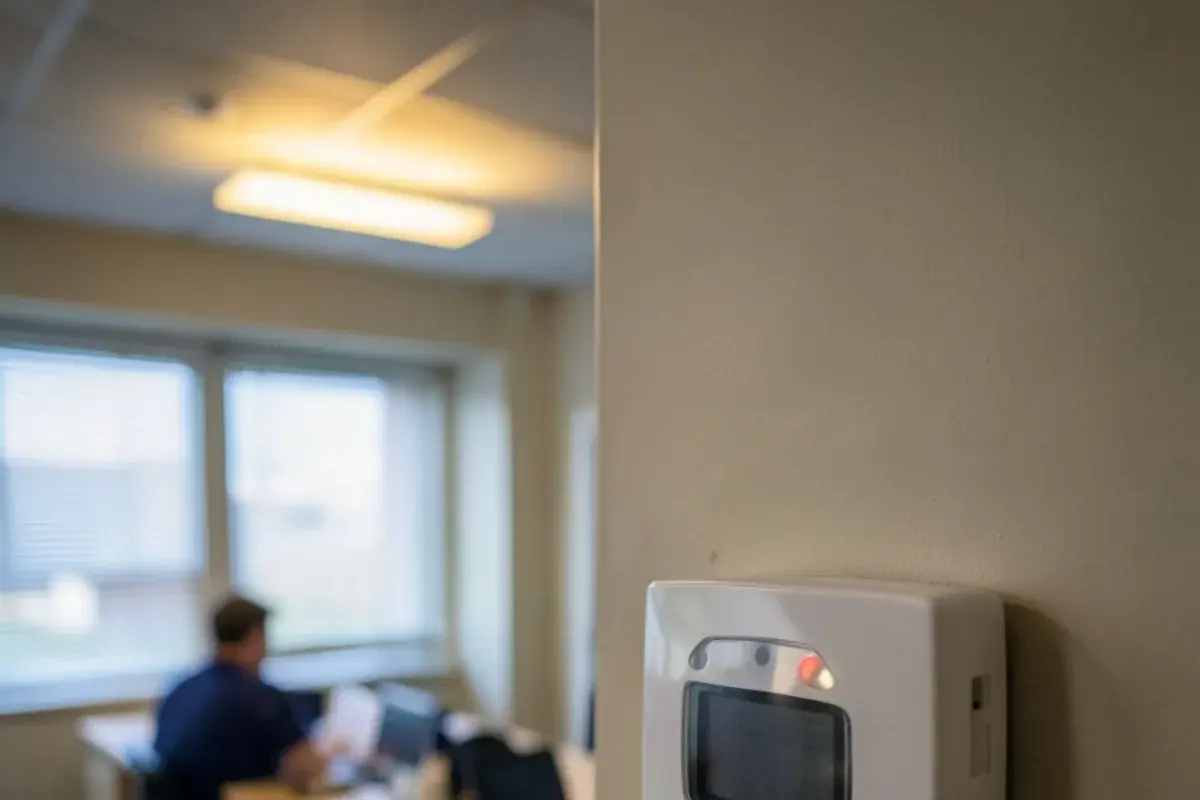
- Symptom and start time. No cooling, no heat, noise, water, tripped breaker, or a fault code on the thermostat.
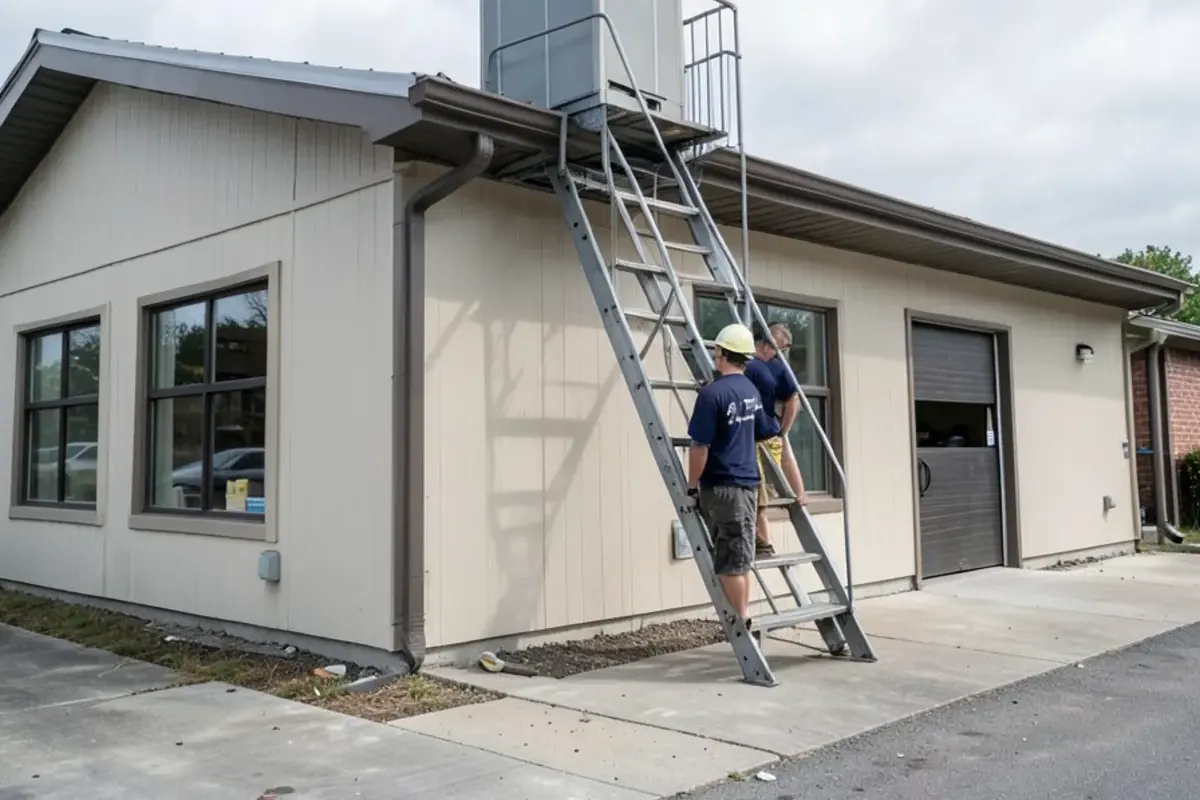
- Unit location and access. Which roof or closet, where the hatch or ladder is, and who holds the key.
- Nameplate details. A phone photo of the model and serial plate saves a trip.
- Occupancy. When the space is empty, and whether customers or staff are present.
- Lease contact. The landlord or property manager who must approve work or be told.
Need help with Commercial HVAC Repair?
Call and tell us what the system is doing. You will get a clear, upfront quote before work starts.
- 4.6★ on Google29 reviews
- A+ BBB ratingNot BBB accredited
- Founded in 2010Repair-first advice
- Open 24 hoursCall any time
Which light commercial systems does this page cover?
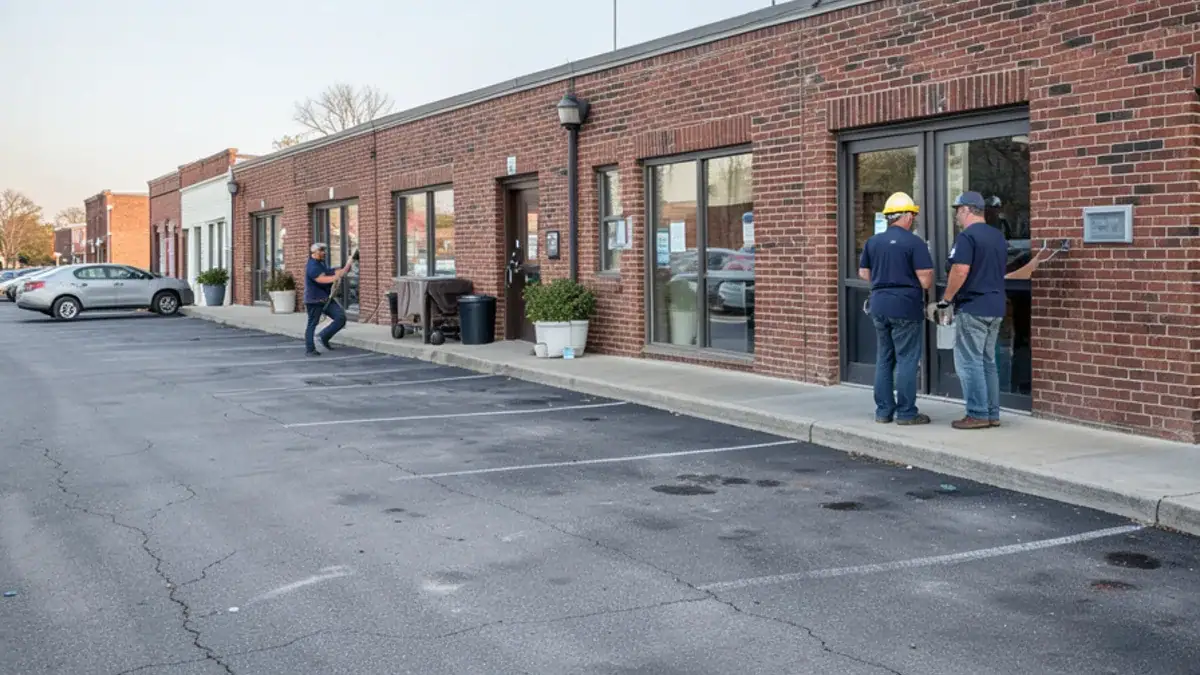
This page covers repairs on the equipment that serves small commercial buildings. That means rooftop package units, split systems with an outdoor condenser and indoor air handler, and gas furnaces serving offices, shops and small restaurants. It is light commercial work, not large plant work.
If your building runs a central plant or chilled-water system, describe it when you call and ask whether it fits.
How does a repair visit run in an occupied building?
A visit in an open business is planned around the people in it, so tell us your hours. The steps follow the same sequence on every call.
- Confirm the symptom and get access to the equipment.
- Diagnose before replacing parts, from thermostat and controls to electrical parts, airflow and refrigerant.
- Explain what failed and what the options are.
- Give a clear, upfront quote before work starts, in a form you can forward to a landlord or manager.
- Repair, run the system and check what else is working.
We are open 24 hours and offer same-day service when the schedule allows, so call early when the unit failed overnight. A Google reviewer who placed an emergency call wrote that the technician arrived within 12 hours, replaced the failed item and checked that everything else worked. That is the repair pattern on every call.
What a commercial repair visit covers
- Fault history from your staff and any codes on the controls
- Electrical, airflow and refrigerant checks on the failed unit
- Belt, filter and economizer checks on rooftop units
- A plain list of what failed and what to watch
- A clear, upfront quote before parts are ordered
What are the most common commercial repairs?
Most no-cooling and no-heat calls trace back to a short list of faults. The table shows where each one tends to hide.
| Fault | Symptom | Typical repair |
|---|---|---|
| Capacitor or contactor | Compressor or fan will not start | Electrical part replacement |
| Belt or blower motor | Weak airflow, squeal, tripped overload | Belt or motor replacement |
| Dirty coil or filter | Long run times, ice, high bills | Cleaning, filter change |
| Igniter or flame sensor | Rooftop or furnace heat cycles off | Ignition part replacement |
| Thermostat or control fault | Wrong temperature, schedule not holding | Replace, rewire or reprogram |
| Failed compressor | Cooling stops, unit hums or trips | Repair-versus-replace decision |
What does a commercial repair cost in St. Louis?
The fault, the access and the hour set the price. Angi's 2026 range for St. Louis HVAC labor is $75 to $150 per hour, a market range and not our quote.
- The failed part, and whether it must be ordered
- Roof access: a fixed ladder, a hatch or a lift
- Unit age, refrigerant type and parts availability
- The hour of the visit, so ask about after-closing work
Ask for parts, labor and refrigerant listed separately, and whether the price is hourly or flat.
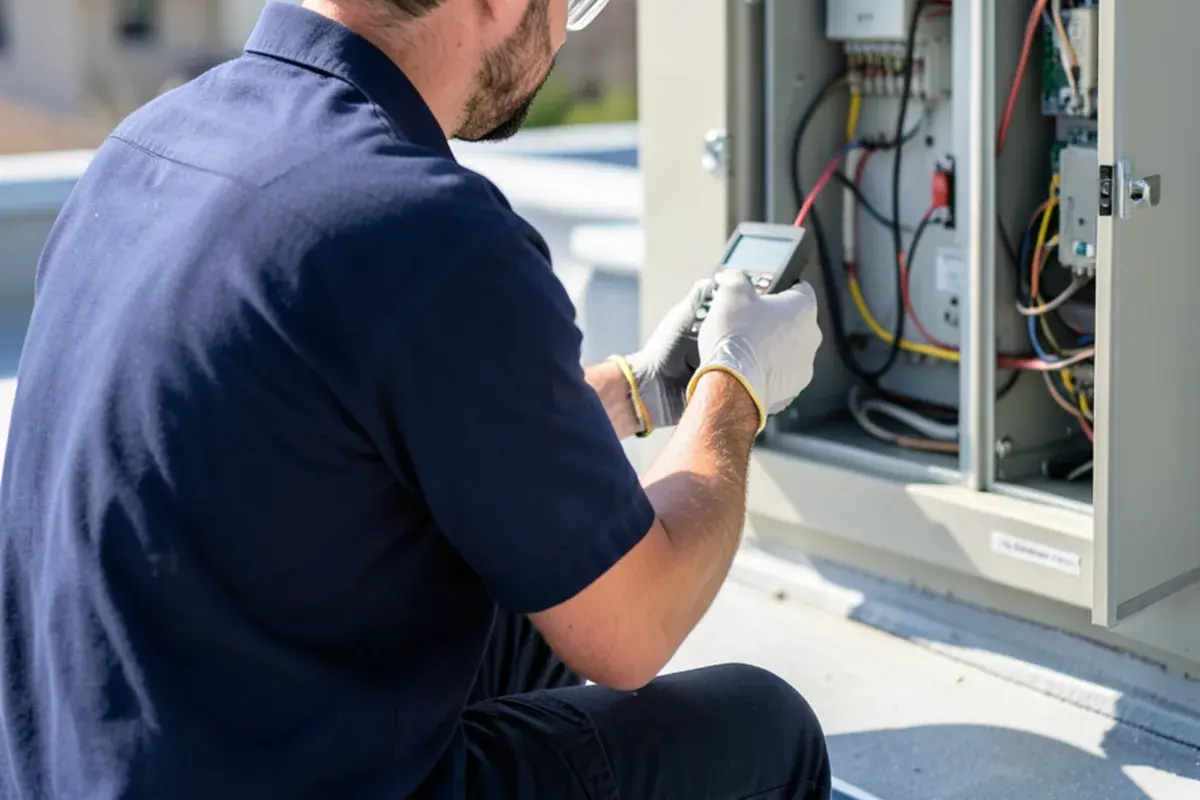
The compressor row is where honesty matters most. A very old unit with a failed compressor deserves a comparison of repair and replacement costs, and we would rather repair your system than pressure you into a new one.
Which records should you keep after each repair?
Keep one file per unit. It pays for itself the second time something breaks.
File the invoice and quote, the model and serial numbers, what failed and what was replaced, the date and any permit number. The next technician starts with the history instead of guessing.
Read any manufacturer's warranty yourself before approving a part, since terms can depend on who installed or serviced the unit.
Which permits and licenses apply to commercial repairs?
St. Louis County says a mechanical permit is needed to install, alter, repair or replace a system, and the work must be done by a contractor licensed for mechanical work. Commercial jobs add layers: Maryland Heights sends commercial mechanical permits to the county, Bridgeton runs occupancy inspections through city Public Works, and Florissant requires an occupancy permit before a business moves in.
The City of St. Louis Mechanical Section, at 314-622-3313, can say how commercial work is handled there. Ask any contractor, including us, which license your address requires.

Why Kenan Corporation for business HVAC repair
Our proof is the pattern in customer reviews, where we hold a 4.6★ rating from 29 Google reviews as of October 2026.
- Diagnosis before parts. A Google reviewer was told a furnace needed replacing, and the real fault was a capacitor, found and fixed.
- Honesty about the cause. Margaret S. wrote that a capacitor supposedly replaced by a prior person was not in the unit, and the technician advised the fan motor was going out.
- Open 24 hours. An overnight failure can be reported at any hour, with same-day service when the schedule allows.
- Home and business owners. The company serves both, and its founder started it in 2010 to bring honesty and fair dealing back to the trade.
We reach Hazelwood in about 25 minutes, Bridgeton in about 30 minutes and Maryland Heights in about 35 minutes from our base near Spanish Lake, in normal traffic.
Where we repair business systems
- Hazelwood: flat-roof packaged units serve offices and light-industrial spaces near the old Ford plant site.
- Bridgeton: the county issues mechanical permits and the city runs occupancy inspections, so a quote should say who files what.
- Maryland Heights: offices cool from packaged rooftop units, and the county, not the city, handles commercial mechanical permits.
- Florissant: a working rooftop or split system is a first-week item for a new tenant facing the city's occupancy inspection.
- Clayton: small office suites and retail spaces fit; a building with a chiller needs a call first.
- Creve Coeur: small suites off Olive Boulevard fit, while nearby hospital and laboratory systems are a different scale.
- University City: Delmar Loop shops and restaurants sit among apartment buildings making up about a third of units.
- Chesterfield: Chesterfield Valley's retail and light-industrial buildings along Olive Boulevard can file a separate city mechanical permit.
How do you stop the same repair from coming back?
A planned visit twice a year catches belts, filters, coils and drains before they fail on a hot afternoon. Studies cited in the DOE's FEMP guide put the savings from preventive maintenance at as much as 12 to 18 percent over reactive maintenance. Read our page on commercial HVAC maintenance for what a scheduled agreement should list, and see the rooftop unit service page if the unit is near the end of its life.
Commercial HVAC Repair: common questions
What kinds of buildings do you repair HVAC in?
Our commercial work is light commercial: offices, retail shops, small restaurants and the rooftop package units that serve small buildings. If your property runs a central plant or large chilled-water equipment, describe it when you call so we can tell you honestly whether it fits.
Can a repair be scheduled around our business hours?
Yes, tell us when the space is empty and who can give access. We are open 24 hours and offer same-day service when the schedule allows, so an early-morning or after-closing visit is a reasonable request. Say whether staff or customers will be present.
Who pays for the repair, the landlord or the tenant?
Your lease decides. Many leases make the tenant responsible for the equipment that serves the leased space and the landlord responsible for the roof and structure, but wording varies. Read the repair clause, tell the landlord before work begins and ask us for a quote you can forward.
Do I need a permit for a commercial HVAC repair?
Repairs that swap like-for-like parts are often not permit work, while replacing equipment or altering ducts, gas or electrical service often is. Rules differ by city and county, so check with the local building office and get the answer in the quote before work starts.
What records should I keep after a repair?
Keep the invoice, the unit's model and serial numbers, a note of what failed and what was replaced, and the date. These support a manufacturer parts claim, show a landlord what you did and help the next technician find a repeat fault faster.
Is there a temperature my workplace must stay within?
OSHA has no specific temperature rule for offices, but it recommends keeping indoor temperature between 68 and 76°F and humidity between 20 and 60 percent. OSHA also says employers must protect workers from temperature extremes, so a failed unit in summer or winter is a workplace issue.
Talk to a commercial HVAC specialist
Tell us what your system is doing and where you are. Open 24 hours.
Kenan Corporation, 927 Broadhead Lane, St. Louis, MO 63138. Open 24 hours.
- 4.6★ on Google29 reviews
- A+ BBB ratingNot BBB accredited
- Founded in 2010Repair-first advice
- Open 24 hoursCall any time
What customers say on Google
4.6★ from 29 Google reviews, checked October 2026.
Kenna did an amazing job! I had another company come out and told me I needed a new furnace because my heat was not coming on. Previous company said could be the motor/fan and that would cost $650, which I was ok with. They didn’t check any parts, but was ready to say I should just get a new heating and cooling unit. I knew my neighbor had service done by Kenyan and said he did a great job. He came out and found it was a capacitor that was causing the issue and fixed it. He is awesome and definitely if I need help again, he will be called and I will use his services!
We placed an emergency call to Kenan and within 12 hrs he arrived, prepared and ready to go. Extremely courteous and pleasant. Knew exactly what the issue was, replaced the item and checked to see if everything else was working properly. Great job, very competitive pricing and best of all great communicator before, during and after the job. Well done sir! We’ll definitely be call you in the future.
My A/C had been out for a while and I woke up at 1am to a 90degree house. Kenan Corporation was at my house within 12 hours and my house is back to a comfortable temperature. He was so kind even with my curious dog with a big bark. Would definitely recommend.