Heating and cooling
Emergency HVAC in St. Louis, MO
Emergency HVAC in St. Louis begins with safety: if you smell gas or a carbon monoxide alarm is sounding, get outside first. For a dead furnace or a failed AC, Kenan Corporation is open 24 hours and offers same-day service when the schedule allows.
- 4.6★ on Google29 reviews
- A+ BBB ratingNot BBB accredited
- Founded in 2010Repair-first advice
- Open 24 hoursCall any time
Emergency HVAC in St. Louis is two different problems that need two different calls. A gas smell or a sounding carbon monoxide alarm goes to 911 from outside the building. A furnace that quit or an AC that stopped in a heat wave goes to Kenan Corporation. The shop is open 24 hours, and same-day service is offered when the schedule allows.
What counts as an emergency HVAC call in St. Louis?
An HVAC problem is an emergency when it threatens people, pipes or property before morning. Comfort alone rarely meets that bar. The table sorts the common situations by what to do first.
| Situation | First move | Who to call |
|---|---|---|
| Gas smell or hissing near a furnace, water heater or line | Leave the building, touch no switches | 911 or Spire, from outside |
| Carbon monoxide alarm sounding | Everyone outside into fresh air | 911 |
| No heat with temperatures near or below freezing | Close off one room, protect pipes | Kenan Corporation |
| AC out, indoor air above 90°F, someone older, ill or very young at home | Move to the coolest room or a cooler place | Kenan Corporation; 911 for heat stroke |
| Burning smell, smoke or sparks at the equipment | Shut the system off at the thermostat | 911 if smoke or flame, then us |
| Water running from the unit or ice on the lines | Switch the system off, protect the floor | Kenan Corporation |
Weather and housing stack the odds. The National Weather Service counted 49 days at or above 90°F in St. Louis in 2025, and the City's median home dates to 1938, according to census figures. Old equipment tends to fail on the hardest day.
A system that cools weakly on a mild day, makes a new noise but still runs, or has a dim thermostat can wait for a normal appointment. Tell us on the call and we will help you judge it.
What should you do in the first ten minutes?
Start with air safety, then people, then the simple checks. This order keeps a small problem from becoming a hospital visit.
- Rule out gas and carbon monoxide. Spire lists 800-887-4173 as its Eastern Missouri number for reporting gas emergencies at any hour. EPA says anyone with CO symptoms should get outside and seek medical care.
- Protect the people in the house. The CDC lists adults 65 and older, young children and people with chronic conditions as higher risk in heat. On the cold side, Ready.gov calls a body temperature below 95 degrees an emergency.
- Check the thermostat. Confirm the mode and setpoint, and replace weak batteries.
- Check the breaker and the furnace switch once. Reset a tripped breaker one time. If it trips again, leave it off.
- Shut off anything that smells, sparks or leaks. Then call and describe what you saw.
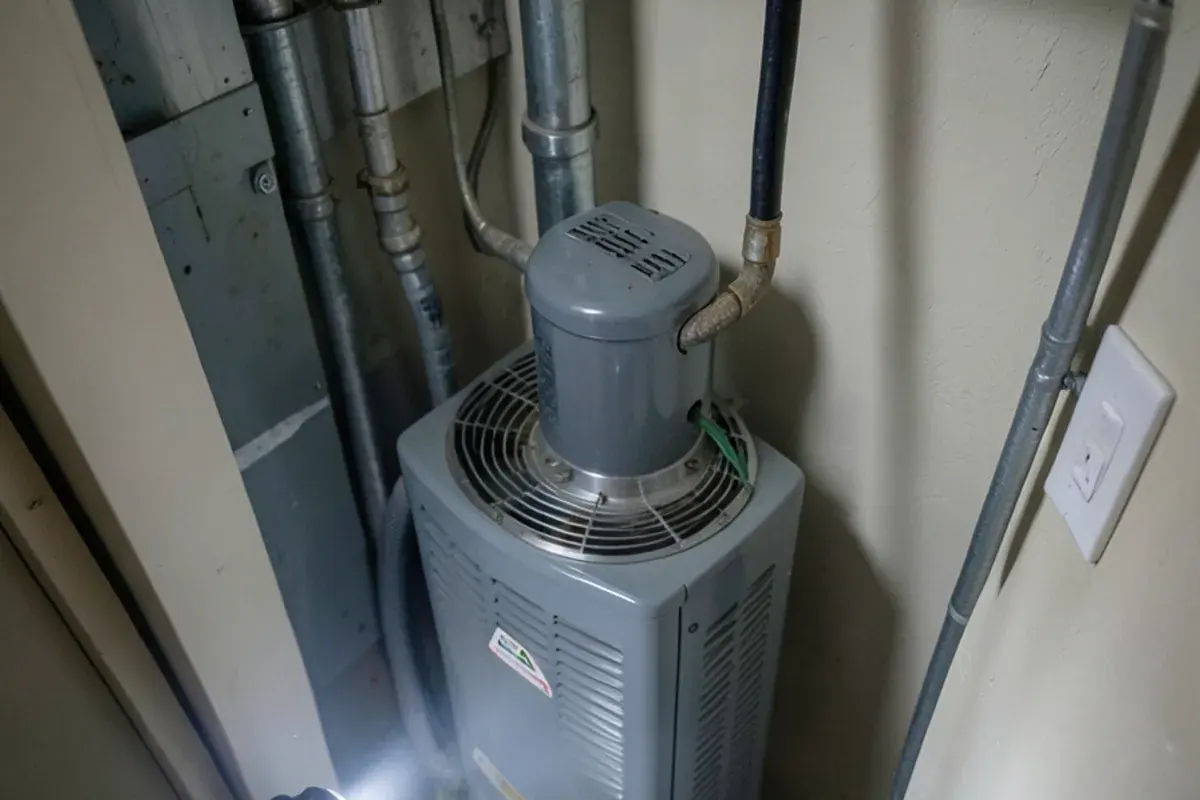
Need help with Emergency HVAC?
Call and tell us what the system is doing. You will get a clear, upfront quote before work starts.
- 4.6★ on Google29 reviews
- A+ BBB ratingNot BBB accredited
- Founded in 2010Repair-first advice
- Open 24 hoursCall any time
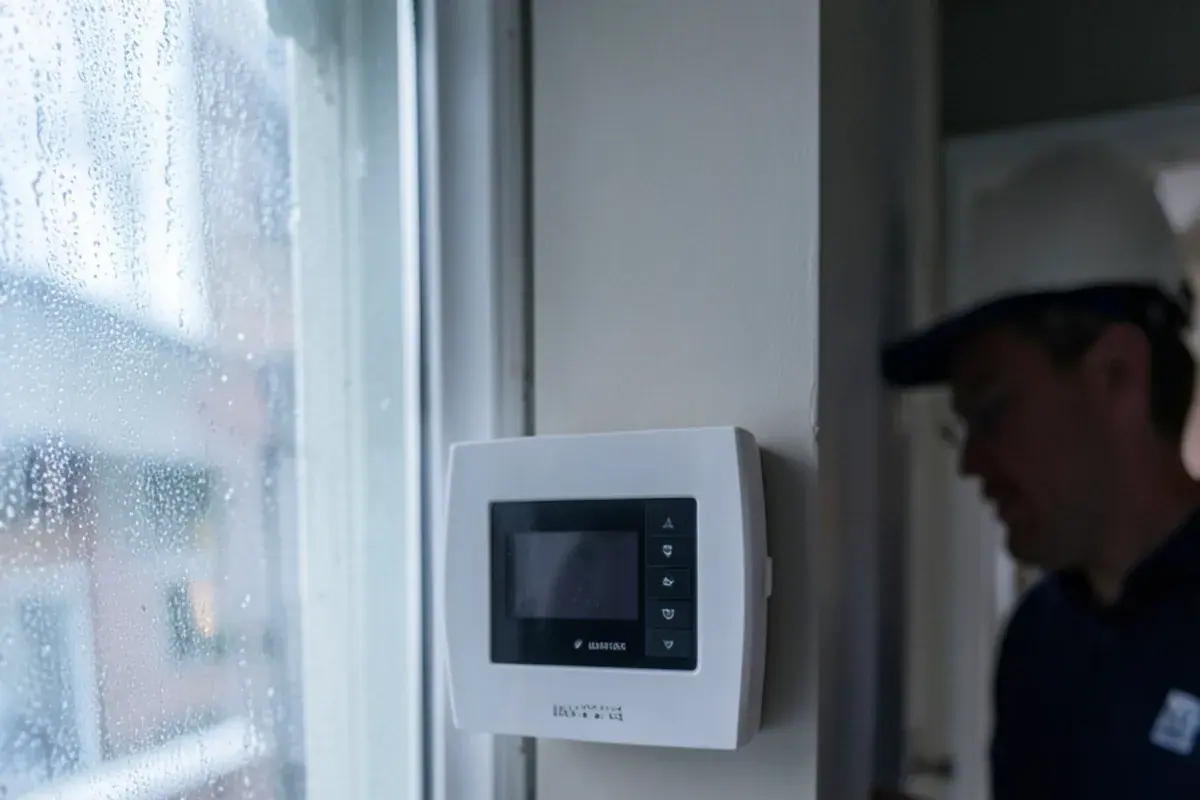
On the call, tell us the symptom, whether the system ran earlier that day, any fault code on the furnace, and whether anyone at home is older, ill or very young. That detail helps us decide how the visit should be handled.
Where do we respond, and how fast?
Our base is at 927 Broadhead Lane in the Spanish Lake area of north St. Louis County. Drive time is not an arrival promise; it shows how far each area sits from the shop.
| Area | Drive from our base near Spanish Lake, in normal traffic | Why an emergency call differs there |
|---|---|---|
| Spanish Lake | about 5 minutes | Ranch basements hold gas furnaces. Bellefontaine Road apartments use closet air handlers. |
| Ferguson | about 20 minutes | Century houses and 1950s ranches sit blocks apart, so we ask boiler or furnace first. |
| Florissant | about 20 minutes | About 18,000 houses went up between 1947 and 1980, so many furnaces are replacements. |
| Jennings | about 20 minutes | Over half of occupied homes are rented, so give the landlord's name; an owner usually approves parts. |
| Hazelwood | about 25 minutes | Warehouses and offices run rooftop units, where one failed contactor can stop a workspace. |
| Bridgeton | about 30 minutes | Low ground near the Missouri River means damp basements and drain trouble. |
| University City | about 30 minutes | Prewar brick homes often have boilers, and utility gas heats 78 percent of occupied homes. |
| Clayton | about 35 minutes | Most units are in multi-unit buildings, so name the unit and the building manager. |
For the speed question, the best evidence is what customers wrote on Google. Kristie S. described a 90-degree house at 1 am and a visit within 12 hours. Monty M. placed an emergency call and wrote that the technician arrived within 12 hours. Mary E. called about 5 pm, had the call returned immediately and was seen at 7 am the next morning. Gaquan C. wrote that the technician came out in 10-degree weather.
Those are single stories, not a promise. The weather, the day and the schedule decide your wait. For addresses farther out than the table, call first to confirm scheduling.
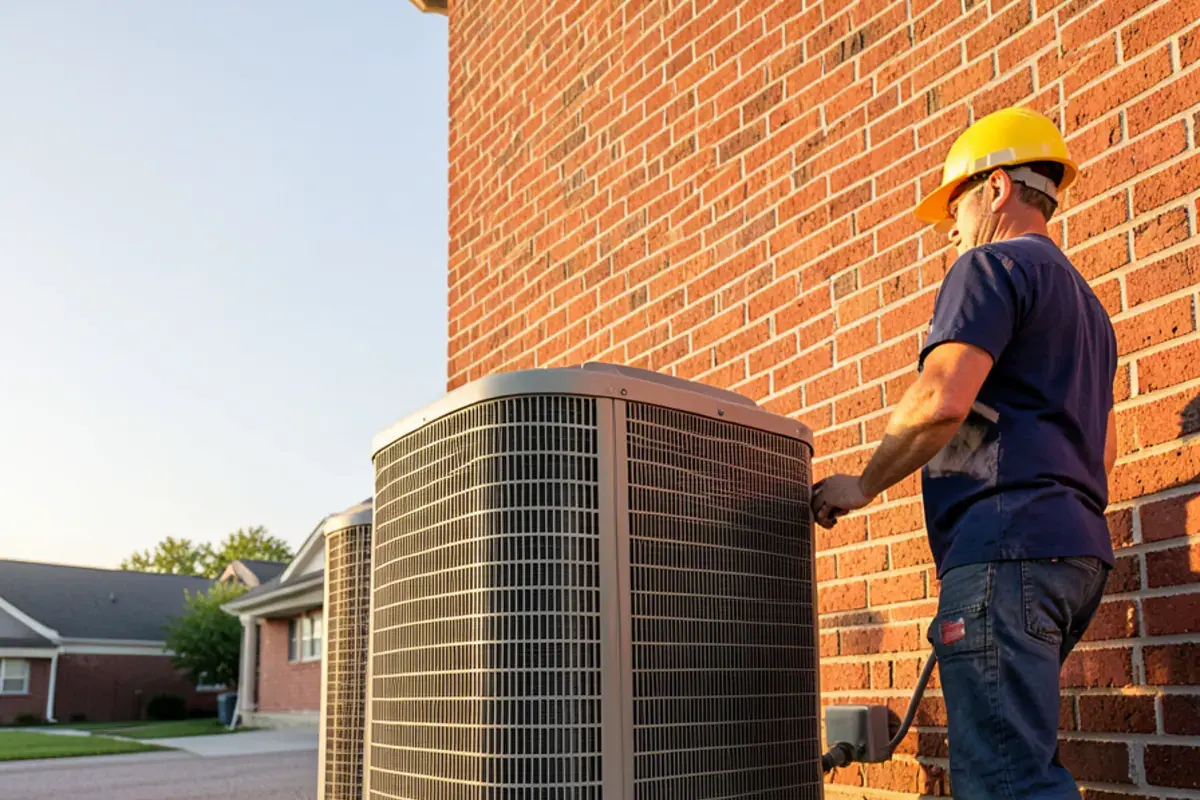
What does the technician do on arrival?
The visit follows a fixed order, and the order starts with safety.
- Check for a gas smell, soot or a CO reading near the equipment.
- Ask what happened, then watch the system run or fail.
- Diagnose before replacing parts, testing the likely failure points in sequence.
- Explain the problem in plain language and lay out the options.
- Give a clear, upfront quote before any work starts.
- Make the repair, run the system, and check what else is working.
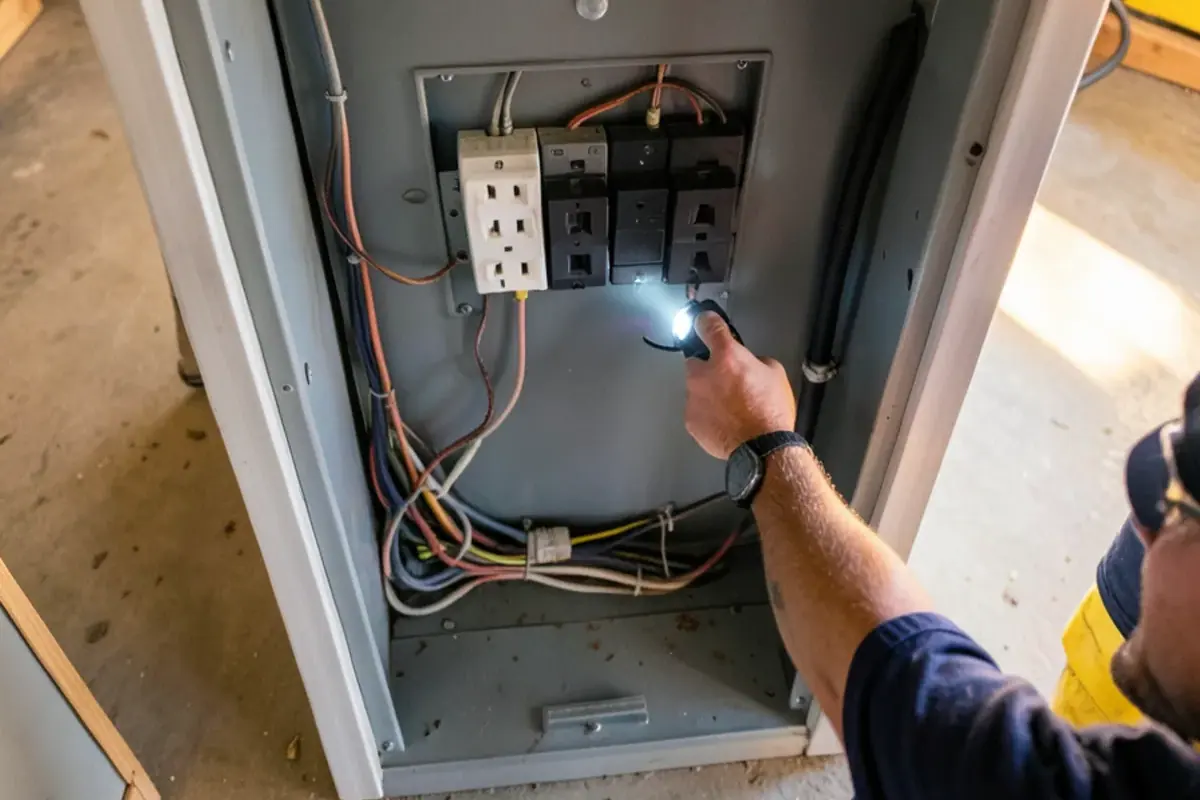
What does an emergency visit include?
An emergency visit is the same diagnosis-first work as a daytime call, done on a tighter clock. We work on furnaces, air conditioners, heat pumps, boilers, ductwork and thermostats, plus light commercial equipment.
- A safety check at the equipment before anything is switched on.
- Testing of the likely failure points, in sequence, before any part is replaced.
- A plain-language explanation of what failed and what each option means.
- A clear, upfront quote before work starts, so the number is agreed first.
- The repair itself when the part is available, or advice on keeping the house safe until it is.
- A full cycle test and a check of everything else on the system.
Parts availability decides whether the repair finishes in one visit. When it cannot, the technician will tell you how to keep the house safe until it can. A Google reviewer wrote that the technician "replaced the item and checked to see if everything else was working properly," which is the final step on this list.
How does after-hours pricing work?
The price reaches you before work starts. No after-hours rate is published on this page, because a guess would not help you. Ask on the phone what the visit will cost, and get the repair price once the diagnosis is done.
For context, Angi reports HVAC labor in St. Louis at about $75 to $150 per hour in 2026. That is a market figure and not our quote. Ask any contractor whether a price covers the visit only or the repair as well, and ask for the number before you approve anything.
Four things move an emergency bill: which part failed, since a capacitor and a heat exchanger sit at opposite ends; whether that part is on hand or must be ordered; how much labor the repair takes; and whether the fault is a repair or a replacement decision.
Does emergency work need a permit or a licensed contractor?
Missouri has no statewide HVAC license, so your city or county sets the rule (Contractor License Requirements, 2026). In the City of St. Louis, Ordinance 70800 requires replacement units to be installed by a mechanical contractor licensed in the City, with a permit and a $25 application fee, according to the City. St. Louis County says a permit is required to install, alter, repair or replace heating, air-conditioning or duct systems; filter changes and refrigerant recharges are not permit work. Ask any contractor, including us, for the license number for your address, and have the quote say who pulls the permit.
Which emergency page fits your problem?
Two pages go deeper on the most common failures. Emergency AC repair covers heat illness, breaker and filter checks, and what happens at the condenser. Emergency furnace repair covers frozen-pipe protection, heater safety and the ignition faults behind most no-heat calls. If a business loses heating or cooling, read about commercial HVAC repair.
Why Kenan Corporation when the call cannot wait
Our proof is in what customers wrote on Google, where we hold a 4.6★ rating from 29 reviews as of October 2026.
- Open 24 hours. Reviewers describe overnight, weekend and freezing-weather calls.
- Repair before replacement. One Google reviewer was told a new furnace was needed. The fault was a capacitor, and it was fixed. Repair comes first when repair makes sense.
- Plain explanations. Candice F. credited the technician with explaining things and giving options.
- Founded in 2010. Kenan Bruce Martz started the company after 20-plus years at St. Louis area HVAC companies, because the founder disliked the hard-sell pitches common in the trade.
Start with Spanish Lake or Ferguson, or see every area we cover.
Emergency HVAC services
Emergency HVAC: common questions
Is Kenan Corporation open at night and on weekends?
Kenan Corporation is open 24 hours, and Google reviewers describe weekend and overnight calls. One wrote that the AC went out over a weekend and was running again within 20 minutes of arrival. Call, describe the problem, and ask about the schedule for your address.
Can you promise how fast someone will arrive?
No. Arrival depends on the schedule, the weather and how many systems failed that day, so we do not promise a time. We offer same-day service when the schedule allows. Reviews mention arrivals within 12 hours and a 7 am visit after a 5 pm call.
Gas odor in the house: what is the first move?
Walk out at once and touch no switches, lighters or indoor phones. From the yard or the street, dial 911 or the Spire gas emergency number, 800-887-4173. Spire states that investigating an odor carries no charge. Bring in a heating contractor only after the utility clears the area.
My carbon monoxide alarm is sounding. Do I call you first?
No. Get everyone outside into fresh air, call 911, and stay out until responders say the home is clear. EPA says anyone with symptoms should get medical care and mention suspected CO. After that, an HVAC technician can look for the source, such as a cracked heat exchanger or a blocked flue.
How much does an after-hours HVAC call cost?
We have not published an after-hours rate, and we will not guess at one here. Ask on the phone what the visit will cost. You will hear the price before work starts, and the quote comes from the technician after diagnosis, not from a script.
Is it worth calling at night if the house is still above freezing?
Often it can wait until morning if everyone is warm and no pipes run along cold exterior walls. Call at night when the forecast is near or below freezing, when someone at home is older, ill or very young, or when the house is dropping fast.
Talk to an emergency specialist
Tell us what your system is doing and where you are. Open 24 hours.
Kenan Corporation, 927 Broadhead Lane, St. Louis, MO 63138. Open 24 hours.
- 4.6★ on Google29 reviews
- A+ BBB ratingNot BBB accredited
- Founded in 2010Repair-first advice
- Open 24 hoursCall any time
What customers say on Google
4.6★ from 29 Google reviews, checked October 2026.
Kenna did an amazing job! I had another company come out and told me I needed a new furnace because my heat was not coming on. Previous company said could be the motor/fan and that would cost $650, which I was ok with. They didn’t check any parts, but was ready to say I should just get a new heating and cooling unit. I knew my neighbor had service done by Kenyan and said he did a great job. He came out and found it was a capacitor that was causing the issue and fixed it. He is awesome and definitely if I need help again, he will be called and I will use his services!
We placed an emergency call to Kenan and within 12 hrs he arrived, prepared and ready to go. Extremely courteous and pleasant. Knew exactly what the issue was, replaced the item and checked to see if everything else was working properly. Great job, very competitive pricing and best of all great communicator before, during and after the job. Well done sir! We’ll definitely be call you in the future.
My A/C had been out for a while and I woke up at 1am to a 90degree house. Kenan Corporation was at my house within 12 hours and my house is back to a comfortable temperature. He was so kind even with my curious dog with a big bark. Would definitely recommend.