Commercial and property managers
Rooftop Unit Replacement: Planning Guide for Building Owners
Rooftop unit replacement works best as a plan made before the unit fails. Check age and repair history, size the new unit from a load calculation, confirm the curb, lift, permit and refrigerant, and put every item in a written quote before you sign.
Published October 30, 2026 · Updated October 30, 2026 · By Kenan Perkins, Owner
- 4.6★ on Google29 reviews
- A+ BBB ratingNot BBB accredited
- Founded in 2010Repair-first advice
- Open 24 hoursCall any time
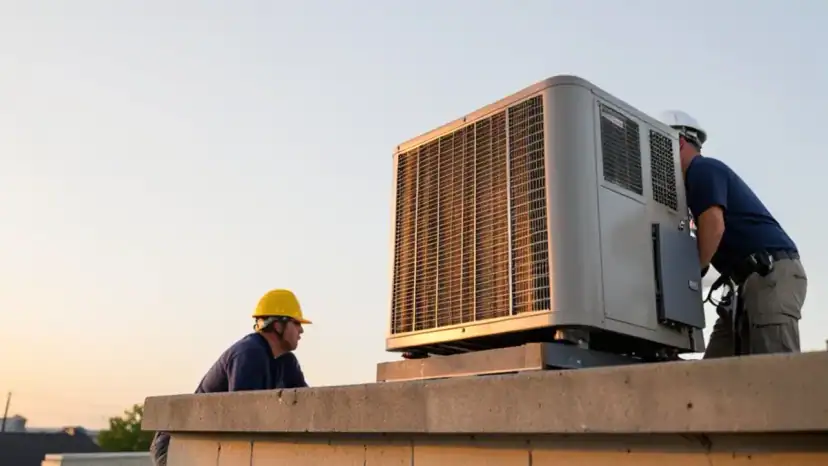
Replacing a rooftop unit is a project with many parts: sizing, curb, crane, roof, utilities, permit and refrigerant. An owner who plans it before a failure gets time to compare quotes and pick a quiet week. An owner who waits for a failure in July gets a rushed decision. This guide covers the questions to settle first.
When should you start planning a rooftop unit replacement?
Start planning when the unit nears 15 years or when repairs begin to stack up. Contractors citing ASHRAE service-life tables put a rooftop air conditioner at about 15 years, and roof exposure can shorten that while good maintenance can extend it.
Four signals together make the case:
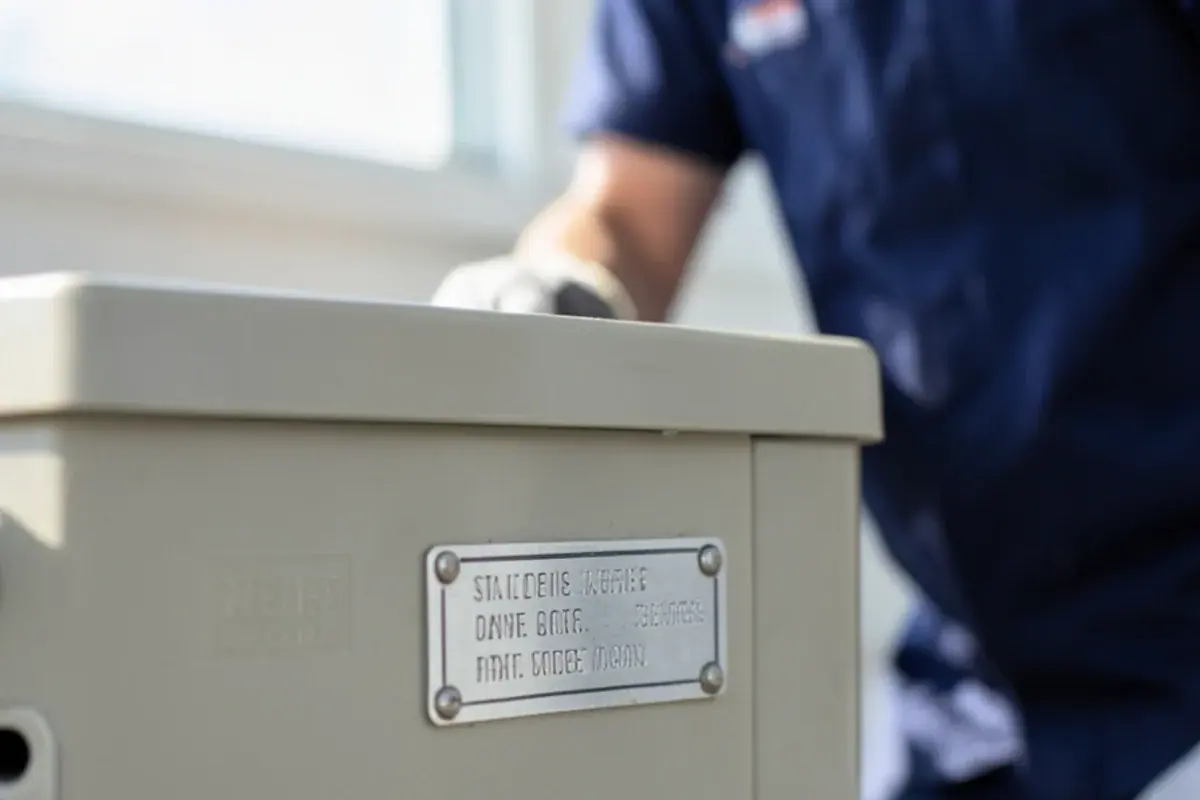
- Age. The nameplate shows the manufacture date.
- Repair history. Repeat callbacks in one season point to wear that parts will not fix.
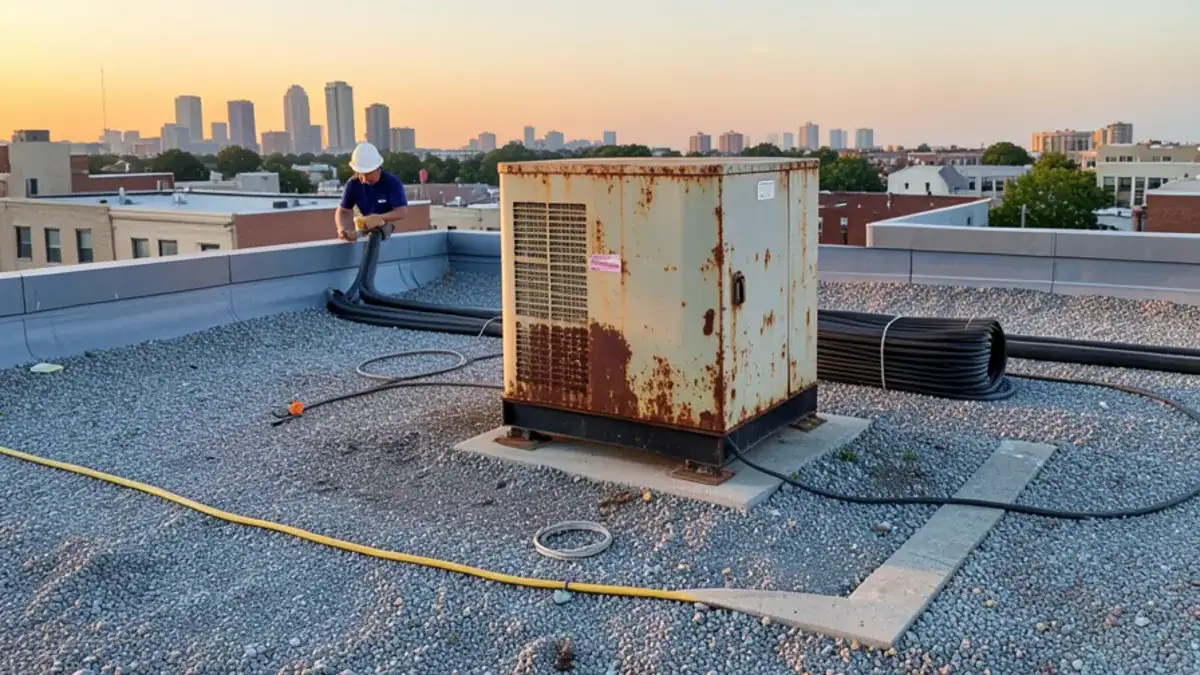
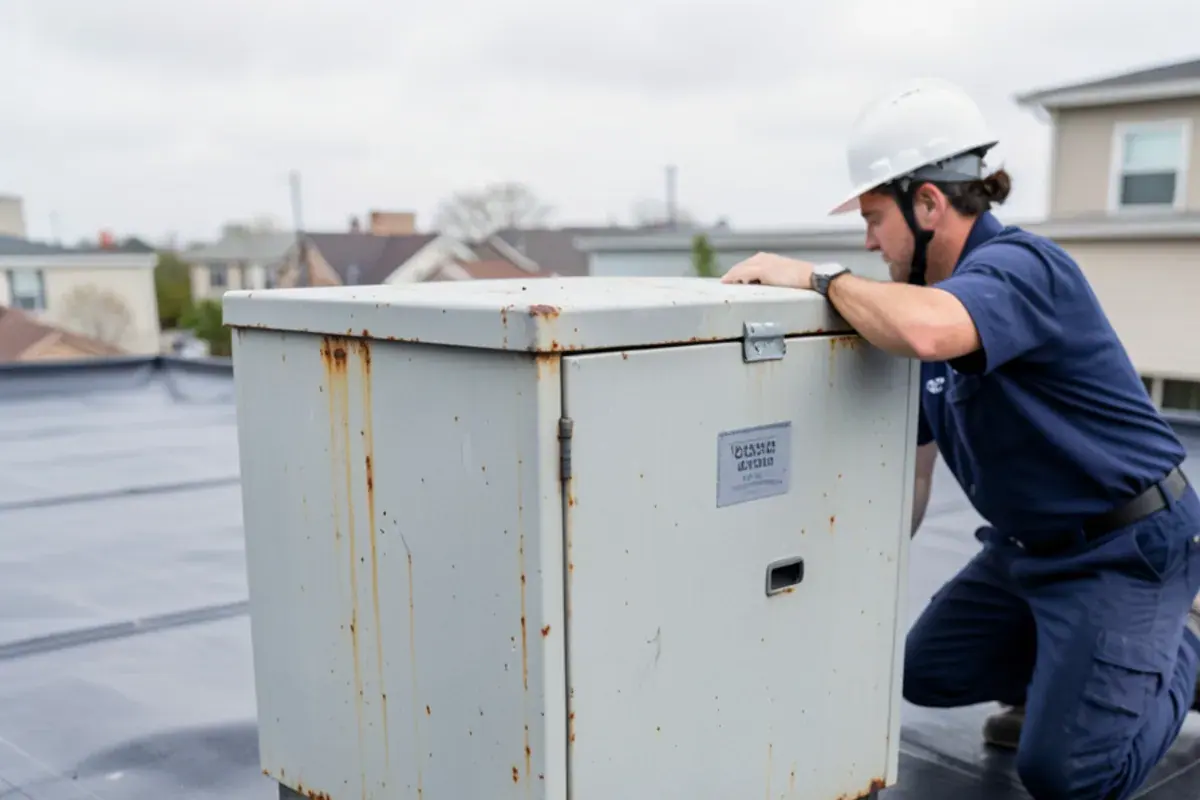
- Condition. Rust at the base, a damaged coil or a cracked heat exchanger raise the stakes.
- Refrigerant. Older systems on R-22 face limited supply, since R-22 production ended in 2020.
Want a technician to take a look?
Call and tell us what the system is doing. You will get a clear, upfront quote before work starts.
- 4.6★ on Google29 reviews
- A+ BBB ratingNot BBB accredited
- Founded in 2010Repair-first advice
- Open 24 hoursCall any time
A failed part alone does not justify a new unit. A diagnosis should say what failed, what it costs to repair and what the repair buys you. Read about rooftop unit service for how the repair-or-replace comparison works.
Worked example: what does a repair actually buy?
Divide the repair cost by the years it buys. The figures here are made up to show the method. A 14-year-old rooftop unit on R-22 loses its compressor, and the repair is quoted at 45 percent of a new unit's installed cost. Rust at the base suggests the cabinet has perhaps two years left.
- Repair: 45 percent of the new-unit cost for about two years, or roughly 22 percent per year.
- Replace: 100 percent of the cost for about 15 years, or roughly 7 percent per year.
Replacement wins even though the repair quote looks smaller. Change the facts and the answer flips. Put the same compressor failure on a seven-year-old unit with a clean cabinet and the repair buys eight or more years, so repair is the honest recommendation. Ask the contractor to show this arithmetic with real numbers.
What does a rooftop replacement involve?
A replacement runs through seven steps, and skipping one is how surprise costs appear.
- Assess the existing unit. Capture the model, serial, tonnage, fuel and condition.
- Size the replacement. Use a load calculation for the space instead of copying the old tonnage.
- Check the curb. Confirm the opening, height and any adapter.
- Plan the lift. Crane position, access path and a clear window.
- Handle utilities. Gas line, disconnect, condensate and controls.
- Permit and inspection. Who pulls it and which office inspects.
- Start up and test. Run the unit, record the readings and walk through controls.
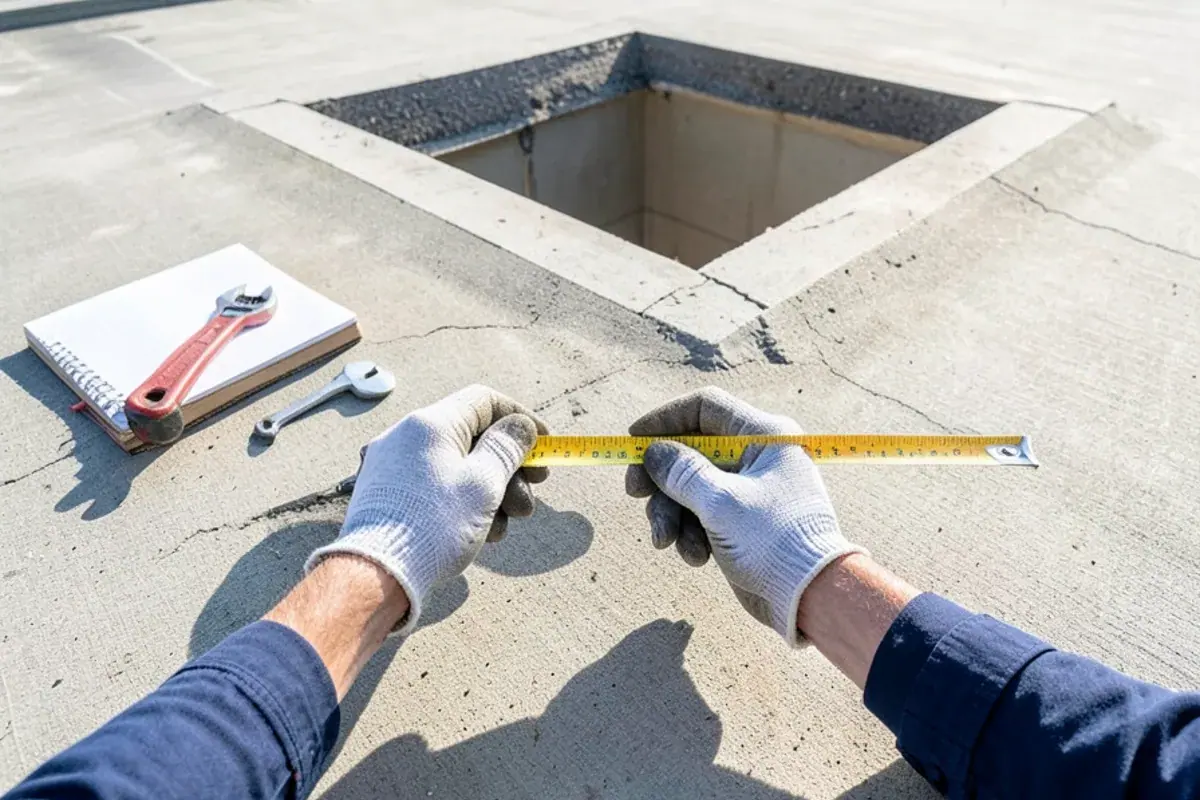
Will the new unit drop onto the old curb?
Sometimes, and the exceptions are costly. Newer units often differ from old ones in footprint, height and the position of the supply and return openings, so a curb adapter may be needed to close the gap. A higher-efficiency unit can also weigh more. Ask the contractor to compare the new unit's weight with the old one and to say who confirms that the roof framing can carry it.
Check the roof warranty before the lift. Many roof warranties limit who may cut, flash or set equipment on a curb, and a mistake can void coverage on the surrounding membrane. Call the roofing contractor first and put the answer in the written scope.
What should the written quote spell out?
A quote should leave no step to be discovered on lift day. Ask for each item below by name.
| Item | Why it matters |
|---|---|
| Tonnage and how it was sized | Prevents short-cycling or weak cooling |
| Curb or adapter | Avoids an unexpected change order |
| Crane or hoist | A cost many owners overlook |
| Roof protection and responsibility | Roof damage disputes are common |
| Gas, electrical and condensate work | Utilities are part of the project |
| Permit and inspection | Names who pulls it and who pays |
| Refrigerant and efficiency rating | Sets future service and operating cost |
| Schedule and temporary comfort | Tells you what tenants will experience |
Compare at least two quotes line by line. A low total can hide a missing curb adapter or an unstated crane charge.

How does the refrigerant rule affect your plan?
The refrigerant rule affects which equipment you can buy new, not whether you can service what you have. EPA's Technology Transitions program limits new light commercial air conditioning and heat pumps to refrigerants under 700 global warming potential, which usually means R-454B or R-32. Servicing existing R-410A units remains legal.
This matters for planning in two ways. First, ask the contractor to name the refrigerant on the quote. Second, ask who services it afterward, since newer refrigerants have different handling rules. Confirm current details on EPA's site, because the rule has been revised more than once.
From the field: repair first, replace when it is honest
Reviews show the discipline owners should expect from a contractor. Wendy R. wrote that another company called for a new furnace without checking parts, and a capacitor turned out to be the real fault. Candice F. wrote that the technician was great at explaining things and giving options.
Not every story ends in repair. Ms. O. wrote that an old, rusty air conditioner was leaking a lot of water and the house could not reach the right temperature, so a new system was installed. That is the honest answer when a unit is finished. The company is open 24 hours, and same-day service is offered when the schedule allows. The quote comes before work starts. Our commercial HVAC repair page explains how a failed unit gets triaged.
How do you budget and schedule the work?
Budget for the unit plus everything around it, and schedule the lift for a quiet week. Put aside money for curb work, crane time, electrical and gas connections, permit fees and temporary comfort if the building must stay open. Ask the contractor what could change the price after the roof is opened.
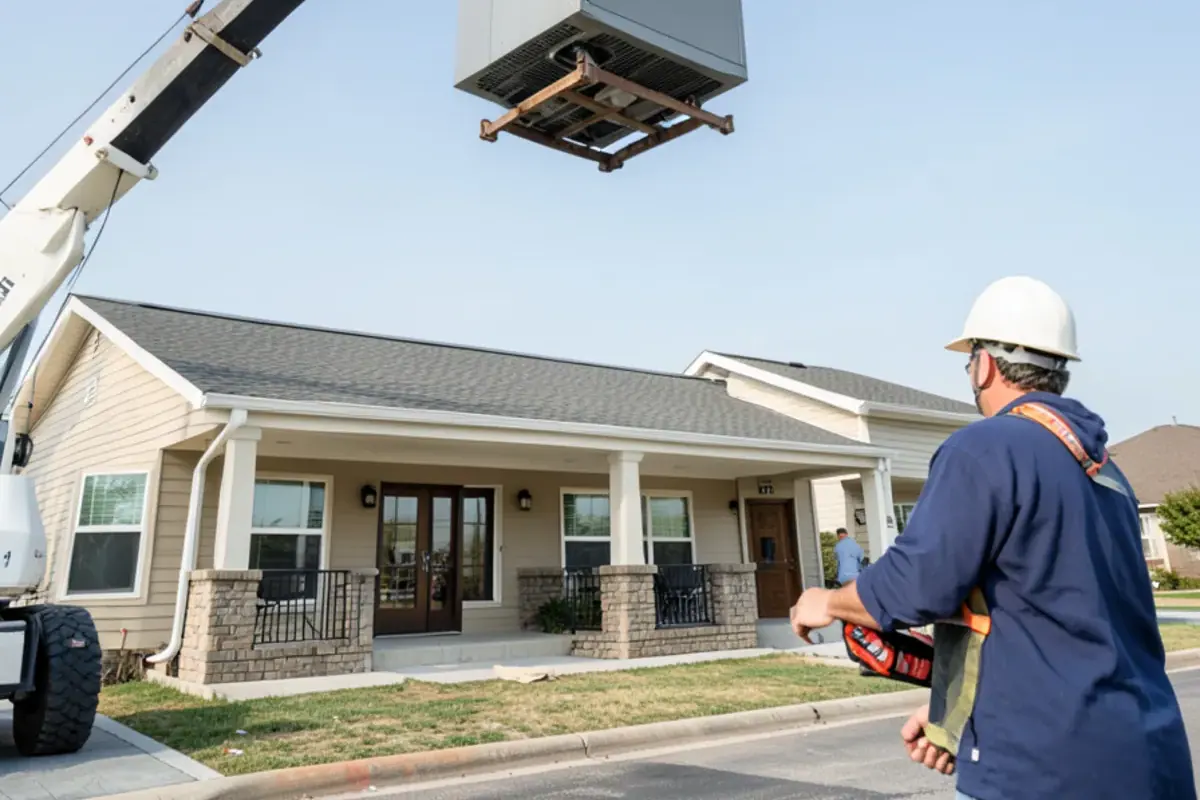
Book the work outside the hottest and coldest weeks, when tenants rely on the system most. After the new unit is running, set up commercial HVAC maintenance so the next 15 years start with a service record. Buildings in Lemay are about 45 minutes from our base near Spanish Lake in normal traffic, and Bridgeton is about 30 minutes, so call first to discuss scheduling.
Should the new unit use the same fuel as the old one?
Usually yes, because a fuel change reaches beyond the roof.
| Option | What stays the same | What changes |
|---|---|---|
| Same fuel (gas heat, electric cooling) | Gas line, disconnect and curb layout | Little beyond the unit itself |
| Heat pump rooftop unit | Curb, if the adapter fits | Electrical service and backup heat need checking |
A heat pump rooftop unit can work in a mixed-humid climate, but ask the contractor to confirm the building's electrical capacity before quoting it. Never choose a fuel change on the strength of the unit price alone.
What belongs on the lift-day checklist?
Walk through these items the week before the crane arrives.
- Tell tenants the date, the time window and whether heating or cooling will pause.
- Clear the crane's path and any parking the lift needs.
- Confirm who holds the roof key and who is on site to open the building.
- Agree on a plan for temporary comfort if the building stays occupied.
- Ask for the start-up readings and the permit inspection date before the crew leaves.
About the author
Kenan Perkins
Owner of Kenan Corporation. Studied at Ranken Technical College. The company, founded in 2010, is built on repairing systems honestly rather than pressuring people into new ones. More about us.
Sources
Rooftop Unit Replacement Planning Guide: common questions
How do I know a rooftop unit is due for replacement?
Look at age, repair history and condition together. Contractors citing ASHRAE put a rooftop air conditioner at about 15 years. A unit near that age with a failed compressor, a rusted cabinet or repeated callbacks is a candidate. A younger unit with a single failed part usually is not.
Can I replace a rooftop unit without a permit?
Do not assume so. Replacing equipment, gas piping or electrical service often needs a permit, and rules differ between cities and St. Louis County. Ask the contractor who pulls it and which office inspects, and check with the local building office yourself before work begins.
Should I plan around the old unit's tonnage?
Not by default. Walls, windows, occupancy and equipment loads change over the years. Ask for a load calculation for the space, then compare it with the existing tonnage. An oversized unit short-cycles, and an undersized one cannot keep up on the hottest days.
What refrigerant will a new rooftop unit use?
EPA's Technology Transitions rule limits new light commercial air conditioning and heat pumps to refrigerants under 700 global warming potential, which usually means R-454B or R-32. Existing R-410A units can still be serviced. Ask for the refrigerant in writing and confirm the rule on EPA's site.
How long does a rooftop replacement take?
Plan for most of a day for the lift, hookup and startup, plus time before the visit for ordering and permit steps. The timeline depends on the unit, the curb and access, so ask for a written schedule and a plan for temporary heating or cooling.
Talk to an HVAC specialist
Tell us what your system is doing and where you are. Open 24 hours.
Kenan Corporation, 927 Broadhead Lane, St. Louis, MO 63138. Open 24 hours.
- 4.6★ on Google29 reviews
- A+ BBB ratingNot BBB accredited
- Founded in 2010Repair-first advice
- Open 24 hoursCall any time