Heating
Heat Pump Installation in St. Louis, MO
Heat pump installation in St. Louis works when the system is sized to your house's real heat loss and paired with ductwork that can carry it. Kenan Corporation runs a load calculation first and gives a clear, upfront quote before work starts.
- 4.6★ on Google29 reviews
- A+ BBB ratingNot BBB accredited
- Founded in 2010Repair-first advice
- Open 24 hoursCall any time
A heat pump can replace both your furnace and your air conditioner with one system that moves heat instead of making it. The Department of Energy says modern air-source heat pumps can reduce electricity use by 50 percent compared with furnaces and baseboard heaters, and that they are now a legitimate option for colder regions. The result depends on sizing, ductwork and installation quality, which is where most of this page lives.
Which type of heat pump fits a St. Louis home?
Pick the type by how your house is built and what heats it today. Four layouts cover most homes.
| Type | Best fit | Watch for |
|---|---|---|
| Ducted air-source | Homes with sound ductwork | Duct leaks and undersized returns erase the efficiency gain |
| Dual-fuel (heat pump plus gas furnace) | Homes keeping a working furnace as backup | Controls must switch between fuels sensibly |
| Ductless mini split | Additions, garages and brick homes without ducts | Several indoor heads add up in cost |
| Ground-source | Large lots and long-term owners | Highest installed price by far |
When does a heat pump make more sense than a furnace?
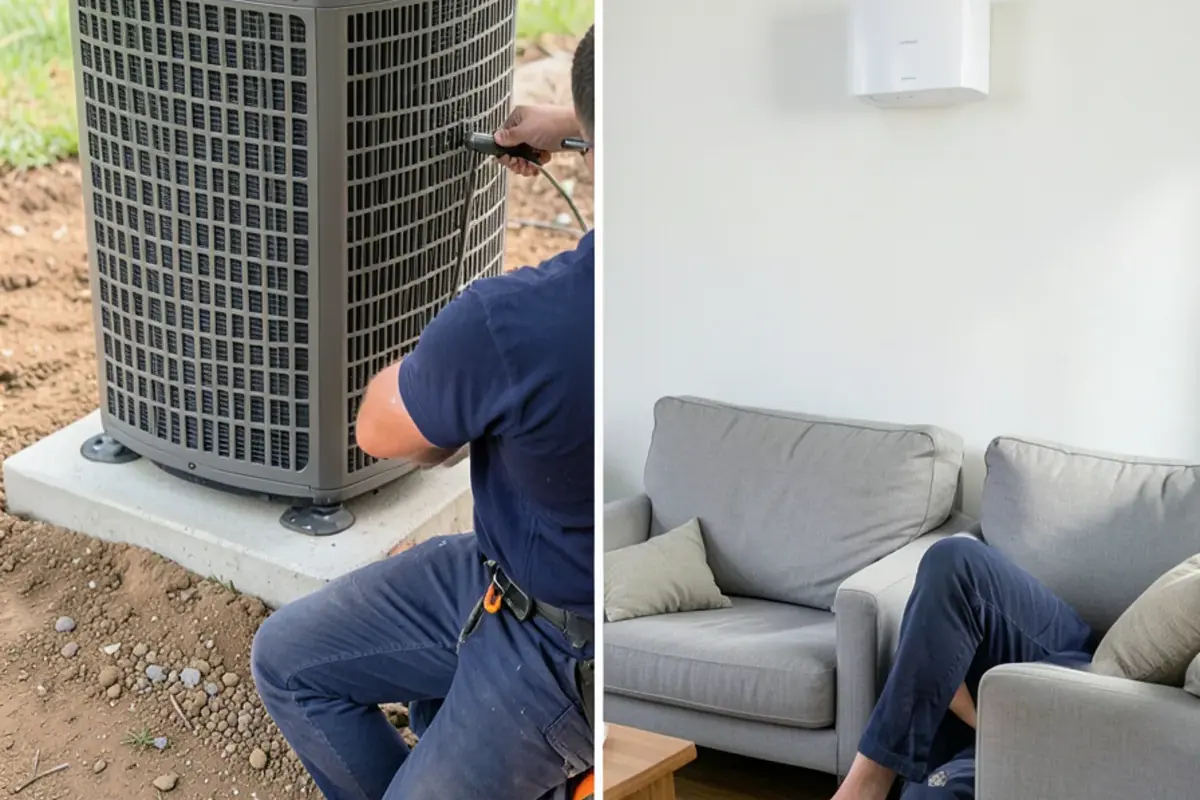
Three situations point toward one. A house on electric resistance heat or with no central system gains cooling and, per the Department of Energy, can use less electricity than baseboard heaters do. Ameren's 2026 chart pays $2,000 per system for that case. A house at the end of both furnace and air conditioner can swap both for one outdoor unit. A house with sound ducts and a working furnace can pair a heat pump with it as dual-fuel. Electric heat is already common: 23 percent of occupied homes in St. Louis County, 30 percent in St. Charles County and 68 percent in Franklin County, according to census survey figures.
Single-stage, two-stage and variable-speed compressors change cost and comfort. Variable-speed units run longer at lower output, which the Center for Energy and Environment guide describes as steadier heat with less temperature swing. Cold-climate models are built to keep working at low outdoor temperatures, and in Climate Zone 4A that margin is worth asking about.
How is a heat pump sized for your house?
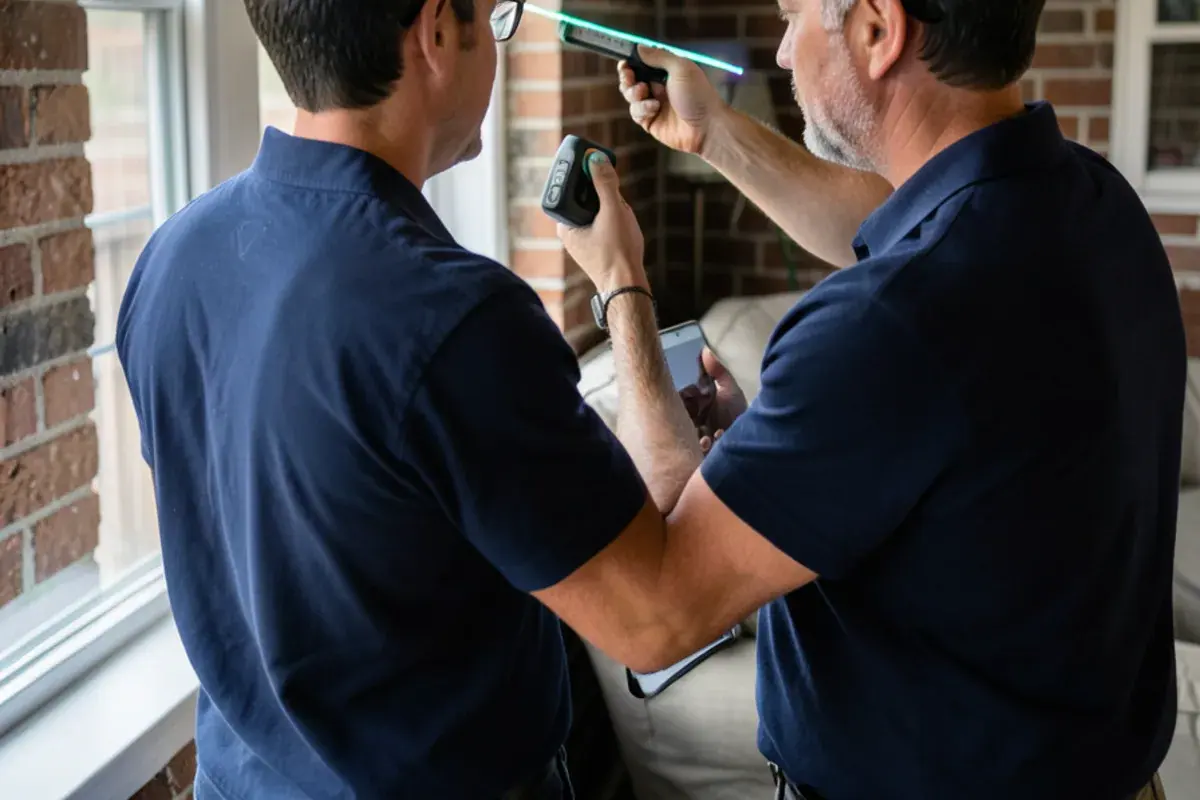
Sizing starts with a room-by-room load calculation, not the size of the old unit. We measure the house, note windows, insulation and air leakage, and calculate heating and cooling loads separately. Heating usually drives the choice here, because the National Weather Service logged 4,100 heating degree days in 2025.
Three design questions follow:
- Is bigger better? No. A Department of Energy sizing module says increasing indoor unit size is not the answer in cold climates, and that better insulation and air sealing can allow a smaller system.
- Do the ducts fit? ENERGY STAR says about 20 to 30 percent of the air in a typical duct system is lost to leaks. Repair may come first. See duct repair and replacement.
- What provides backup heat? Electric strips, a gas furnace or a smaller second system, each with different operating costs.
What happens from first quote to final inspection?
A typical ducted installation follows six steps, and your written quote should name each one.
- Home assessment. Measurements, load calculation, ductwork check and electrical panel review.
- Options and quote. Equipment choices, backup heat, rebates you may qualify for and a clear, upfront quote.
- Permit. The installing contractor applies, and you confirm that in writing.
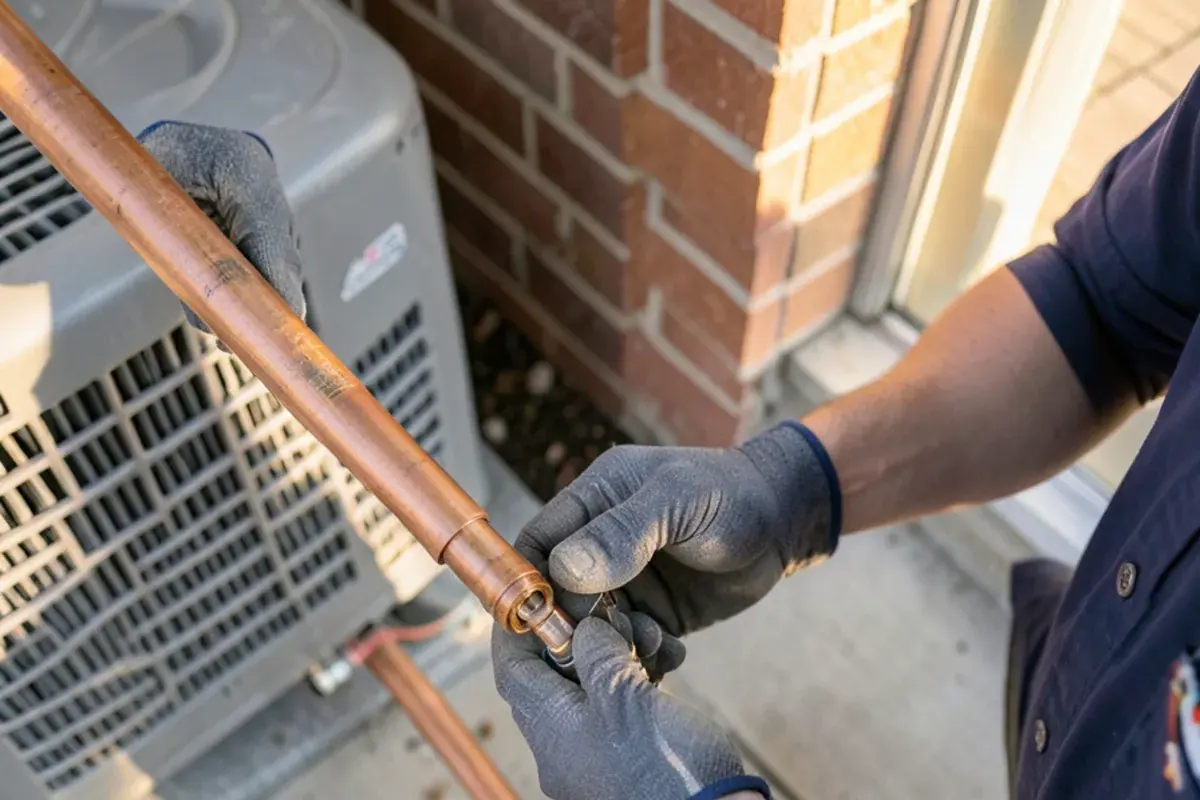
- Installation. Old equipment out, new outdoor unit on a level pad, indoor coil, line set, wiring, drain and thermostat.
- Commissioning. Refrigerant charge, airflow, defrost and backup heat sequence are tested.
- Inspection and handover. The inspector signs off where required, and you learn modes, filters and what a normal defrost looks like.
Homeyou reports that a standard replacement can take up to three days, and a ductless installation about one. Ductwork or electrical work adds time.
Need help with Heat Pump Installation?
Call and tell us what the system is doing. You will get a clear, upfront quote before work starts.
- 4.6★ on Google29 reviews
- A+ BBB ratingNot BBB accredited
- Founded in 2010Repair-first advice
- Open 24 hoursCall any time
What a heat pump installation covers
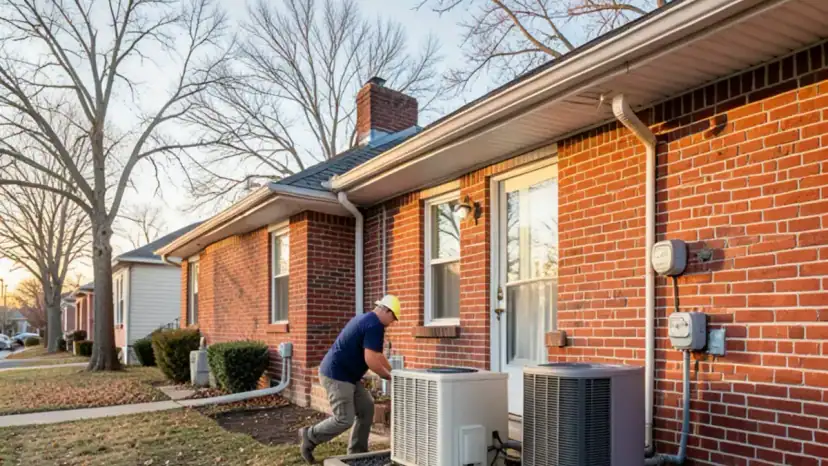
- An outdoor unit on a level pad, with room for frost and drainage
- An indoor air handler or coil matched to the outdoor unit
- Refrigerant lines that are pressure-tested and evacuated
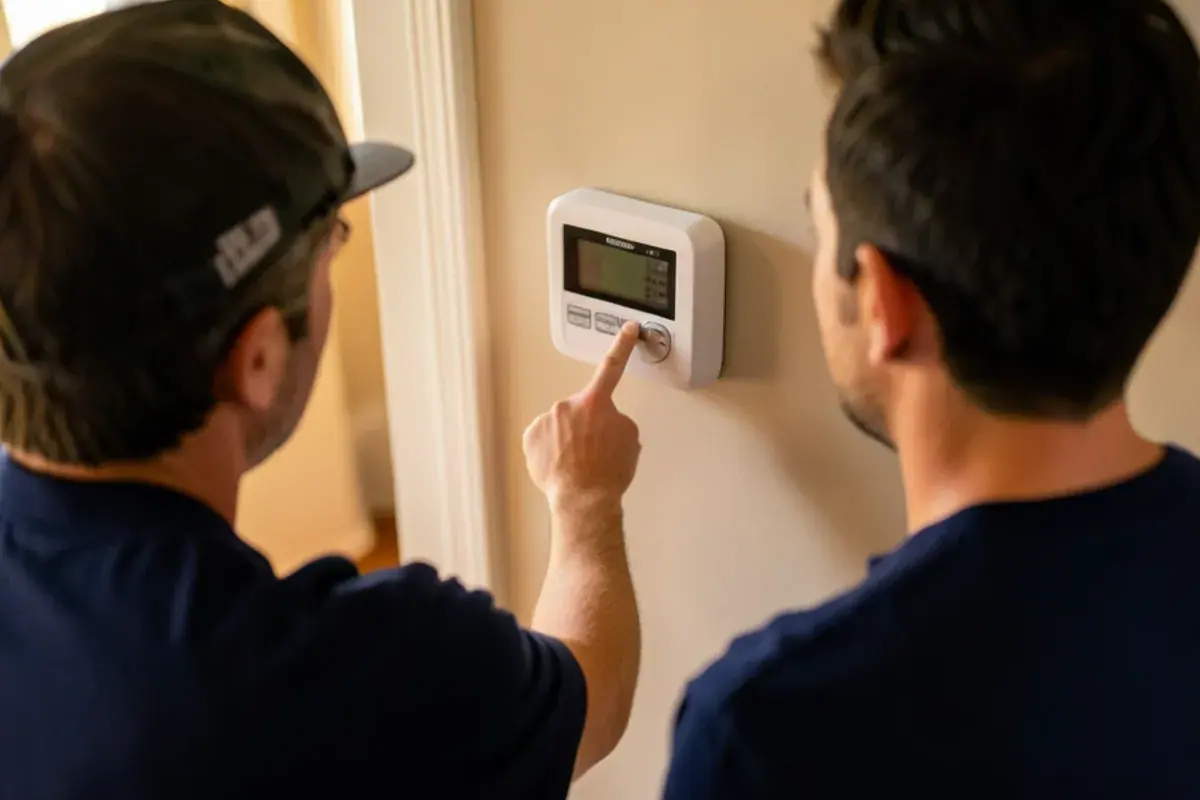
- A thermostat set up for heat pump and backup heat stages
- Condensate, electrical connections and a startup test in both modes
How much does heat pump installation cost in St. Louis?
Third-party figures put the range at $5,300 to $6,971 on average. That is Homeyou's number for St. Louis-area heat pump projects, drawn from 332 projects (2025), and it is not our quote. Angi gives $4,755 to $11,888 for a full HVAC replacement in St. Louis (2026), with labor at $75 to $150 per hour.
What moves your number:
- Equipment tier: single-stage, two-stage, variable-speed or cold-climate.
- Ductwork repair, new returns or a larger trunk.
- Electrical upgrades and the length of the line set.
- Backup heat choice.
- Whether an indoor coil, air handler or thermostat is replaced too.
- Rebates, which lower net cost only if you qualify.
Do Ameren rebates apply to a heat pump in 2026?
Possibly, but read the details before you sign. Ameren Missouri's 2026 chart, valid January 1 to December 31, 2026, runs HVAC rebates through tier 4 of Pay As You Save (PAYS). It lists $2,000 per system for air-source heat pumps at 15.2 SEER2 or higher in dual-fuel, electric-resistance-replacement and no-existing-central-system cases. Mini splits at 19 SEER2 or higher earn $500 per ton, and ground-source systems at 23 EER2 or higher earn $5,000.
Work must go through a participating contractor, who submits the paperwork. Use Ameren's Find a Contractor tool to confirm one before you commit. Kenan Corporation does not claim participation in the program. Get any rebate eligibility confirmed in writing, since a 2027 chart may differ.
The federal 25C credit is gone. The IRS says it is not allowed for property placed in service after December 31, 2025. Missouri's HEAR and HOMES programs have about $75 million each allocated, but the Department of Natural Resources was still procuring and had confirmed no launch as of mid-2026. Check dnr.mo.gov/energy.
What do permits, codes and efficiency rules require?
Permits depend on the city. St. Louis County requires a permit to install, alter, repair or replace heating and cooling systems, following the 2015 International Residential Code as amended for one- and two-family homes. The City of St. Louis requires a City-licensed mechanical contractor for residential replacement units, with a $25 application fee. Ballwin requires an active county license plus a city contractor license, and in Creve Coeur a licensed county mechanical contractor pulls the permit and the city inspects afterward.
Federal rules set equipment floors. The Department of Energy requires split-system heat pumps to meet 14.3 SEER2. On refrigerant, ACHR News reports that EPA's May 2026 revision removed the installation deadline for R-410A equipment built before 2025, so ask which refrigerant your equipment uses.
Why Kenan Corporation for a heat pump installation
Kenan Corporation holds a 4.6★ rating from 29 Google reviews, checked October 2026.
- Load calculation before sizing. The number comes from your house, not a rule of thumb.
- Replacement is not the default. Wendy R. was told by another company to replace a furnace. The real fault was a capacitor. We say so when a repair beats a heat pump.
- An installed system on record. Ms. O. wrote that an old, rusty, leaking AC needed a new system, and one was installed.
- Open 24 hours. If a new system acts up, the same number answers.
Missouri has no statewide HVAC license. Request the license number from any company, including ours, and verify it with the city or county.
Where do we install heat pumps?
Utility territory and permit rules shape a heat pump job. Minutes are from our base near Spanish Lake in normal traffic; call first for the farthest.
- St. Charles, about 35 minutes: Main Street's thick masonry walls have few chases, which can favor ductless heads.
- Creve Coeur, about 40 minutes: a county-licensed contractor pulls the permit and the city inspects.
- Chesterfield, about 50 minutes: two-story homes often run two systems, so ask for both priced together and apart.
- Kirkwood, about 50 minutes: a city electric utility serves about two-thirds of the town, and Ameren's rebates cover Ameren customers only.
- O'Fallon, about 50 minutes: Ameren Missouri and Cuivre River Electric Cooperative both serve addresses inside the city.
- Ballwin, about 55 minutes: installers need an active county license plus a Ballwin contractor license.
- Mehlville, about 55 minutes: 37 percent of occupied homes already heat electrically.
- Wentzville, about 1 hour 5 minutes: past the gas main, a heat pump runs on electricity alone.
- Franklin County, about 1 hour 40 minutes to Union: Ameren and two cooperatives serve parts of the county, so confirm your utility.
How do you care for a new heat pump?
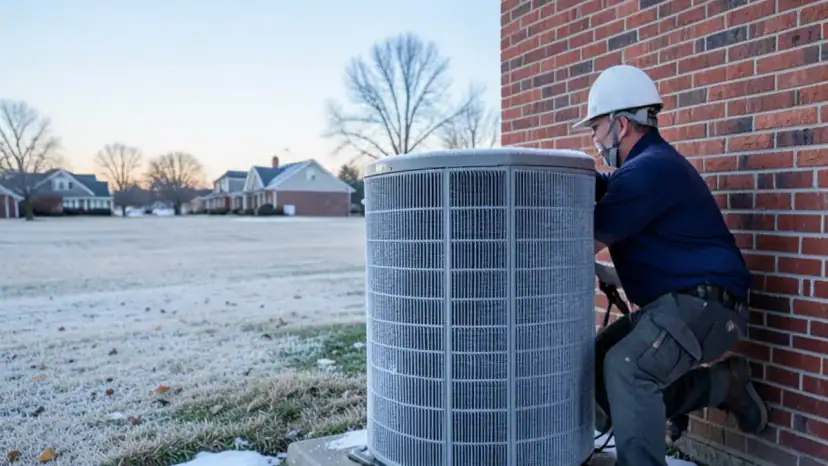
Keep the filter clean, the outdoor unit clear and the thermostat steady. The Center for Energy and Environment guide says to wash or replace ducted filters about every 90 days, use Heat mode in winter and Cool mode in summer, and avoid temperature swings of 3°F or more during unoccupied hours. It also says typical heat pumps last about 15 years. Book a yearly service visit, and call if auxiliary heat shows all day or ice builds on the outdoor coil.
Heat Pump Installation: common questions
Do heat pumps work in St. Louis winters?
Yes, when they are sized and installed for cold weather. The Department of Energy says modern air-source heat pumps are a legitimate option for colder regions, and a Center for Energy and Environment guide notes that typical units keep a coefficient of performance above 1.75 at 5°F. Many St. Louis homes pair one with a gas furnace as backup.
Should I keep my gas furnace and add a heat pump?
That dual-fuel setup is common, and Ameren's 2026 rebate chart names it as one qualifying case. The heat pump handles mild weather efficiently, and the furnace covers the coldest days. Whether the combination saves money depends on your gas and electric rates and on how the controls are set.
Can I still get the federal heat pump tax credit?
No. The IRS says the 25C energy-efficient home improvement credit is not allowed for property placed in service after December 31, 2025. Do not budget for it. Check Ameren and the Missouri Department of Natural Resources energy office for state and utility programs instead.
How long does installing a heat pump take?
A standard replacement in an existing ducted home can take up to three days, according to Homeyou, and a ductless install may take one. Ductwork changes, a new electrical circuit or an indoor coil swap add time. Ask for the schedule in the written quote.
Who pulls the permit for a heat pump installation?
The installing contractor does, and you should get that in the written quote. St. Louis County requires a permit to install or replace heating and cooling systems, and the City of St. Louis requires a City-licensed mechanical contractor and a permit. Local rules vary, so check with your building office.
Is my existing ductwork good enough for a heat pump?
Sometimes, but it needs checking. A heat pump moves a steady stream of gentler air, so undersized or leaky ducts cost comfort and efficiency. ENERGY STAR says about 20 to 30 percent of air in a typical house is lost to duct leaks. A duct inspection belongs in the quote.
Talk to a heating specialist
Tell us what your system is doing and where you are. Open 24 hours.
Kenan Corporation, 927 Broadhead Lane, St. Louis, MO 63138. Open 24 hours.
- 4.6★ on Google29 reviews
- A+ BBB ratingNot BBB accredited
- Founded in 2010Repair-first advice
- Open 24 hoursCall any time
What customers say on Google
4.6★ from 29 Google reviews, checked October 2026.
Kenan Corporation they are very great at what they do; my air conditioner was leaking lots of water, it was rusty & so old and damaged that the air in the house wasn’t reaching to the correct temperature, so Kenan Corporation came out to fix the problem, needed a new HVAC system installed, so now our home is back to normal, I would definitely recommend their service to friends and family they are 100% a recommendable company; We will definitely continue to call for their service if needed, Thank you Kenan Corporation.
My A/C had been out for a while and I woke up at 1am to a 90degree house. Kenan Corporation was at my house within 12 hours and my house is back to a comfortable temperature. He was so kind even with my curious dog with a big bark. Would definitely recommend.
Kenan Corporation was very professional and honest. He came to look at my AC after I had an issue reappear that I thought a prior person had fixed. The tech was able to move the blades of the fan that were not moving and advised that the motor was going out. I told him of the other things that I had done prior which was supposed to be a capacitor and freon just to find out that there is not a new capacitor in my air conditioner. Honesty and responsiveness is what I usually look for in a contractor. I would refer him to all my family, friends, and neighbors as well. Thank you Kenan!!