Commercial and property managers
Preventive HVAC Maintenance Checklist for Property Managers
A commercial HVAC maintenance checklist for property managers has three layers: monthly filter checks by staff, a cooling visit in spring and a heating visit in fall. Add a records file for every unit, and repeat failures become much easier to catch.
Published October 30, 2026 · Updated October 30, 2026 · By Kenan Perkins, Owner
- 4.6★ on Google29 reviews
- A+ BBB ratingNot BBB accredited
- Founded in 2010Repair-first advice
- Open 24 hoursCall any time
A preventive HVAC checklist is a calendar and a file, not a list of tasks to do when something breaks. The calendar assigns work by season, and the file shows what happened on each unit. Together they turn an emergency call into a scheduled visit for the small offices, shops and apartment buildings that a property manager looks after.
What belongs on a preventive HVAC checklist?
A good checklist is organized by how often each task is done and who does it. This version fits light commercial rooftop units and split systems.
| When | Task | Who |
|---|---|---|
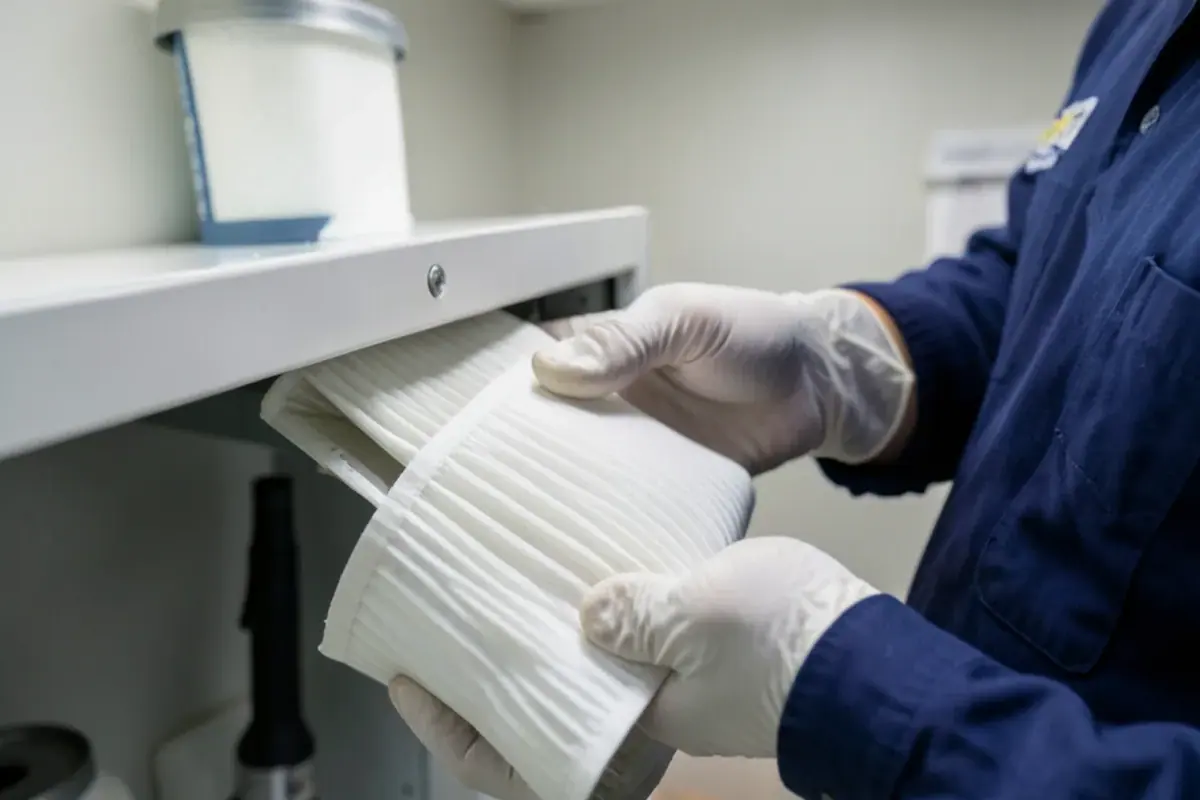
| Monthly | Check filters, swap if loaded, look for water or ice | On-site staff |
| Monthly | Walk the roof or unit area for debris and loose panels | On-site staff |
| Spring | Clean condenser coil, inspect evaporator coil, clear condensate drain | HVAC contractor |
| Spring | Test capacitors, contactors and wiring, record refrigerant pressures | HVAC contractor |
| Fall | Test ignition, flame sensor, venting and heat section | HVAC contractor |
| Fall | Inspect belts, blower wheel and motor, test economizer dampers | HVAC contractor |
| Annual | Update records, review repair history, rank units by age and risk | Manager and contractor |
Want a technician to take a look?
Call and tell us what the system is doing. You will get a clear, upfront quote before work starts.
- 4.6★ on Google29 reviews
- A+ BBB ratingNot BBB accredited
- Founded in 2010Repair-first advice
- Open 24 hoursCall any time
What can on-site staff do between visits?
Staff can protect airflow and spot trouble early. Those two jobs prevent a surprising share of failures. The U.S. Department of Energy's FEMP guide notes that more than 55 percent of maintenance activity in the average facility is reactive, which suggests most buildings wait for the problem.
- Replace filters on schedule and write the date on the frame.
- Keep leaves, trash and snow away from outdoor equipment.
- Report new noises, odors, ice, water or uneven rooms the day they show up.
- Log thermostat complaints by room and date, since a pattern points to airflow or control trouble.
- Keep roof access instructions current and the key where staff can find it.
- Never reset a tripping breaker more than once.
Staff should stay out of electrical panels, gas lines and refrigerant circuits. A short walk-through form, one page long, keeps the monthly checks consistent when staff change.
Which records should a property manager keep?
Keep one page per unit and update it after every visit. Records let you spot a repeat failure and set a replacement date.
| Record | Why it helps |
|---|---|
| Model, serial number, install date | Needed for parts and warranty questions |
| Filter and belt sizes | Quick swaps without guessing |
| Visit dates and findings | Shows wear over time |
| Parts replaced, with dates | Proves the work was done |
| Quotes declined or deferred | Reminds you what is waiting |

Ask the contractor to say what was found and what was replaced, in writing, after every visit. One Google reviewer found that a capacitor a prior person said was replaced was not in the unit at all. A short note per visit makes that kind of gap visible.
How do you schedule maintenance around tenants?
Schedule around people, not just around the calendar. Check your leases for access and notice terms, then plan the visits for the quietest hours. Opening and closing times matter for shops, and a restaurant needs a window outside service. Tell tenants if heating or cooling will pause, and note who holds roof keys and alarm codes.
A spring and a fall visit, booked months ahead, spread the load and avoid the scramble of the first hot week.
[[image:rooftop-unit-seasonal-visit]] Kenan Corporation is open 24 hours and offers same-day service when the schedule allows, so an urgent failure can still be reported at any hour. For what a schedule should include in writing, see our commercial HVAC maintenance page.
Should a building get two visits a year or four?
Two fit most offices and small apartment buildings. A restaurant, a salon or a dusty shop is the exception, because grease, lint and dust load filters and coils faster than a calendar assumes. Add a visit when filters are loaded before 30 days or a coil comes back visibly coated.
The trade-off is cost against surprise. Extra visits cost money, and on-site filter checks already cover part of the gap. Try a third visit for one year on the heaviest-use unit, read the reports, and keep it only if it finds something the other two missed.
Which permit rules touch a maintenance program?
Routine upkeep stays outside permit work, but bigger jobs do not. St. Louis County says a permit is required to install, alter, repair or replace heating, cooling or duct systems, and that filter changes and refrigerant recharges are not permit work. Ask before anything beyond routine upkeep. In Maryland Heights, the city says St. Louis County handles commercial and multi-family mechanical permits, while Shrewsbury's forms leave it unclear, so call the building office. Kenan Corporation does residential and light commercial work, so a chilled-water plant or a large venue is a scope conversation first.
What should a visit report say?
A report that says "serviced, all OK" tells you nothing. Ask for these items on every visit.
- Readings recorded: supply and return air temperatures, motor amps against the nameplate and refrigerant pressures.
- Each finding ranked as fix now, fix before next season or watch.
- Photos of any worn part, such as a cracked belt or a pitted contactor.
- A quote for deferred items, held on file so you can budget it, with no pressure to approve it on the roof.
Last year's report is the baseline for this year's, so file each one in the unit's record page.
From the field: why verifying the work matters
Customer reviews reveal the habits that matter most to a manager who cannot be on every roof. Wendy R. wrote that another company said a new furnace was needed without checking any parts, and the real fault was a capacitor, found and fixed by Kenan Corporation. Margaret S. wrote that a repair they believed had been done had not been.
Monty M. described an emergency call in which the technician arrived prepared, replaced the failed item and checked that everything else worked. The pattern is diagnose, replace what failed, and look at the rest. Ask your contractor, including us, for that pattern in writing. Reviews are individual accounts, and they do not stand in for a signed scope.
When does the checklist say replace instead of repair?
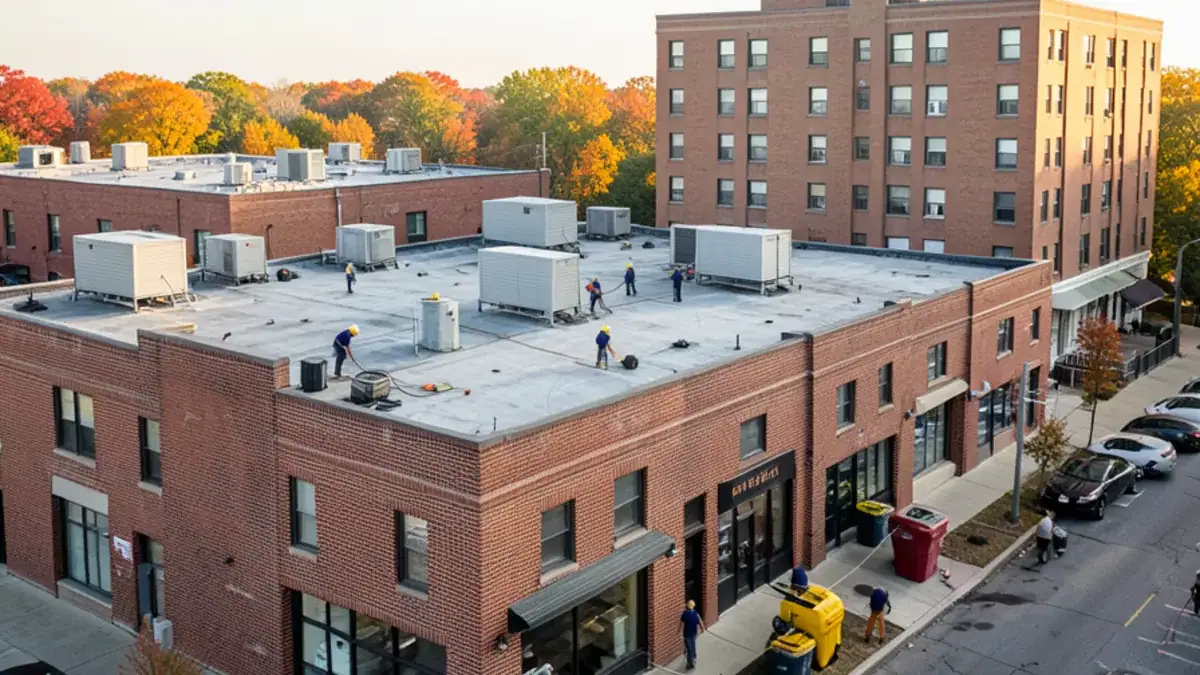
The checklist points to replacement when records show a pattern. Contractors citing ASHRAE service-life tables put a rooftop air conditioner at about 15 years, and roof exposure shortens that. A unit near that age with repeated callbacks, a failed compressor or a rusted cabinet belongs on a budget list. Our guide to rooftop unit service explains the repair-or-replace comparison, and the commercial HVAC repair page covers failures between visits.
How do you rank units by replacement risk?
Give each unit one point for every item that applies:
- Older than 12 years, a few years short of the roughly 15-year service life in the ASHRAE tables.
- Two or more repair calls in the last 12 months.
- A rusted or sagging cabinet or curb.
- A compressor or heat section already repaired once.
- R-22 refrigerant, since production ended in 2020 and service relies on reclaimed supply.
The table below uses three made-up units to show the method.
| Unit | Age | Repairs, 12 months | Points | Action |
|---|---|---|---|---|
| Rooftop over the front suite | 6 | 0 | 0 | Routine visits |
| Rooftop over the rear suite, R-22, rusted curb | 14 | 3 | 4 | Budget replacement now |
| Split system serving the back office, compressor replaced last year | 11 | 1 | 1 | Watch and re-score |
Three or more points belongs on next year's capital list. One or two means re-score after each visit.
Buildings in Shrewsbury are about 45 minutes from our base near Spanish Lake in normal traffic, and Maryland Heights is about 35 minutes, so call first to talk through scheduling.
About the author
Kenan Perkins
Owner of Kenan Corporation. Studied at Ranken Technical College. The company, founded in 2010, is built on repairing systems honestly rather than pressuring people into new ones. More about us.
Sources
Preventive HVAC Maintenance Checklist for Property Managers: common questions
How often should property managers schedule HVAC maintenance?
Plan two professional visits a year, one before cooling and one before heating, with monthly filter checks in between. High-use spaces such as restaurants or dusty shops may need filters and coils checked more often. The unit's age and location on the roof also matter.
What should be in a maintenance record for each unit?
Record location, model and serial numbers, install date, filter and belt sizes, visit dates, findings, parts replaced and any follow-up quotes. A single page per unit is enough. The point is that the next technician and the next manager can see the unit's history in a minute.
What can on-site staff safely do themselves?
Staff can check and swap filters, keep roof drains and the area around outdoor units clear, watch for new noises or leaks and log thermostat complaints. Anything that involves electrical panels, gas, refrigerant or roof access should go to a qualified HVAC contractor.
Do I need to tell tenants before a service visit?
Check your lease and building rules, then give notice that fits. A short written notice with the date, time window and who is on site avoids missed access. Tell tenants if the visit affects heating or cooling, and keep a copy of the notice with the visit record.
Talk to an HVAC specialist
Tell us what your system is doing and where you are. Open 24 hours.
Kenan Corporation, 927 Broadhead Lane, St. Louis, MO 63138. Open 24 hours.
- 4.6★ on Google29 reviews
- A+ BBB ratingNot BBB accredited
- Founded in 2010Repair-first advice
- Open 24 hoursCall any time