Emergency HVAC
Emergency AC Repair in St. Louis, MO
Emergency AC repair in St. Louis is a health call once the house climbs past 90°F, especially with older adults, small children or anyone ill at home. Kenan Corporation is open 24 hours and offers same-day service when the schedule allows.
- 4.6★ on Google29 reviews
- A+ BBB ratingNot BBB accredited
- Founded in 2010Repair-first advice
- Open 24 hoursCall any time
An AC that stops in a St. Louis heat wave is an emergency once the house passes 90°F with a vulnerable person inside. Below that, you can usually protect everyone and book the first sensible visit. Either way, call a specialist, because the details you give decide how the visit is handled.
Is a broken AC an emergency in St. Louis?
A broken AC is an emergency when heat can hurt someone in the house. St. Louis recorded 49 days at or above 90°F in 2025 per the National Weather Service, so long hard-running stretches are normal, and so are failures on the worst afternoons.
The CDC names adults 65 and older, infants and young children, pregnant people and people with chronic conditions as higher risk in heat. Watch for heavy sweating, cramps, dizziness, nausea and a fast, weak pulse. The National Weather Service describes heat stroke as a medical emergency with confusion, slurred speech, hot skin and a body temperature above 103°F. For heat stroke, call 911, move the person somewhere cooler and do not give fluids.
What should you do while the AC is down?
Slow the heat gain first, then check the three things you can safely check. These steps take about fifteen minutes.
- Close blinds and curtains on the sunny side, and move everyone to the lowest, coolest room.
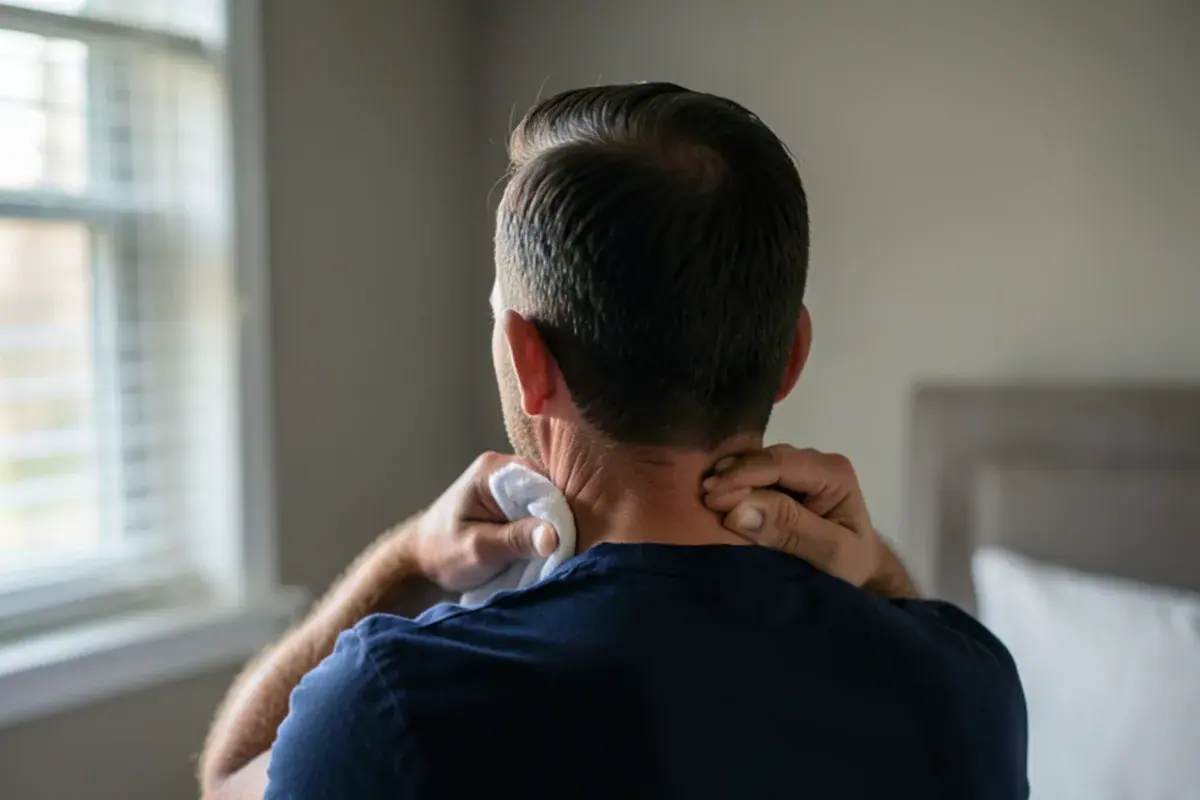
- Drink water regularly and use cool damp cloths on the neck and wrists.
- Use fans only while the indoor temperature is below 90°F. The CDC warns that above that, a fan can increase body temperature. Call 2-1-1 to find a cooling location if the house is hotter.
- Set the thermostat to Cool, a few degrees below the room temperature, and replace weak batteries.
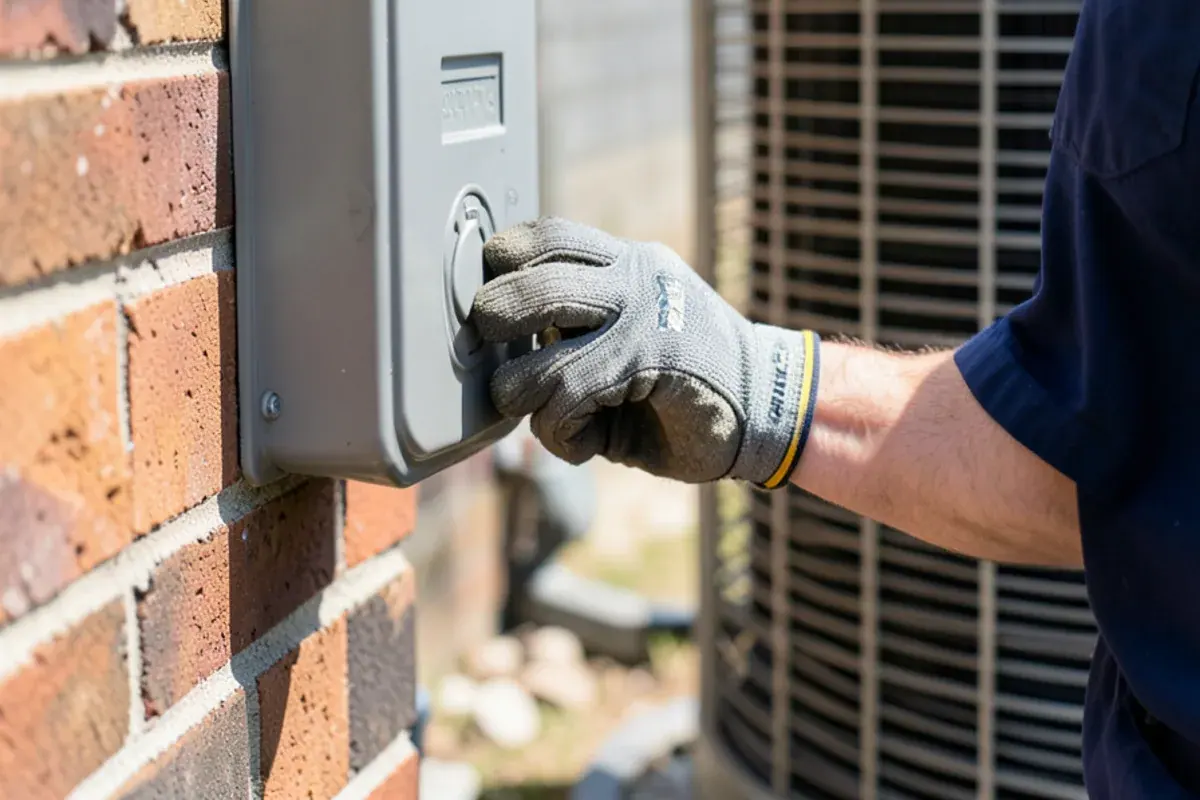
- Look at the outdoor unit. Clear leaves or cottonwood off the sides, but do not open any panel.
- Check the air handler's breaker and the outdoor disconnect. Reset a tripped breaker once. If it trips again, leave it off.
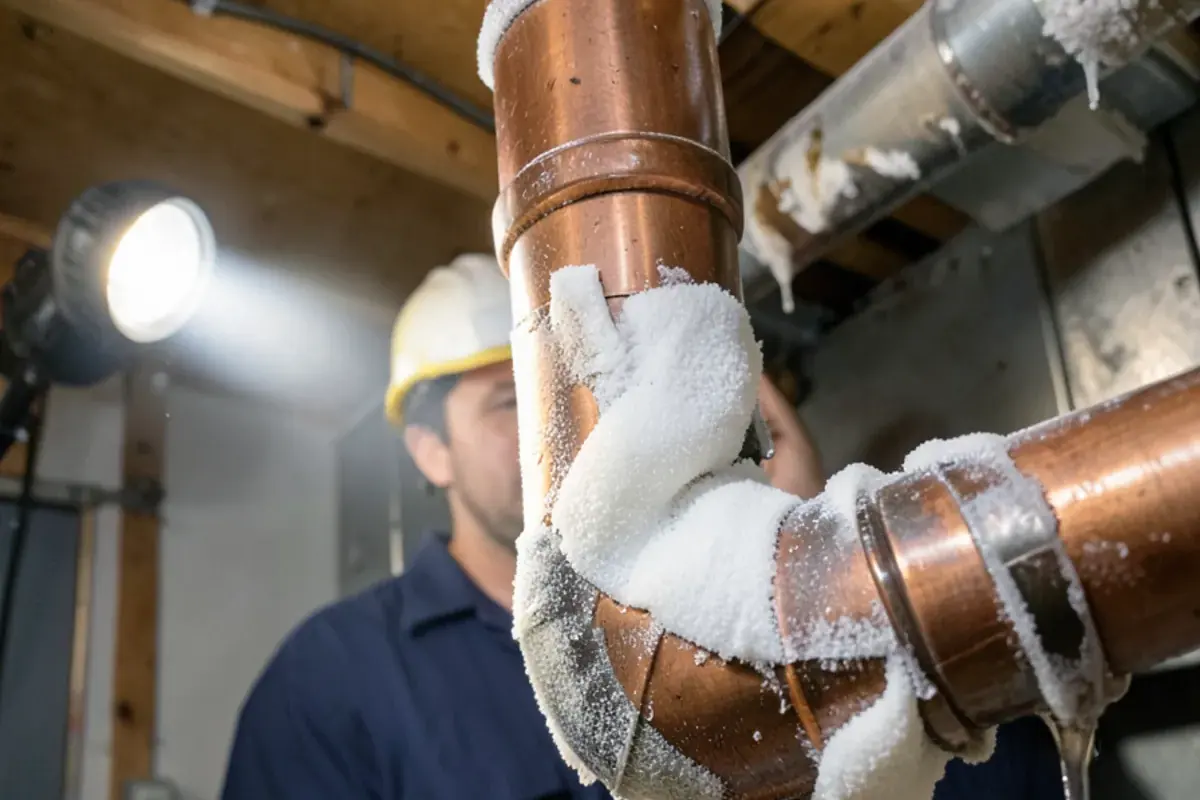
- Look for ice on the copper lines. If you see it, switch the AC to Off and set the fan to On so the coil can thaw.
Need help with Emergency AC Repair?
Call and tell us what the system is doing. You will get a clear, upfront quote before work starts.
- 4.6★ on Google29 reviews
- A+ BBB ratingNot BBB accredited
- Founded in 2010Repair-first advice
- Open 24 hoursCall any time
If water is pooling around the indoor unit, switch the system off, mop up and keep it off until the drain is cleared.
What does the technician check at the condenser and air handler?
The technician works from the thermostat outward, so the cheap failures are ruled out before the expensive ones are named. Hot-weather calls cluster around a short list of faults.
| Fault | What you notice | Usual path |
|---|---|---|
| Failed capacitor or contactor | Outdoor fan or compressor will not start | Test and replace the electrical part |
| Seized or failing fan motor | Humming, no spin, burning smell | Motor replacement if the system is sound |
| Frozen indoor coil | Ice on lines, weak airflow, then no cooling | Thaw, find the airflow or charge problem |
| Clogged condensate drain | Water at the air handler, safety switch shuts the AC | Clear the line and test the switch |
| Low refrigerant | Warm air, long run times, ice | Find the leak before adding refrigerant |
The technician explains what failed in plain language and lays out the options. Then you get a clear, upfront quote before any work starts. After the repair, the technician runs the system and checks what else is working. Our AC repair page walks through the full inspection order.
What does an emergency AC visit include?
An emergency AC visit is a diagnosis plus a repair, started at the thermostat and finished at the condenser. The aim is a cool house. We handle central air, heat pumps in cooling mode and light commercial cooling.
- Thermostat, breaker and outdoor disconnect checks before anything is opened.
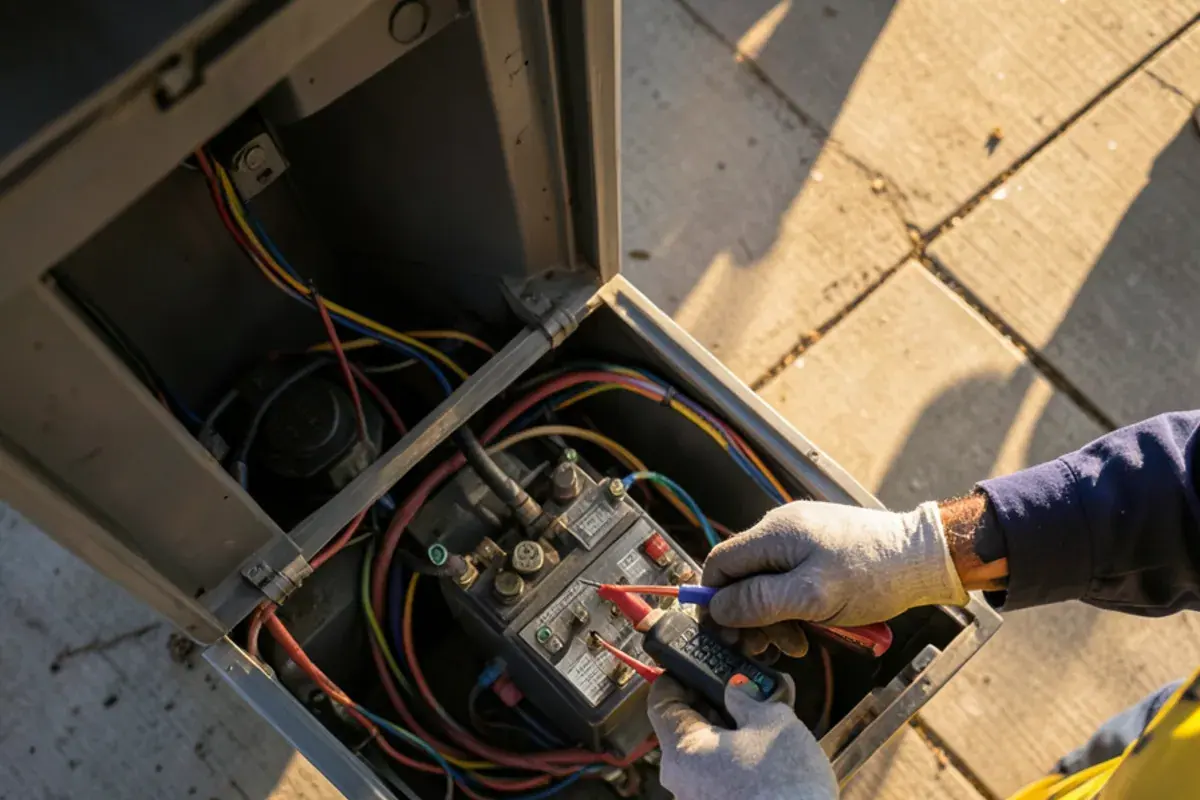
- Electrical tests on the capacitor, contactor and fan motor.
- A look at the indoor coil, the drain line and the airflow across the coil.
- Pressure and temperature readings that show whether refrigerant is the problem.
- A plain explanation of what failed, with options and a quote before work starts.
- A run of the system after the repair, plus a check of the parts around it.
How fast do emergency AC calls get answered?
The honest answer is that it depends on the day. A heat wave stacks failures across the metro, so same-day service hinges on the schedule at that moment. No arrival time is promised.
What customers wrote on Google gives the real picture. Kristie S. wrote about waking at 1 am to a house at 90 degrees and getting a visit inside 12 hours. Kiesha C. lost the AC over a weekend and wrote that it was running again in under 20 minutes of the technician's arrival. Those are the reviewers' timelines, and your wait may be shorter or longer.
What does an after-hours AC repair cost?
The price reaches you before any repair begins. No after-hours price is set on this page, and none is stated that cannot be backed up. When you call, ask what the visit will cost, then get the repair price after the diagnosis.
As third-party context, Angi puts St. Louis HVAC labor at about $75 to $150 per hour in 2026. That is a market range and not our quote. A cheap part such as a capacitor and a compressor replacement sit at opposite ends of the bill, so ask which one the diagnosis points toward.
Four variables decide the total. The failed part matters most: a capacitor, contactor or fan motor is a small repair, while a compressor or coil is not. Refrigerant is next, since a system low on charge has a leak to find first, and R-22 supply is limited because production ended in 2020. Age is last, because a repair on a unit near 15 years competes with the price of a new one.
Repair it tonight or replace it later?
Repair it tonight if the fault is a part, and plan any replacement later. Most heat-wave failures are electrical parts or motors, and a repair gets the house cool again. A compressor failure on a unit past 15 years is a different conversation, since contractor sources put AC life at about 15 to 20 years with routine maintenance.
If the numbers favor a new system, you will see the repair quote and the AC replacement option side by side. Older R-22 systems add a wrinkle, because R-22 production ended in 2020 and supply is limited. Pushing a sale is not the goal at 2 am, and a part swap is often enough.
Does an emergency AC repair need a permit?
A part swap usually does not, but replacing the system does. St. Louis County says a permit is required to install, alter, repair or replace heating, air-conditioning or duct systems, and that filter changes and refrigerant recharges are not permit work. In the City, Ordinance 70800 sends replacement units to a mechanical contractor licensed in the City. EPA's Section 608 rules prohibit knowingly venting refrigerant. For new equipment, the Department of Energy sets a 13.4 SEER2 minimum for split air conditioners in the North region, which includes Missouri. Ask any contractor, including us, for the license number for your address.
Where do we drive for emergency AC calls?
The same outage looks different from one address to the next. Drive times are in the overview, and none is an arrival promise.
- Spanish Lake: cottonwood fluff packs condenser coils before the first 90-degree week, and humid evenings load the drain line.
- Florissant: cooling came after heating in the 1960s tract houses, so weak return airflow is a common suspect on a frozen coil.
- Hazelwood: the 1960s are the biggest build decade in ZIP 63042, with condensers on side-yard pads.
- Bridgeton: houses from the 1960s peak are about 60 years old, so give the condenser's age.
- University City: prewar brick homes often have ductless heads, so say whether you have central air or a mini-split.
- Maryland Heights: about 36 percent of units are in buildings of five or more, so say who controls access.
- Maplewood: condensers sit close to neighbors' fences, and 60 percent of households rent, so send the landlord's name.
- Lemay: a coil tied into ducts built for heat alone freezes easily, and leaves from Jefferson Barracks Park clog drain pans.
- Kirkwood: about 50 minutes out, with condensers tucked beside stone foundations, so call first to confirm scheduling.
Why Kenan Corporation for an AC that quit in the heat
Customers describe the outcome in their Google reviews, where we hold a 4.6★ rating from 29 reviews as of October 2026.
- Speed after arrival. Kiesha C. wrote that the AC was running again less than 20 minutes after the technician arrived.
- Overnight calls. Kristie S. wrote that a house at 90 degrees at 1 am was seen within 12 hours.
- No guessing at parts. Margaret S. wrote that a capacitor had supposedly been replaced, and the technician found no new capacitor and advised that the fan motor was going out.
- Open 24 hours. Call at any hour and we offer same-day service when the schedule allows.
See the emergency HVAC overview for the full triage guide.
Emergency AC Repair: common questions
Is an AC outage really an emergency if it is only 85 degrees outside?
It can wait for a normal appointment if everyone is healthy and the house stays below the upper 80s. It becomes urgent when the forecast is 90 or above, or when anyone at home is older, ill, pregnant or very young. If you are unsure, call and describe the house.
Should I run fans when the AC is out?
Only while the indoor temperature is below 90°F. The CDC says that above 90°F a fan can raise body temperature instead of lowering it. Above that, move to an air-conditioned place, take a cool shower and call 2-1-1 for a cooling location.
Can I keep resetting the breaker until the AC starts?
Reset it once. A breaker that trips again points to a shorted motor, a failed compressor or damaged wiring, and repeated resets can make the damage worse. Leave that breaker off, close the blinds, and call so the technician can test the circuit.
How long will I wait for an emergency AC visit?
We cannot promise a wait, because it depends on the day and the schedule. Google reviewers describe an arrival within 12 hours after a 1 am wake-up and a weekend outage fixed within 20 minutes of arrival. We offer same-day service when the schedule allows.
Will you push a new AC on me at night?
No. Diagnosis comes first, and most hot-weather failures are electrical parts or motors. If the unit is truly finished, you will get the repair quote and the replacement option side by side. A full replacement is a decision to make rested, not at midnight.
What should I tell you when I call about a dead AC?
Tell us whether the outdoor fan is spinning, whether the indoor blower runs, whether there is ice on the lines or water near the unit, and what the thermostat shows. Add who is home and the indoor temperature. We use that to decide how the visit is handled.
Talk to an emergency specialist
Tell us what your system is doing and where you are. Open 24 hours.
Kenan Corporation, 927 Broadhead Lane, St. Louis, MO 63138. Open 24 hours.
- 4.6★ on Google29 reviews
- A+ BBB ratingNot BBB accredited
- Founded in 2010Repair-first advice
- Open 24 hoursCall any time
What customers say on Google
4.6★ from 29 Google reviews, checked October 2026.
Kenna did an amazing job! I had another company come out and told me I needed a new furnace because my heat was not coming on. Previous company said could be the motor/fan and that would cost $650, which I was ok with. They didn’t check any parts, but was ready to say I should just get a new heating and cooling unit. I knew my neighbor had service done by Kenyan and said he did a great job. He came out and found it was a capacitor that was causing the issue and fixed it. He is awesome and definitely if I need help again, he will be called and I will use his services!
We placed an emergency call to Kenan and within 12 hrs he arrived, prepared and ready to go. Extremely courteous and pleasant. Knew exactly what the issue was, replaced the item and checked to see if everything else was working properly. Great job, very competitive pricing and best of all great communicator before, during and after the job. Well done sir! We’ll definitely be call you in the future.
Kenan Corporation they are very great at what they do; my air conditioner was leaking lots of water, it was rusty & so old and damaged that the air in the house wasn’t reaching to the correct temperature, so Kenan Corporation came out to fix the problem, needed a new HVAC system installed, so now our home is back to normal, I would definitely recommend their service to friends and family they are 100% a recommendable company; We will definitely continue to call for their service if needed, Thank you Kenan Corporation.