Air Conditioning
Refrigerant Leak Repair in St. Louis, MO
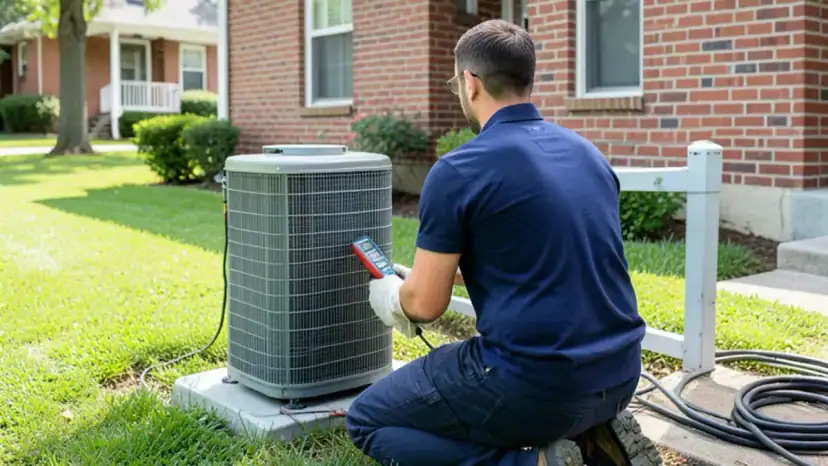
Refrigerant leak repair in St. Louis starts with finding where the charge is escaping, because an air conditioner does not burn refrigerant. Kenan Corporation locates the leak, explains the options in plain language, and gives you a clear, upfront quote before work begins.
- 4.6★ on Google29 reviews
- A+ BBB ratingNot BBB accredited
- Founded in 2010Repair-first advice
- Open 24 hoursCall any time
An air conditioner that needs refrigerant added is an air conditioner with a leak. Refrigerant circulates in a sealed loop and is not used up, so the question is never how much to add. It is where the charge went and whether that spot can be fixed for less than the system is worth.
Why is your AC low on freon?
A leak is the only reason a sealed system loses charge. These signs point to one:
- Warm air or weak cooling that gets worse over weeks
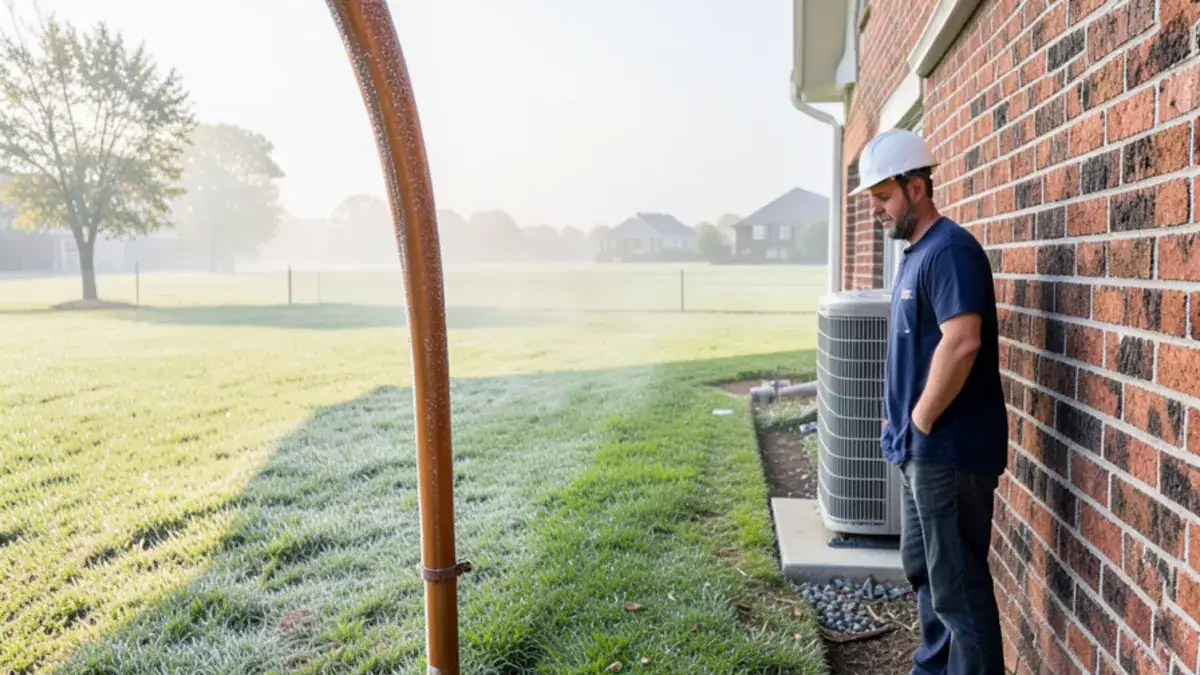
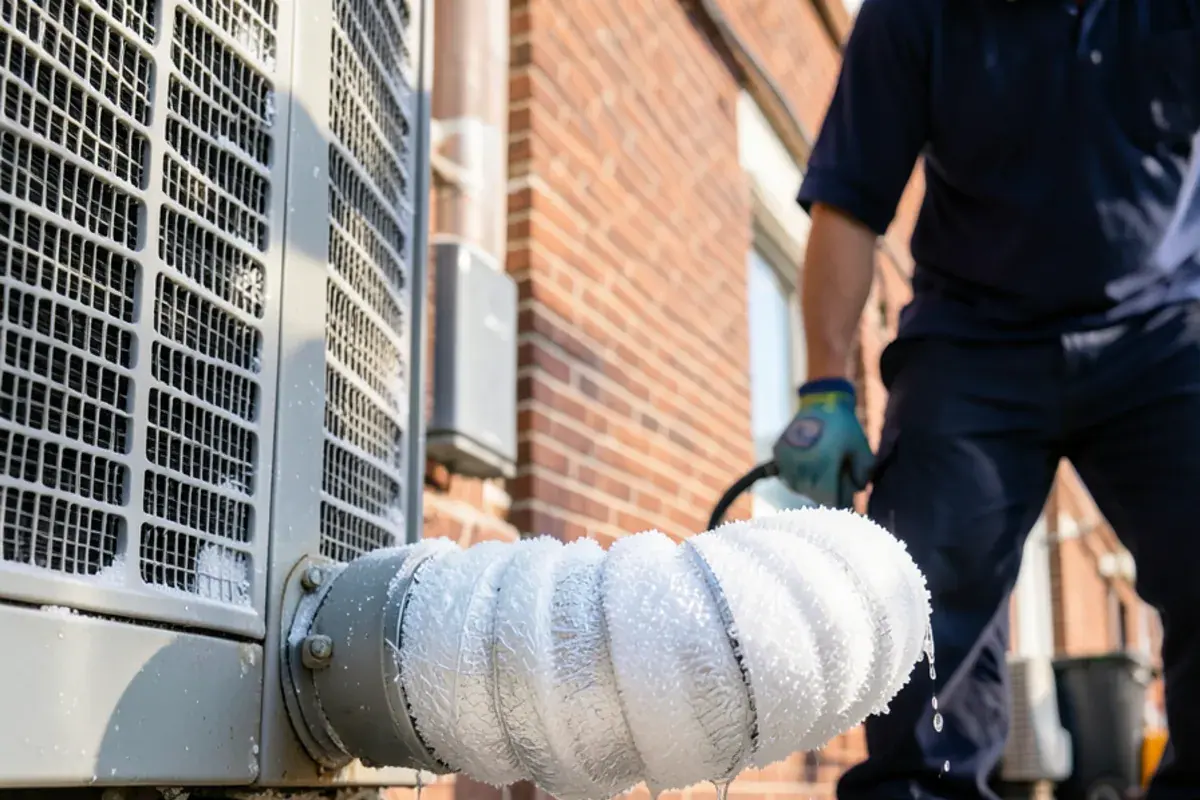
- Ice on the large copper line or the indoor coil
- A hissing or bubbling sound near the coil or lines
- Higher bills with no change in thermostat settings
- Oil stains at fittings, which are refrigerant oil carried out with the gas
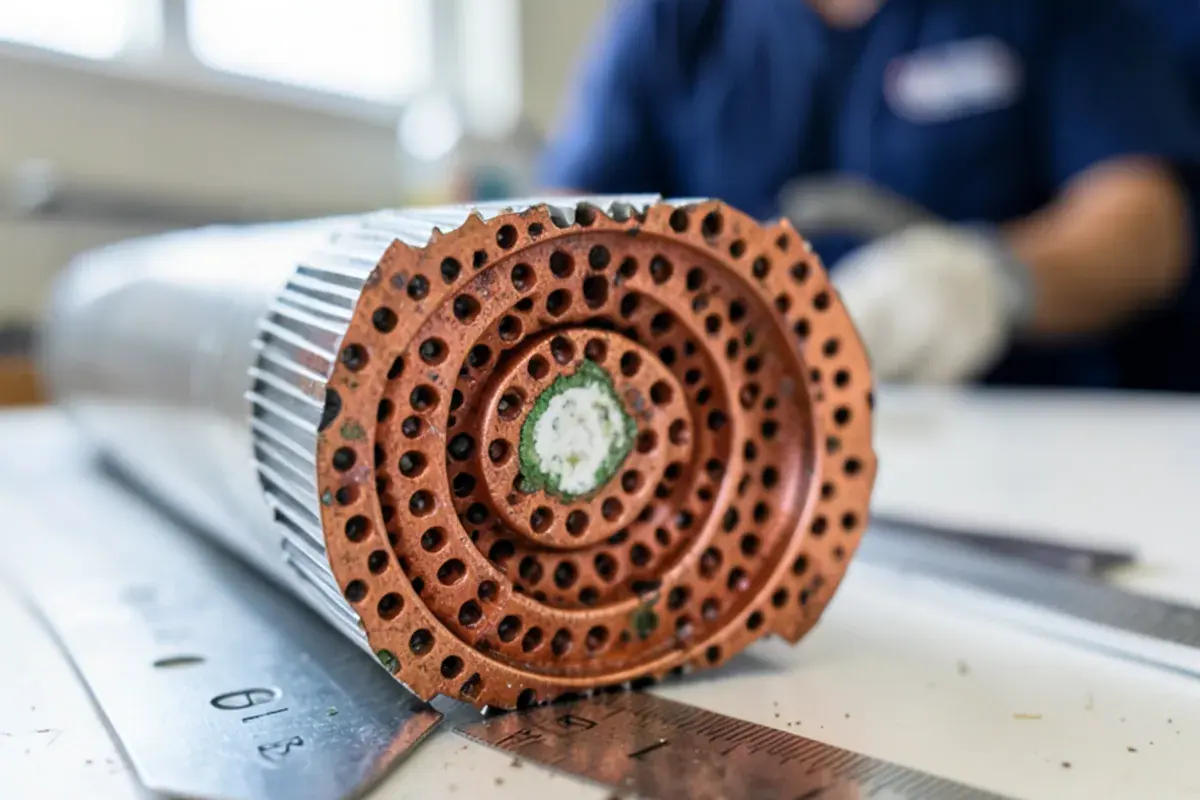
Common leak spots are the thin copper tubes in an aging indoor coil, flare fittings, brazed joints, valve cores and lines rubbing against framing. Coils on systems past about 15 years show pinhole corrosion more often. Humid summers keep the coil wet for months, which speeds that wear.
How is a refrigerant leak found?
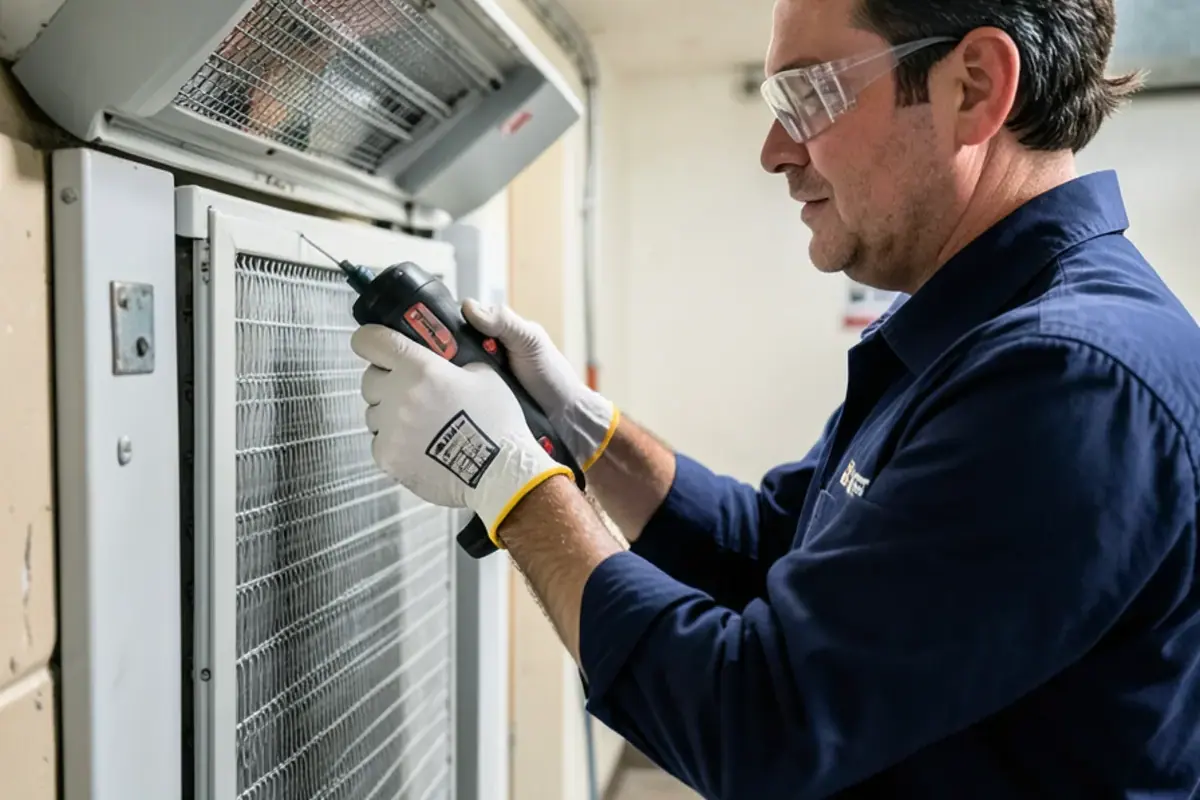
We locate the leak before quoting a repair, using a sequence that goes from least invasive to most.
- Read pressures and temperatures to confirm the charge is actually low.
- Sweep an electronic leak detector along the coil, lines and fittings.
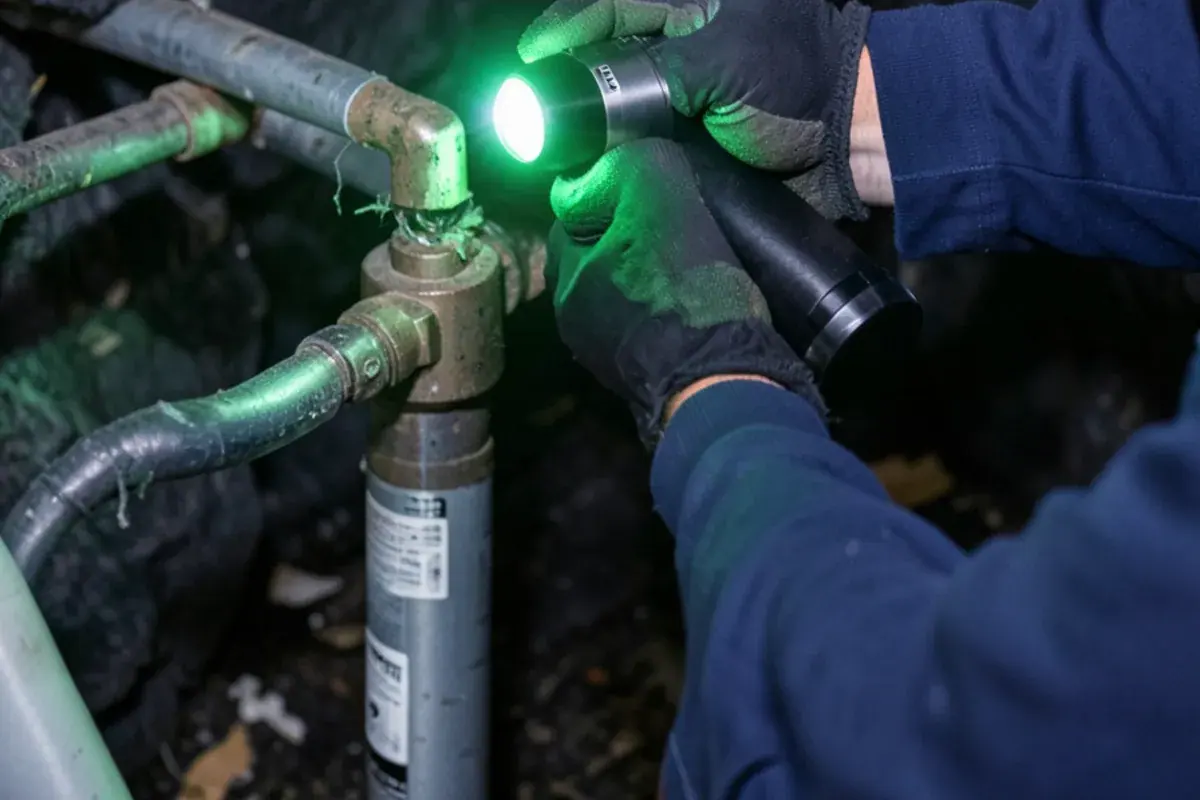
- Add UV dye when the sniffer is inconclusive, then check with a UV light after the system runs.
- Isolate sections and hold nitrogen pressure to test the lines and coil, since nitrogen does not release refrigerant.
- Apply a bubble solution to suspect joints.
Margaret S., a Google reviewer, had been told a capacitor and freon were handled, and we found no new capacitor and a failing fan motor. That experience is why we confirm each fault before talking about parts, as with any AC repair.
Repair options and their trade-offs
The right repair depends on where the leak is and how old the system is.
| Leak location | Repair | Trade-off |
|---|---|---|
| Valve core or flare fitting | Replace the core or reseal the fitting | Low cost, quick; confirm no second leak |
| Accessible line or joint | Braze or replace the line section | Moderate cost; line must be reachable |
| Indoor evaporator coil | Replace the coil | Common repair; must match the condenser and refrigerant |
| Outdoor condenser coil | Replace the condenser | Often close to replacement cost |
| Multiple leaks or R-22 system | Replace the system | Compare against AC replacement |
A repair-and-recharge on an old R-22 system can cost more than the equipment is worth. We tell you when that point has been reached.
Need help with Refrigerant Leak Repair?
Call and tell us what the system is doing. You will get a clear, upfront quote before work starts.
- 4.6★ on Google29 reviews
- A+ BBB ratingNot BBB accredited
- Founded in 2010Repair-first advice
- Open 24 hoursCall any time
What happens during a leak-repair visit, and how long does it take?
The visit has one purpose: end the leak and verify it. Timing depends on whether the leak is easy to reach and whether parts are on hand.
- Confirm symptoms and read system pressures.
- Locate the leak and show you where it is.
- Give you a clear, upfront quote with repair and replacement options.
- Recover the existing refrigerant if the circuit must be opened.
- Make the repair, then hold nitrogen pressure to prove the fix.
- Pull a deep vacuum, charge to the correct weight and measure temperatures.
- Check what else is working, including the capacitor, drain and airflow.
What a refrigerant leak repair covers
A leak repair ends the leak and proves it is gone, and a recharge alone does neither. The quote should name each part:
- A leak search with the methods used, such as an electronic detector, UV dye or a nitrogen hold
- The repair at the located point, whether a core, fitting, joint, line section or coil
- Refrigerant recovery before the circuit is opened
- A pressure test, deep vacuum and a charge measured by weight
- Pressure and temperature readings after the repair, plus a check of the capacitor, drain and airflow
A valve-core or fitting repair can be finished the same visit.
A coil replacement usually takes longer if the part must be ordered. The aftermath is simple: watch cooling for a week, and call if ice returns.
What does EPA require for refrigerant?
EPA's rules affect who may handle the gas and what may happen to it.
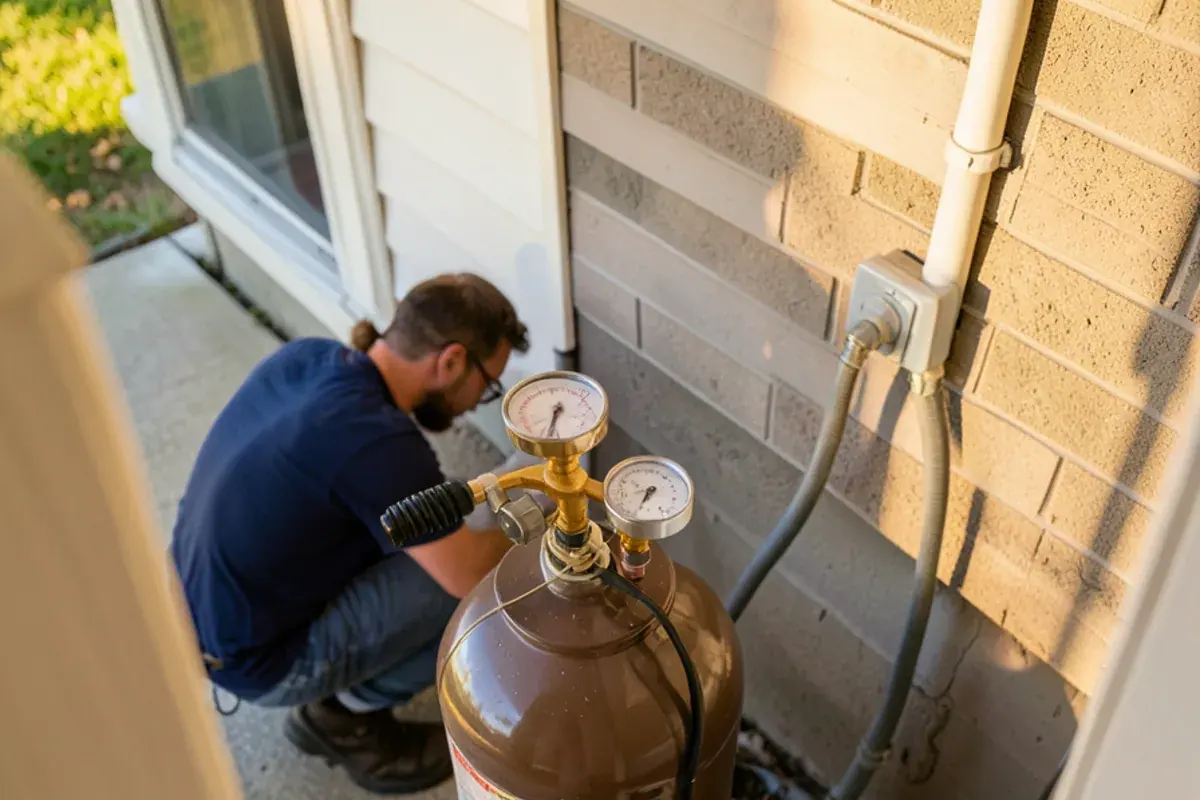
- Venting is prohibited. EPA says Section 608 bars intentionally releasing refrigerant during service or disposal.
- Purchase is restricted. Sales of refrigerant for stationary air conditioning go to Section 608 certified technicians or their employers.
- R-22 is scarce, not banned. Production and import ended January 1, 2020.
- R-410A is not banned. New split systems made since January 1, 2025 use refrigerant under 700 GWP, usually R-454B or R-32, and EPA's May 21, 2026 revision removed the install deadline for pre-cutoff stock.
- EPA's January 2026 leak repair rule excludes home AC. It targets appliances holding 15 pounds or more of HFC, and exempts residential and light commercial air conditioning.
Ask any technician, including us, to show Section 608 certification, and ask the contractor for the license number that applies to your address. Because Missouri licenses HVAC contractors locally, not statewide, the City of St. Louis and St. Louis County each run their own mechanical licensing.
Local permits for coil and component work
A recharge is not permit work in St. Louis County, but repairing or replacing system components can be, so ask before a coil swap. The City of St. Louis requires a City-licensed mechanical contractor and a permit for replacement units under Ordinance 70800. Missouri has no statewide HVAC license, and municipal rules vary, so check with the local building office and have the quote say who pulls any permit.
What does refrigerant leak repair cost?
Cost follows the leak location, the part, the refrigerant type and the labor time. Angi reports St. Louis HVAC labor at $75 to $150 per hour in 2026, a market figure and not our quote. A fitting repair costs far less than a coil swap or a compressor-side repair, and R-22 service costs more because supply is limited. This Old House's March 2026 guide lists $200 to $1,500 or more for a leak repair and $1,000 to $3,000 or more for a compressor. Contractor sources put AC life at 15 to 20 years with routine maintenance, so a four-figure quote on an older unit deserves a replacement quote beside it. Ask for the repair price and the replacement price on one sheet, with the refrigerant type written out.
How do you prevent the next leak?
Prevention is mostly monitoring and airflow. Change the filter, because a starved coil runs colder and ices. Keep foam insulation intact on the suction line, since torn foam sweats and corrodes fittings. Book AC maintenance each spring so pressures and fittings are checked before summer, and watch for ice or a sudden bill jump.
Why Kenan Corporation for a refrigerant leak
A leak call is a test of whether a contractor diagnoses or just recharges.
- Locate, then quote. We diagnose before replacing parts, and we explain the problem plainly.
- Repair first. The founder, Kenan Bruce Martz, built Kenan Corporation in 2010 after 20-plus years in the trade, to avoid hard-sell pitches.
- Open 24 hours. The Google profile reads 4.6★ from 29 reviews, as of October 2026.
We cover Spanish Lake, Jennings and Ferguson, each about 5 to 20 minutes from our base near Spanish Lake in normal traffic.
Where we repair refrigerant leaks
Call first for the farther towns; all times assume normal traffic.
- Spanish Lake, about 5 minutes: humid river-bottom summers keep coils wet for months, which speeds pinhole corrosion.
- Ferguson, about 20 minutes: Code Compliance takes the permit that covers mechanical work, which matters when a leak repair turns into a coil replacement.
- Jennings, about 20 minutes: 55 percent of occupied units are rented, so a leak quote often needs an owner's approval and a repair-versus-replace sheet.
- Florissant, about 20 minutes: the median home was built in 1963, and the city lists AC installation as permit work with a 7 to 10 day wait.
- Bridgeton, about 30 minutes: St. Louis County Public Works issues the city's mechanical permits, so a coil replacement here goes through the county.
- Maryland Heights, about 35 minutes: the county handles multifamily mechanical permits, so apartment-community leak repairs follow county rules.
- Lemay, about 45 minutes: 83 percent of homes predate 1970, so check the data plate for R-22 before approving any recharge.
- Chesterfield, about 50 minutes: homes from the 1980s and 1990s are about 42 percent of units, and many 1990s systems were built for R-22.
- Mehlville, about 55 minutes: 30 percent of homes date to the 1960s, and a coil leak on an old unit calls for a repair-or-replace conversation.
- Oakville, about 65 minutes: a unit that slowly loses cooling in humid river-bottom summers likely has a leak, so search before topping off.
Refrigerant Leak Repair: common questions
Why does my AC need freon every year?
Because it has a leak. A sealed air conditioner does not consume refrigerant, so a low charge is a symptom, not a maintenance item. Adding refrigerant without locating the leak buys a few weeks or months. We would rather find the leak and give you repair and replacement prices side by side.
Can a homeowner buy refrigerant and recharge an AC?
Not legally for most systems. EPA says refrigerant sales for stationary air conditioning are limited to technicians certified under Section 608, or employers who can show they employ one. EPA also prohibits intentionally venting refrigerant. Ask any technician to confirm their Section 608 certification.
Is R-410A banned or being phased out?
No, R-410A is not banned. New residential split systems made since January 1, 2025 must use refrigerant under 700 GWP, usually R-454B or R-32, but EPA's May 2026 revision lets pre-2025 R-410A stock be installed. Servicing existing R-410A systems stays legal, so a leak on one is fixable.
What happens if my AC uses R-22?
It can still be serviced, but the refrigerant is scarce. EPA ended R-22 production and import on January 1, 2020, so service relies on reclaimed or stockpiled supply and costs more. EPA does not require you to replace an R-22 system. Compare the leak repair quote against a new system before you commit.
Does EPA's leak repair rule apply to my home AC?
No. EPA's January 2026 leak repair fact sheet covers appliances holding 15 pounds or more of HFC refrigerant and exempts the residential and light commercial air conditioning and heat pump subsector. Your system is not covered by it, but intentional venting remains prohibited.
Will the repair need a permit in St. Louis County?
A refrigerant recharge is not permit work in St. Louis County, but repairing or replacing system components such as a coil can be. Ask whoever quotes the job whether a mechanical permit applies and put the answer in writing. The City of St. Louis and other cities have their own rules.
Talk to a cooling specialist
Tell us what your system is doing and where you are. Open 24 hours.
Kenan Corporation, 927 Broadhead Lane, St. Louis, MO 63138. Open 24 hours.
- 4.6★ on Google29 reviews
- A+ BBB ratingNot BBB accredited
- Founded in 2010Repair-first advice
- Open 24 hoursCall any time
What customers say on Google
4.6★ from 29 Google reviews, checked October 2026.
Kenna did an amazing job! I had another company come out and told me I needed a new furnace because my heat was not coming on. Previous company said could be the motor/fan and that would cost $650, which I was ok with. They didn’t check any parts, but was ready to say I should just get a new heating and cooling unit. I knew my neighbor had service done by Kenyan and said he did a great job. He came out and found it was a capacitor that was causing the issue and fixed it. He is awesome and definitely if I need help again, he will be called and I will use his services!
We placed an emergency call to Kenan and within 12 hrs he arrived, prepared and ready to go. Extremely courteous and pleasant. Knew exactly what the issue was, replaced the item and checked to see if everything else was working properly. Great job, very competitive pricing and best of all great communicator before, during and after the job. Well done sir! We’ll definitely be call you in the future.
Kenan Corporation they are very great at what they do; my air conditioner was leaking lots of water, it was rusty & so old and damaged that the air in the house wasn’t reaching to the correct temperature, so Kenan Corporation came out to fix the problem, needed a new HVAC system installed, so now our home is back to normal, I would definitely recommend their service to friends and family they are 100% a recommendable company; We will definitely continue to call for their service if needed, Thank you Kenan Corporation.