
Comparison and decision guides
Ductless Mini Split vs Central Air
Mini split vs central air is a duct question first. If your house has sound ducts, central air is usually the simpler replacement. If it has none, leaky ones or a room the system cannot reach, a ductless mini split often does the job better.
Published October 30, 2026 · Updated October 30, 2026 · By Kenan Perkins, Owner

- 4.6★ on Google29 reviews
- A+ BBB ratingNot BBB accredited
- Founded in 2010Repair-first advice
- Open 24 hoursCall any time
If your house already has sound ducts, central air is usually the simpler answer to a failed AC. If it has no ducts, leaky ones or a room the system cannot reach, a ductless mini split often fits better. Most of the decision is what your house already has.
What is the real difference between a mini split and central air?
Central air cools every room through one indoor unit and a network of ducts. A mini split skips the ducts. An outdoor unit connects to one or more indoor heads on walls or ceilings through a small bundle of refrigerant line, power and a condensate drain.
| Factor | Central air | Ductless mini split |
|---|---|---|
| Needs ducts | Yes | No |
| Zoning | One thermostat unless zoned | Each head has its own control |
| Duct losses | ENERGY STAR says ducts lose about 20-30% of air in typical systems | None |
| Look | Registers only | Visible indoor heads |
| Best for | Homes with good ducts | Additions, no-duct homes, hot rooms |
| Whole-house cost | Usually lower with existing ducts | Rises with each head |

Want a technician to take a look?
Call and tell us what the system is doing. You will get a clear, upfront quote before work starts.
- 4.6★ on Google29 reviews
- A+ BBB ratingNot BBB accredited
- Founded in 2010Repair-first advice
- Open 24 hoursCall any time
When does a mini split beat central air?
A mini split wins when ducts are the problem. ENERGY STAR lists the best uses: homes without existing ductwork, additions, outbuildings and rooms that are hard to duct, hot or cold spots like a home office, and supplementing an existing system. It also notes that heat pumps produce no combustion emissions indoors.
In St. Louis, the usual cases are a sunroom or finished attic, a garage conversion, a room over a porch that never cools and an old brick house that was built for radiators. Ducts in an unconditioned attic or crawl space lose the most, so the savings are largest there.
When does central air still win?
Central air wins when ducts exist, are sealed and are sized for the load. Replacing the outdoor and indoor equipment on a working duct system is a direct swap with one thermostat and no wall-mounted equipment. It is also the simpler path when every room needs cooling and the budget for multiple heads would exceed one ducted unit.
If you are on the fence, have the ducts tested. Our duct repair and replacement page explains sealing, and signs of leaky ducts tells you what to look for first.
Can you keep the ducts and add one head?
Often, yes, and it is the option most owners overlook. ENERGY STAR lists supplementing an existing system as a good use for ductless. Picture a bungalow whose ducts serve the first floor well, with a finished attic bedroom at the end of a long run that never cools. Replacing the central AC for the main floor and adding one ductless head upstairs fixes the weak room without ductwork through the walls. The trade-off is two systems to maintain and two sets of controls, in exchange for a smaller job than a whole-house conversion.
How do mini splits handle St. Louis winters?
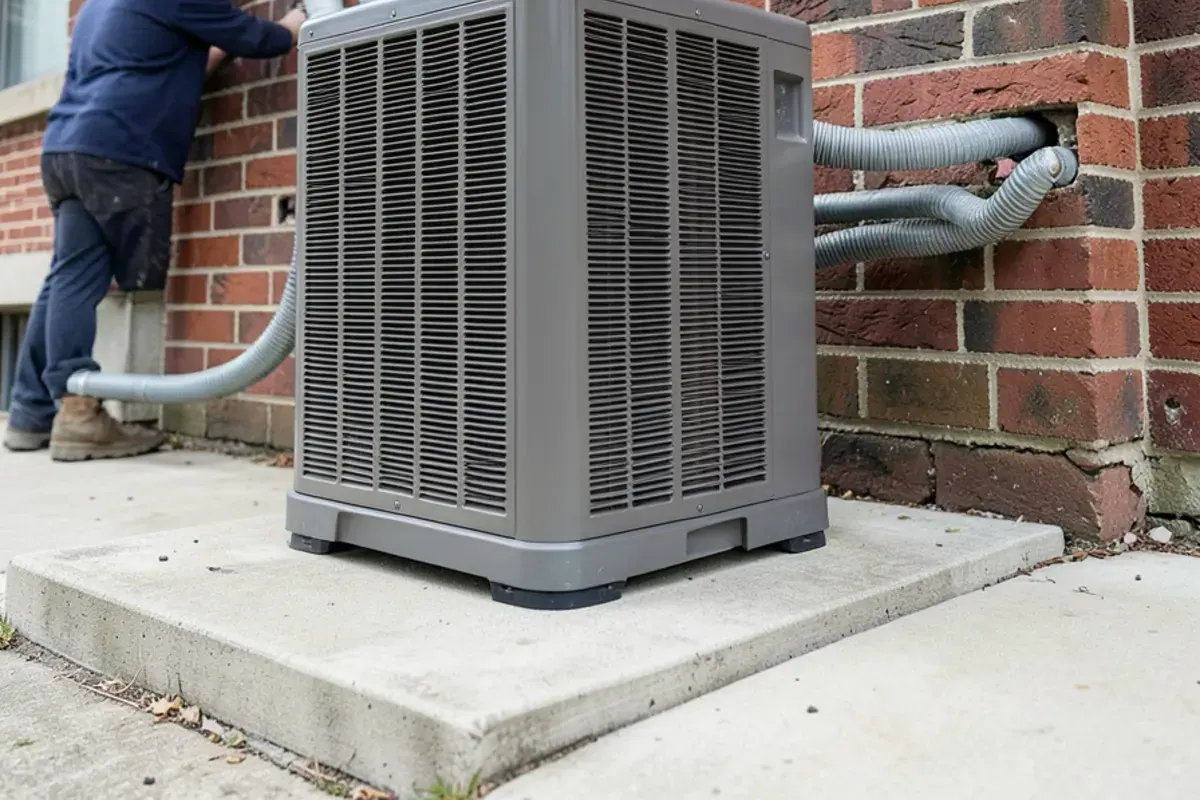
Most mini splits are heat pumps, so they heat as well as cool. ENERGY STAR cold climate models are tested down to 5°F and keep working below that, with backup heat recommended at very low temperatures. St. Louis logged 4,100 heating degree days in 2025 according to the National Weather Service, so a mini split can carry most of a winter in a single room or addition.
Keep the thermostat steady, since ENERGY STAR says heat pumps do not save through deep setbacks. Our heat pump vs furnace guide covers whole-house heating choices.
How should a mini split be sized?
By load, room by room. ENERGY STAR says an oversized or undersized unit performs poorly and that a contractor should use a Manual J load calculation. ACCA frames sizing as Manual J, equipment selection as Manual S and duct design as Manual D.
Indoor placement matters because heat rises and cool air sinks, and closed doors block airflow. Ask where each head will sit, how the line set will be routed and where the condensate will drain. The outdoor unit should stay clear of doors and windows, since it releases defrost water in winter.
Which rooms really need their own head?
Walk the house with this list before you accept a head count:
- Bedrooms that stay shut at night. Closed doors block airflow, so a head in the hall will not cool them.
- Rooms with large west-facing glass that heat up by late afternoon.
- Open living areas where one head can cover a kitchen, dining and living space.
- Bathrooms, closets and storage, which rarely need a head.
- Rooms with high ceilings and plaster walls, where mounting height and wall type decide placement.
Each head adds cost, so the cheapest design is the fewest heads that still cover the rooms you actually use.
From the field: retrofits in brick homes
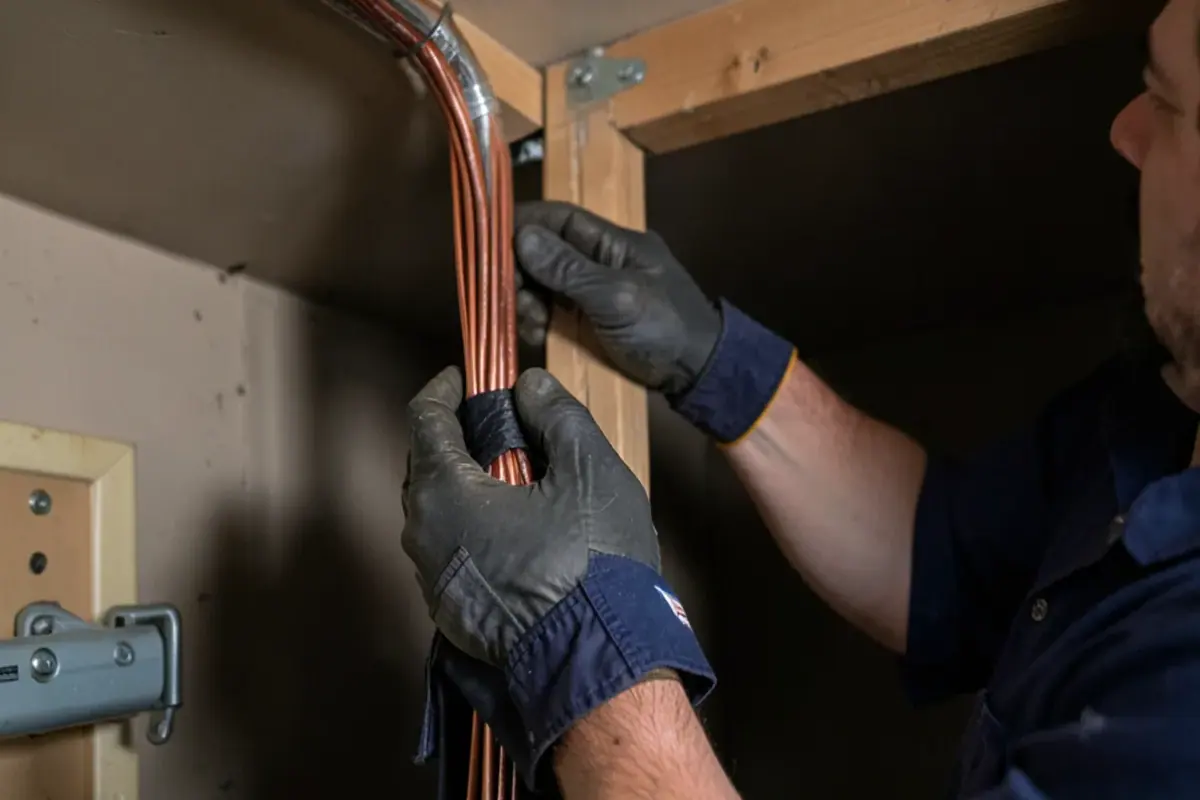
No review we can quote describes a mini split job, so this is general trade knowledge. In a plaster-and-brick house, the hard part is not the equipment but the route. ENERGY STAR notes that installers can run wiring through closets, stairways or attics to limit wall and ceiling repairs, and that is how most older-home retrofits get done.
Our ductless mini split installation page explains the process. Homes around University City were often built with radiators and few ducts, and Ferguson has many north county bungalows with a bedroom or porch that central air never reached well. Walk each space with the contractor before you accept a head count.
How does maintenance compare?
Mini splits ask more of the owner. ENERGY STAR says heat pump filters should be cleaned when they look dirty or when the filter light comes on, and each indoor head has its own filter, so a four-head house means four filters. Central air has one filter or two in one place. A technician should also clean the indoor coil and blower wheel, since they sit inside a wall-mounted cabinet where mold and dust can build, and check the condensate drain. Ask a contractor who does that work and how often.

What about rebates and cost?
Ameren Missouri's 2026 chart, valid January 1 to December 31, 2026, lists $500 per ton for mini splits at 19+ SEER2 under Pay As You Save, with the contractor submitting paperwork. We do not claim participation. Ameren's Find a Contractor tool lists participating contractors, and a 2027 chart may differ. Federal 25C no longer applies to property placed in service after December 31, 2025.
Costs vary with the number of heads, line-set length and wall type, so we leave out a figure. Our AC installation page lists what a quote should include.
One ton of capacity is 12,000 Btu/h, so a single qualifying 1-ton head maps to $500 on the chart. Multi-zone systems are less clear. Ask whether the 19+ SEER2 rating applies to the exact combination of outdoor unit and indoor heads you are quoted, and how Ameren counts the tons.
What should the two quotes line up on?
Ask each contractor for an itemized quote, and compare these lines side by side:
| Line item | Central air quote | Mini split quote |
|---|---|---|
| Equipment | Outdoor unit, indoor coil, blower | Outdoor unit and each named head |
| Duct work | Sealing, repairs, new runs | None, or the ducts you are keeping |
| Rooms served | Whole house | Each room, head by head |
| Refrigerant lines | Standard line set | Length, route and wall patching |
| Permit | Who pulls it | Who pulls it |
| Electrical | Breaker and disconnect | Breaker, disconnect and any circuit |
A quote that cannot be laid out this way is hard to compare. If the totals are far apart, check which rooms each one covers before you decide which is cheaper.
How to start the conversation with a contractor
Sketch the rooms that are hard to cool, note whether you have ducts and their condition, and call. We run a load calculation before sizing and give you a clear, upfront quote. The phone line is open 24 hours. When the schedule allows, same-day service is possible.
About the author
Kenan Perkins
Owner of Kenan Corporation. Studied at Ranken Technical College. The company, founded in 2010, is built on repairing systems honestly rather than pressuring people into new ones. More about us.
Sources
Ductless Mini Split vs Central Air: common questions
Is a mini split cheaper than central air?
Not automatically. For a house with good ducts, central air is usually the lower-cost replacement. A mini split can cost less where ducts would have to be built from scratch, but each added indoor head adds cost. Compare itemized written quotes for the same rooms.
Do mini splits heat well in a St. Louis winter?
ENERGY STAR cold climate models are tested down to 5°F and keep running below it. ENERGY STAR notes that a backup heat source improves efficiency at very low temperatures. Ask for the model's rated capacity at 5°F before you rely on one as your only heat.
Can a mini split replace central air in a whole house?
It can with a multi-zone setup, but it is a different design, not a swap. Closed doors block airflow, so each bedroom may need its own head. A load calculation by room decides the count. If your ducts are sound, whole-house ductless often costs more than central air.
Does Ameren have a rebate for mini splits in 2026?
Ameren's 2026 chart lists $500 per ton for mini splits at 19+ SEER2, valid January 1 to December 31, 2026. The work goes through a participating contractor who submits the paperwork. We do not claim to be one, and a 2027 chart may differ, so confirm in writing.
Talk to an HVAC specialist
Tell us what your system is doing and where you are. Open 24 hours.
Kenan Corporation, 927 Broadhead Lane, St. Louis, MO 63138. Open 24 hours.
- 4.6★ on Google29 reviews
- A+ BBB ratingNot BBB accredited
- Founded in 2010Repair-first advice
- Open 24 hoursCall any time
Services for this problem
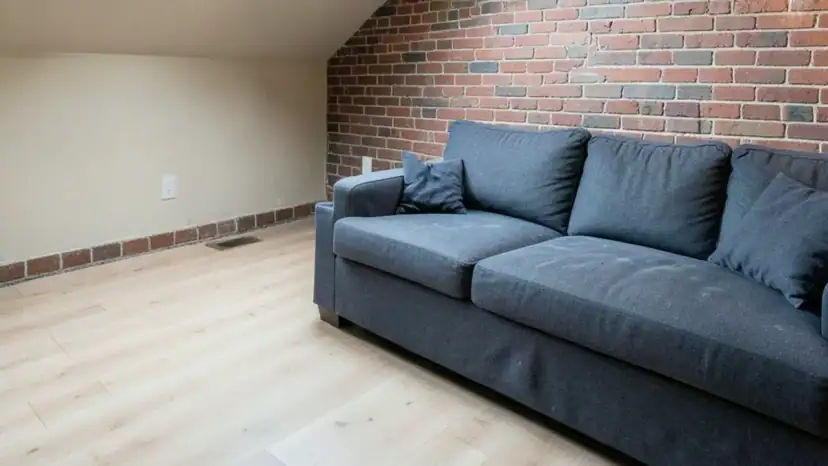
Ductless Mini Split Installation
Zoned cooling and heat for additions, garages and duct-free homes.
Learn more →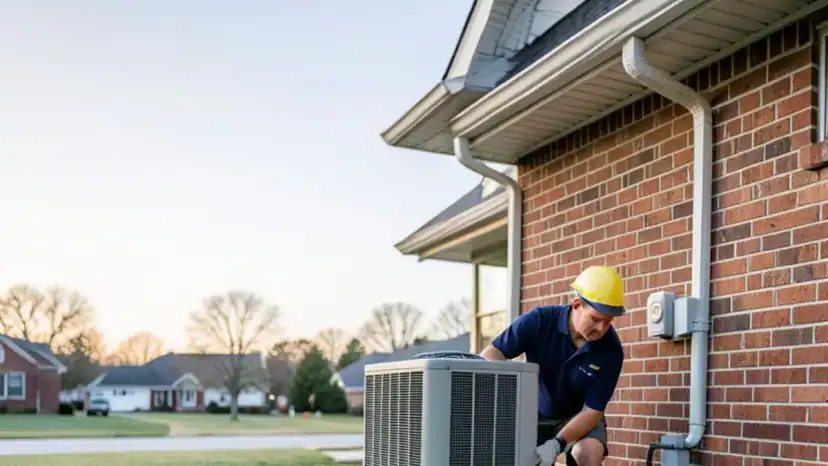
AC Installation
Load-calculated sizing and a written scope before work starts.
Learn more →
Heat Pump Installation
Sized from a load calculation, with Ameren and permit facts spelled out.
Learn more →