Problem solving
Signs Your Ductwork Is Leaking Conditioned Air
The signs of leaky ducts are rooms that never match the thermostat, bills that climb while the system runs longer, dust near registers and whistling at seams. ENERGY STAR says about 20-30% of the air in a typical forced-air system leaks out, so the fix is worth finding.
Published October 30, 2026 · Updated October 30, 2026 · By Kenan Perkins, Owner
- 4.6★ on Google29 reviews
- A+ BBB ratingNot BBB accredited
- Founded in 2010Repair-first advice
- Open 24 hoursCall any time
The signs of leaky ducts show up in comfort first: back bedrooms stay warm in July, the living room feels drafty in January, and the system runs longer to reach the setpoint. ENERGY STAR puts typical loss at about 20-30% of the air moving through a forced-air system.
What are the most common signs of leaky ducts?
Look for a pattern, not a single symptom. Any one sign has other explanations, but three or four together point to the duct system.
- Rooms that are hard to heat or cool, even with the system running for hours
- Utility bills that are high compared with similar months
- Stuffy rooms where the air never seems fresh
- Dust that returns quickly after cleaning, especially near registers
- Whistling, rattling or hissing at seams and boots
- Ducts running through an attic, crawl space or garage
- Flexible duct that is kinked, sagging or crushed
Want a technician to take a look?
Call and tell us what the system is doing. You will get a clear, upfront quote before work starts.
- 4.6★ on Google29 reviews
- A+ BBB ratingNot BBB accredited
- Founded in 2010Repair-first advice
- Open 24 hoursCall any time
Where do ducts leak, and what does each leak do?
The location of the leak decides the symptom. A supply leak wastes conditioned air before it reaches the room. A return leak pulls unconditioned air in from wherever the duct runs.
| Leak location | What you notice |
|---|---|
| Supply trunk in an attic or crawl space | Far rooms stay hot or cold; high bills |
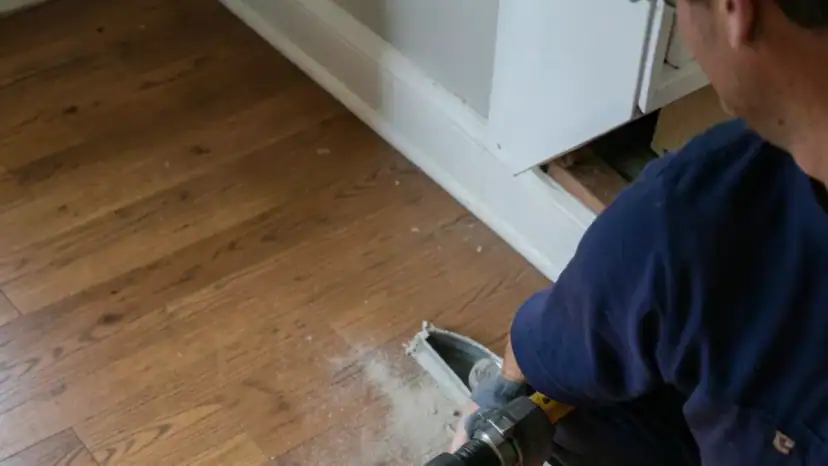
| Boot at a register | Whistling, weak flow, air spilling under the floor |
| Plenum at the furnace or air handler | Dust, uneven pressure, noisy startup |
| Return path through a joist cavity | Musty or dusty air, humid summer rooms |
| Flexible duct with a kink or tear | One room starved of air |
A return leak near a gas appliance deserves a closer look. It can disturb how the furnace or water heater vents, and a carbon monoxide alarm on each level is the right backstop either way.
How do you check ducts yourself?
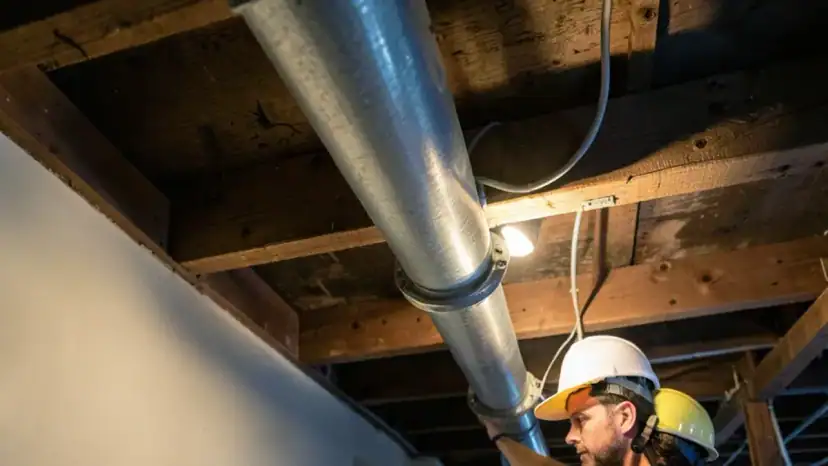
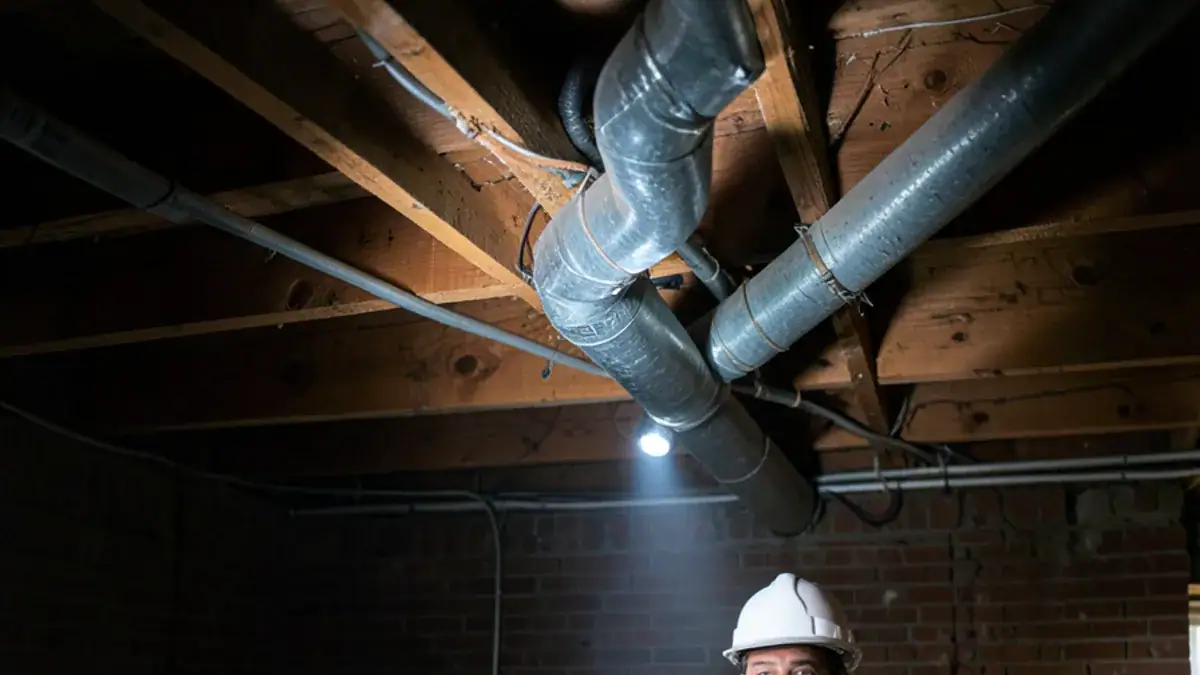
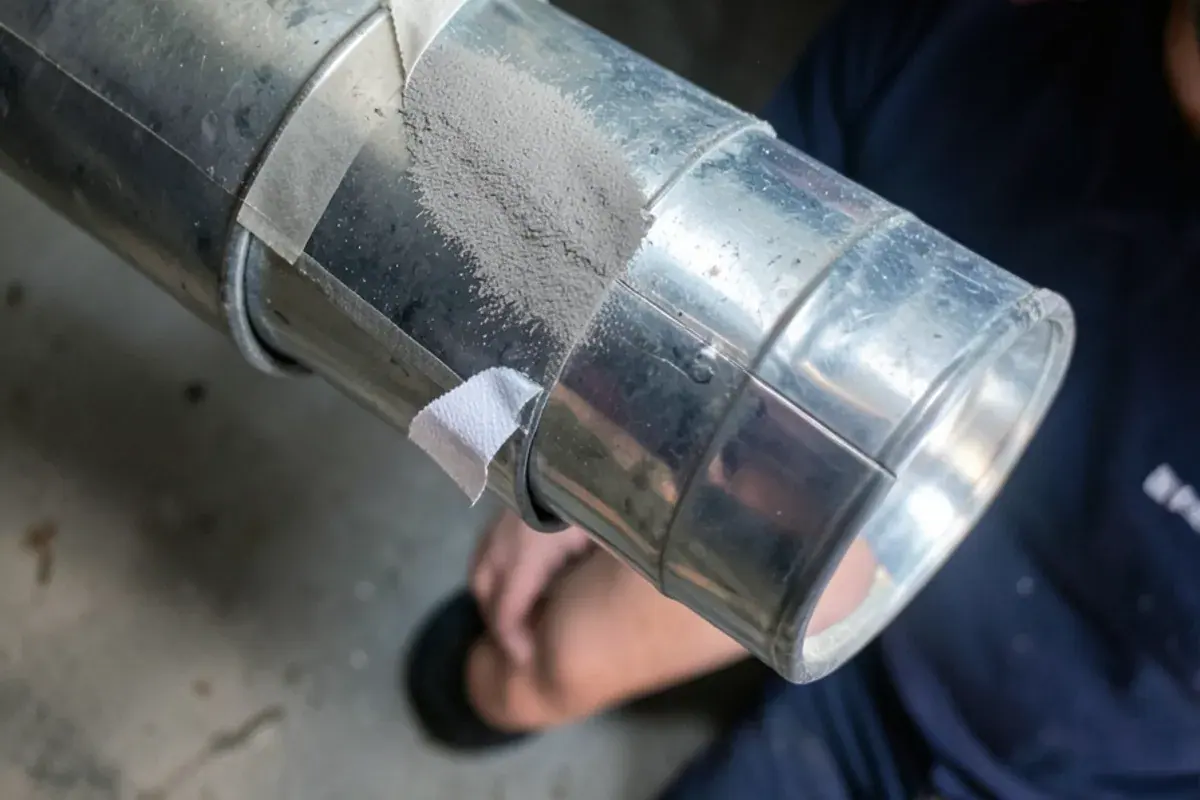
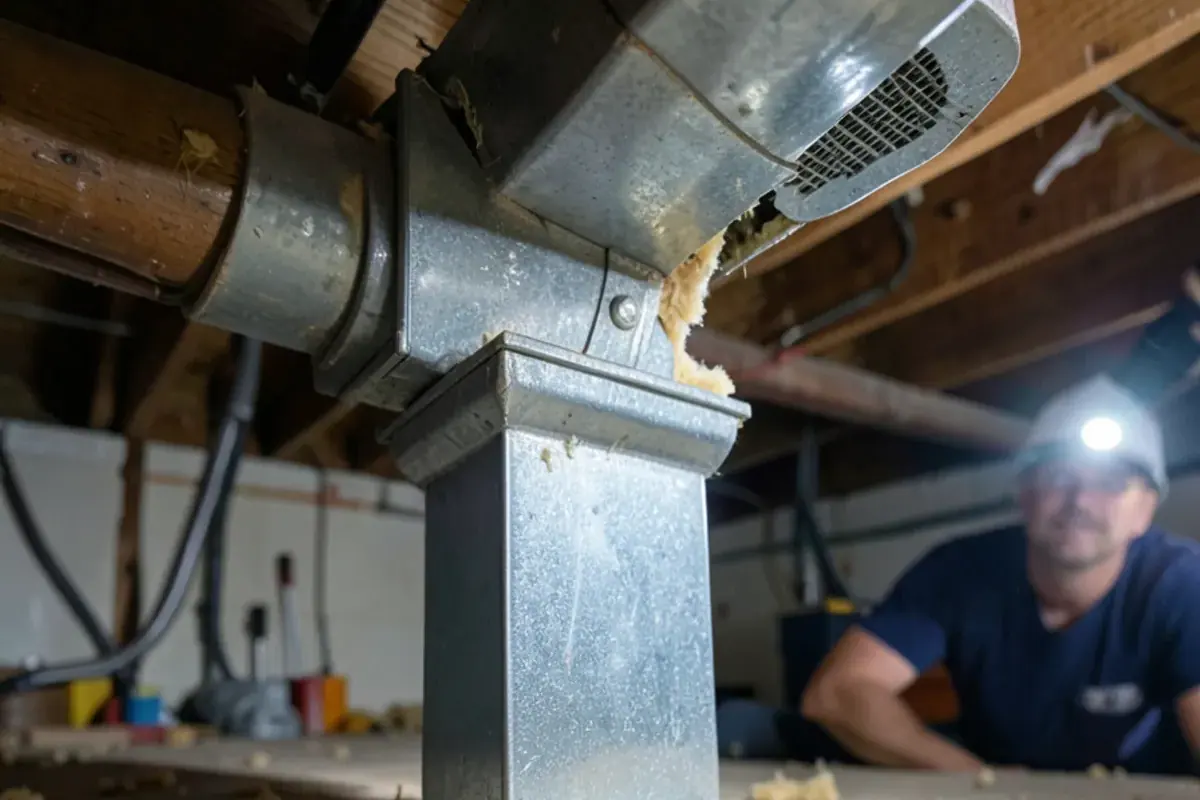
Run the system and look where you can reach. Check exposed trunk lines in a basement, attic or crawl space for open seams, loose joints and disconnected branches. Feel along joints for moving air. Dust-streaked seams are a giveaway, and so is insulation that has been blown out of place near a duct.
Check the farthest register from the equipment. Weak flow there is one of the first signs of loss upstream. Then compare it with the strongest register nearby.
A simple room-by-room comparison
Give every room the same test on one afternoon, with the system running and the doors open:
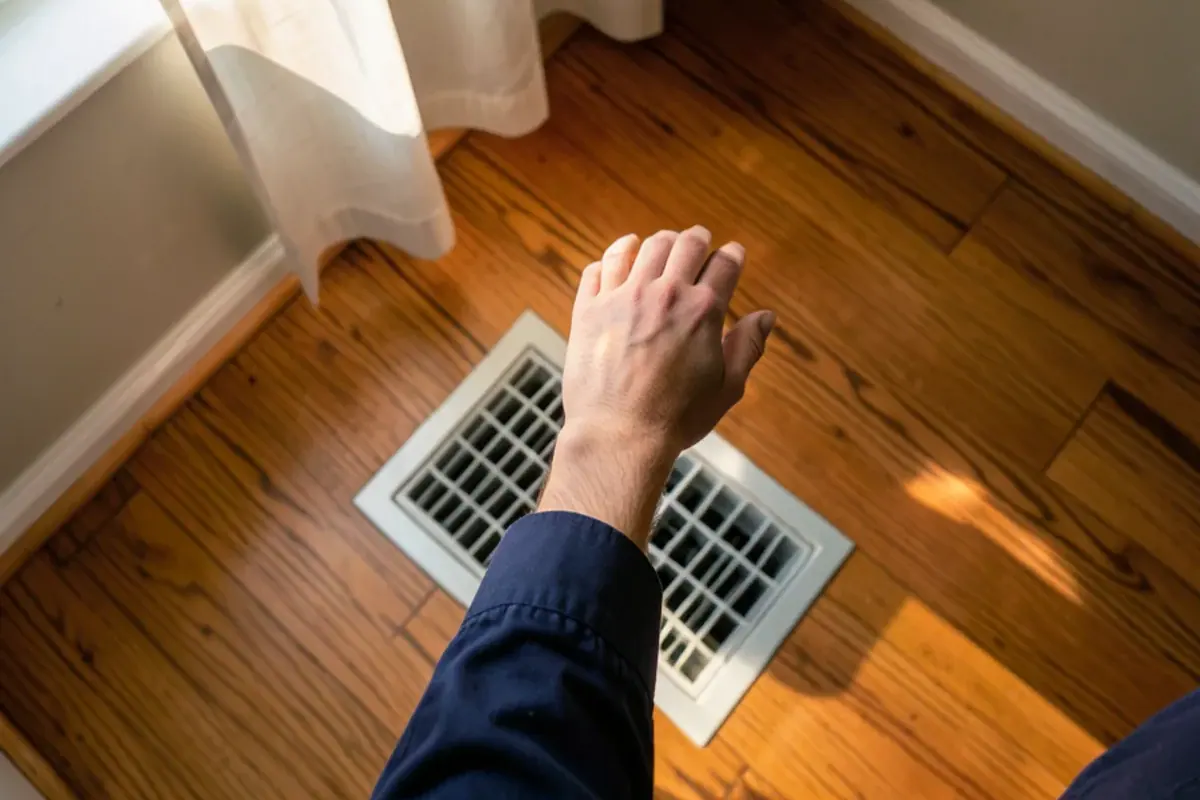
- Hold a hand or a strip of tissue over each supply register and rank the airflow from strongest to weakest.
- Put a thermometer in the airstream at the nearest and the farthest register. A wide gap in supply temperature is a lead for a leaking or uninsulated run, not a verdict.
- Look above the room for a duct in an attic, crawl space or garage wall.
- Note the rooms that rank weakest. If they share one trunk, the fault is probably on that trunk.
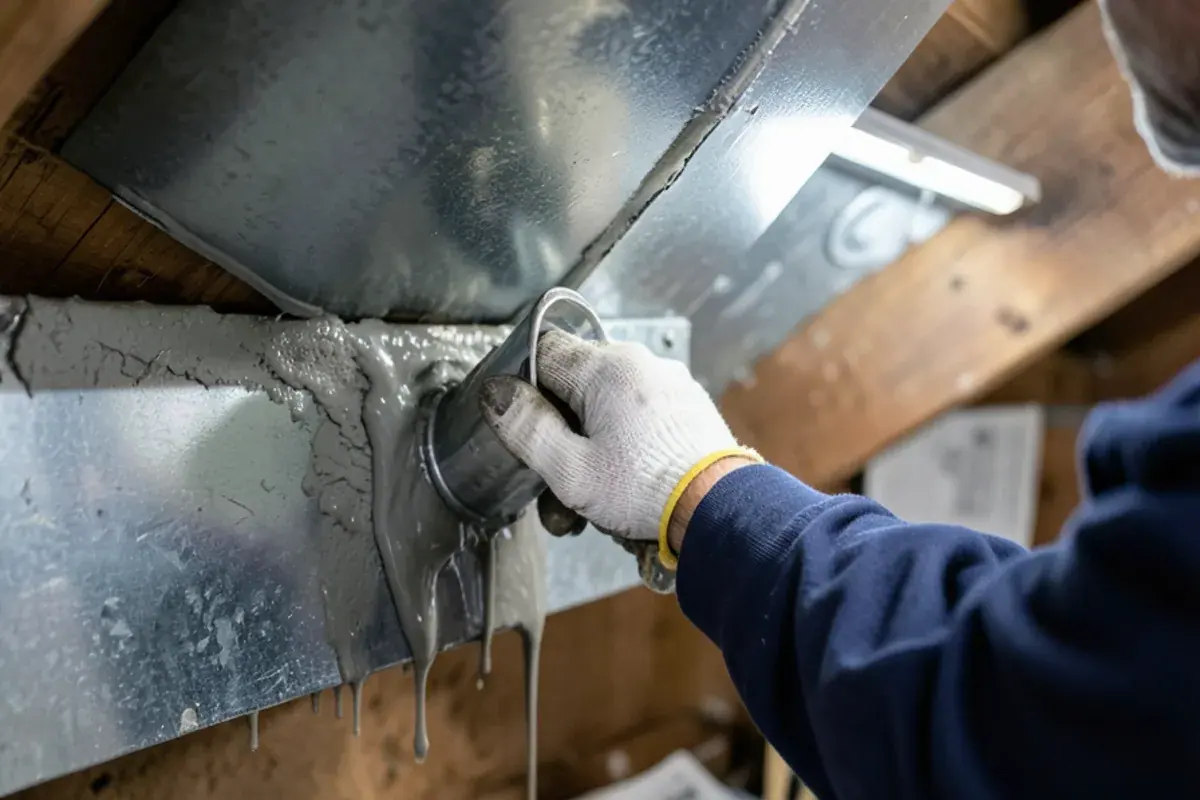
Seal what you can reach with mastic or metal tape. ENERGY STAR says never to use duct tape, because it does not hold. Also seal the connections where vents and registers meet floors, walls and ceilings, which ENERGY STAR calls common leak points.
ENERGY STAR also suggests insulating accessible ducts in attics, crawl spaces, unfinished basements and garages, where a cold duct in summer will sweat and a cold duct in winter steals heat. Anything inside a wall, floor or ceiling cavity is a job for someone with the tools to find it, and that is where a pressure test earns its cost.
From the field: where leaks hide in older homes
None of the Google reviews we can quote mention ducts, so this section rests on general trade knowledge and housing data. Point2Homes reports that 58.4% of City of St. Louis homes were built in 1939 or earlier. In houses that old, forced-air ducts were usually added after the fact. That often means panned joist cavities used as returns, thin sheet metal, and long runs squeezed through tight chases.
South county neighborhoods such as Lemay and Affton add another layer. Postwar homes often have trunk lines in a basement ceiling or a crawl space, and many have had an AC or furnace swapped without anyone looking at the ducts. A new unit connected to leaky ducts still delivers less than its rating.
Is a duct pressure test worth paying for?
Sometimes. A duct blower measures leakage by sealing the registers and pressurizing the system, and the U.S. Department of Energy's home energy assessment guidance says a duct blower is how leakage inside ductwork is measured. A smoke pen or soapy water can help locate leaks, but neither gives a number.
| Your situation | Test? |
|---|---|
| All trunks and boots are visible and reachable | Usually no; seal and recheck airflow |
| Ducts run inside walls, floors or ceilings | Yes; hidden leaks cannot be found by eye |
| A new furnace or AC still leaves rooms uneven | Yes; the equipment may not be the problem |
| Rooms are weak but no leak can be found | Ask for airflow measurements, since the cause may be design |
The trade-off is cost against certainty. A test adds a line to the quote, but it keeps you from sealing the wrong joints or replacing ducts that only needed mastic.
What sealing will not fix
Sealing cannot add a return path that was never built, and it cannot enlarge a duct that is too small. If a bedroom is stuffy with the door closed, the cause may be missing return air, and the answer is a transfer grille or a return duct. A technician should say which problem you have before you pay for the wrong repair.
Does duct work need a permit?
In St. Louis County, a permit is required to install, alter, repair or replace heating, air-conditioning or duct systems, according to the county's permit rules. Sealing a visible seam with mastic is homeowner maintenance, but cutting in new trunk or replacing runs is permit work. Put the permit in the written quote and ask who pulls it. Other municipalities vary, so check with the local building office.
What should a duct quote spell out?
Ask for the work in writing, run by run: which joints and boots get sealed, with mastic or metal tape, which sections are replaced and why, and what insulation goes back over them. If a pressure test is included, ask for the leakage reading before and after. A quote that only says "duct repair" gives you nothing to compare against a second one.
Should you seal, repair or replace the ducts?
Seal first. Most leaks sit at joints, boots and plenum connections, and sealing them costs far less than new ductwork. Replace sections that are crushed, disconnected beyond repair, wet, or undersized for the system. ENERGY STAR also notes that noise at the registers can point to an undersized duct system, which sealing will not cure.
Our duct repair and replacement page covers the options. If you are weighing dust as a reason, read our duct cleaning guide first, because cleaning does not stop a leak. EPA's homeowner guidance says sealing major air leaks and addressing the duct system should come before buying new equipment.
Next step: a duct assessment
Write down which rooms are off, check the visible ducts, and call for a duct assessment if the pattern holds. We explain the problem in plain language, give you options, and quote before work starts. We are open 24 hours. If the schedule allows, same-day service is possible.
About the author
Kenan Perkins
Owner of Kenan Corporation. Studied at Ranken Technical College. The company, founded in 2010, is built on repairing systems honestly rather than pressuring people into new ones. More about us.
Sources
- ENERGY STAR, Duct Sealing
- ENERGY STAR, When Is It Time to Replace?
- U.S. EPA, homeowners and consumers FAQ on refrigerants
- U.S. Department of Energy, home energy assessments (duct blower testing)
- St. Louis County Department of Transportation and Public Works, mechanical permits
- Point2Homes, St. Louis housing age data
Signs Your Ductwork Is Leaking Air: common questions
How much air can leaky ducts lose?
ENERGY STAR says about 20-30% of the air moving through a typical forced-air duct system is lost to leaks, holes and poorly connected ducts. A leaky system can run for hours and still leave back rooms short of air. Duct condition varies by home, so testing gives a real number.
Can I seal ducts with duct tape?
Not with cloth duct tape. ENERGY STAR says to use mastic sealant or metal tape and warns against using duct tape because it does not last. Seal the joints you can reach, then ask a technician about runs behind walls, floors and ceilings where access is the problem.
Do leaky ducts make a house dusty?
They can. Leaks on the return side draw in air from attics, crawl spaces and basements, along with the dust and debris sitting there. ENERGY STAR lists this as one reason to look at the ducts. Sealing the leak is usually more effective than cleaning the ducts.
How do I know which room has the leak?
You often cannot tell by feel alone. A weak register is a clue, because the leak is usually upstream of it. A technician can measure total leakage with a pressure test, then trace it to a boot, a plenum seam or an unsealed return cavity.
Should ducts in the attic or crawl space be insulated?
Yes, where you can reach them. ENERGY STAR recommends insulating accessible ducts in attics, crawl spaces, unfinished basements and garages. Seal the leaks first, because insulation over a leaking joint hides the problem. Insulating ducts also reduces sweating on cold supply runs in humid summers.
Talk to an HVAC specialist
Tell us what your system is doing and where you are. Open 24 hours.
Kenan Corporation, 927 Broadhead Lane, St. Louis, MO 63138. Open 24 hours.
- 4.6★ on Google29 reviews
- A+ BBB ratingNot BBB accredited
- Founded in 2010Repair-first advice
- Open 24 hoursCall any time