Problem solving
Why Your Heat Pump Is Freezing Up
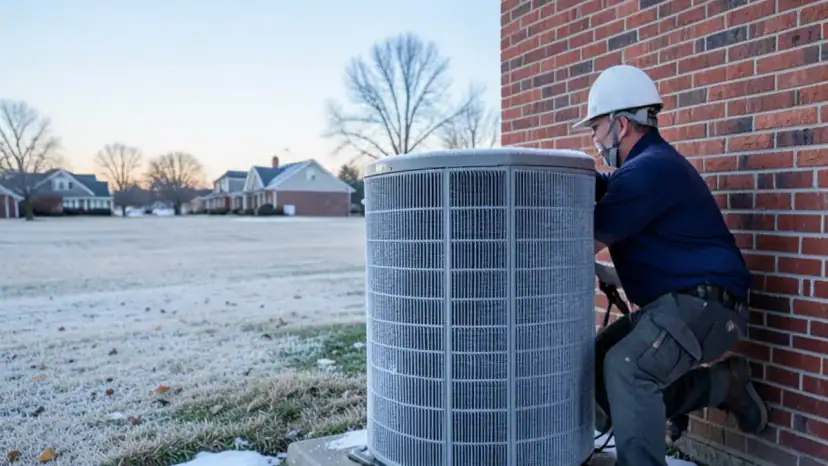
A heat pump freezing up is normal when you see a thin layer of frost that clears on its own. Thick ice that stays for hours means a defrost fault, low refrigerant, blocked airflow or poor drainage. Shut the system off and call before the coil is damaged.
Published October 30, 2026 · Updated October 30, 2026 · By Kenan Perkins, Owner
- 4.6★ on Google29 reviews
- A+ BBB ratingNot BBB accredited
- Founded in 2010Repair-first advice
- Open 24 hoursCall any time
A heat pump freezing up is only a problem when the ice does not go away. Frost on the outdoor coil is part of winter operation, and every air-source unit has a defrost cycle to deal with it. When that cycle fails or the coil cannot breathe, the frost becomes a solid block and heating stops.
Is frost on a heat pump normal?
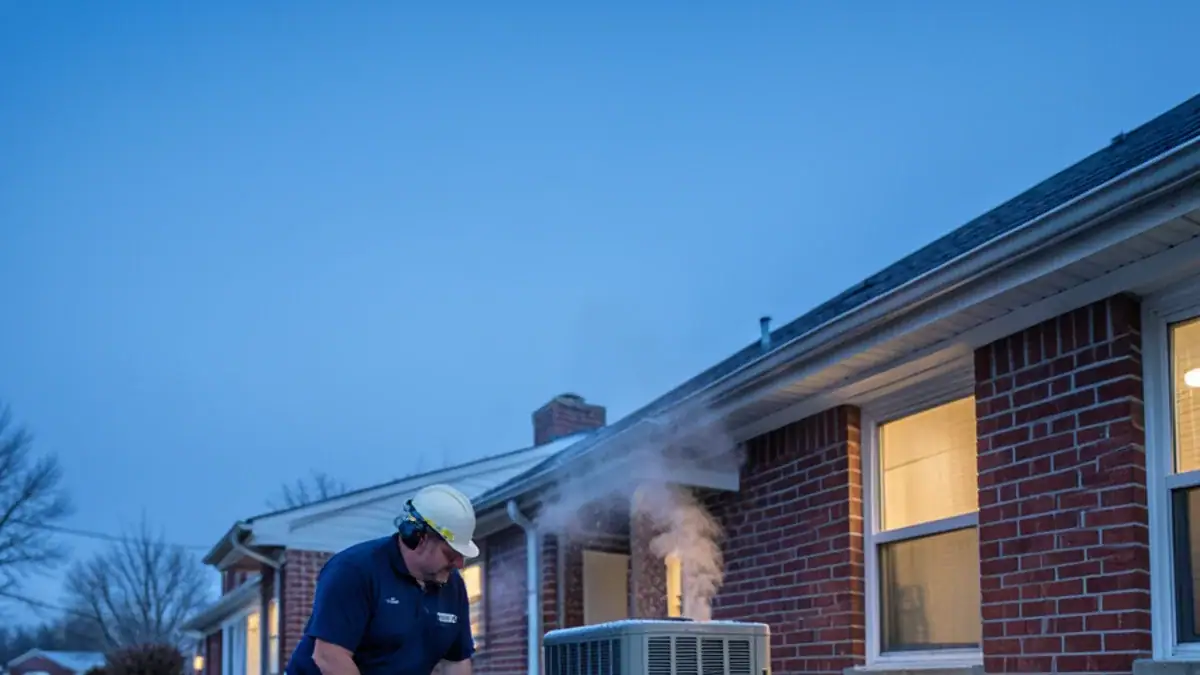
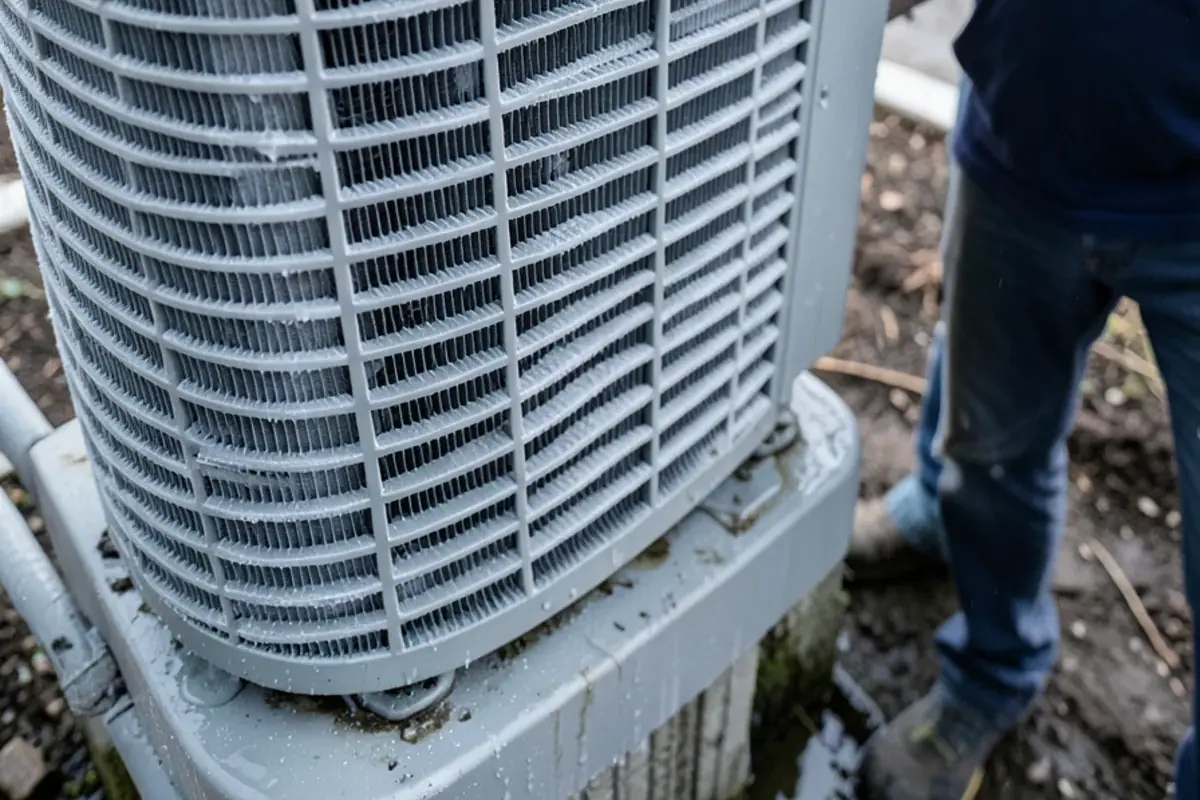
Yes, within limits. In heating mode the outdoor coil runs colder than the outside air, so moisture freezes on it. The unit then reverses into cooling mode for a short time to push heat to the coil, and the frost melts. Energy Vanguard notes that the outdoor fan switches off during defrost so the heat goes into the ice, not the yard.
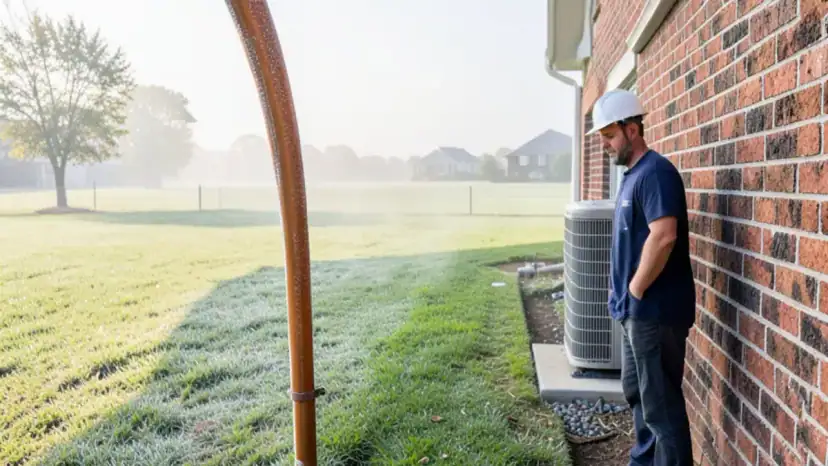
That means a little steam and a brief pause in heating are ordinary. Damp mornings in the 30s make frost more likely than very cold, dry air, because dry air carries less moisture.
| What you see | Likely meaning |
|---|---|
| Thin, even frost that clears within a cycle | Normal operation |
| Steam rising during a defrost | Normal operation |
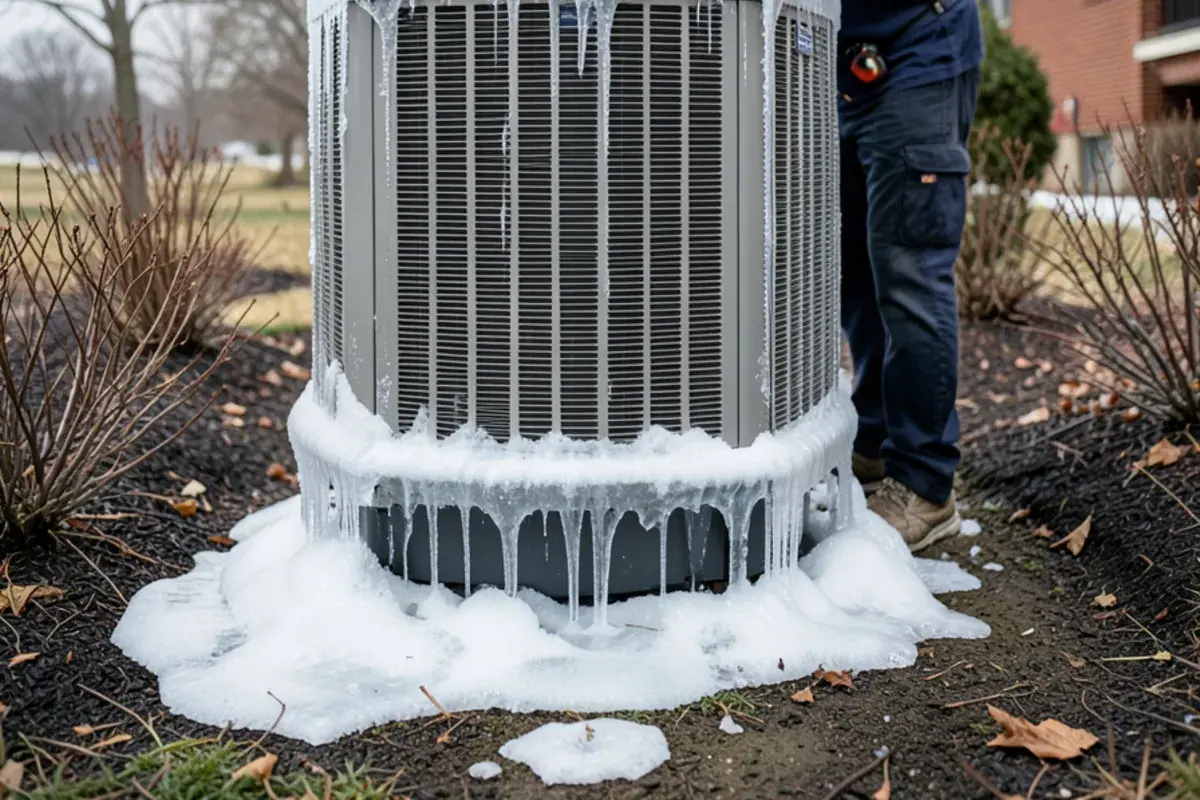
| Ice over the whole cabinet or fan guard | Defrost fault or blocked airflow |
| Ice growing from the base up | Meltwater refreezing; drainage problem |
| Ice on the refrigerant lines | Low refrigerant or airflow fault |
| Frost that never defrosts after hours of running | Failed control board, sensor or reversing valve |
Want a technician to take a look?
Call and tell us what the system is doing. You will get a clear, upfront quote before work starts.
- 4.6★ on Google29 reviews
- A+ BBB ratingNot BBB accredited
- Founded in 2010Repair-first advice
- Open 24 hoursCall any time
What makes a heat pump freeze up?
Lennox lists a handful of common causes, and they match what technicians see.
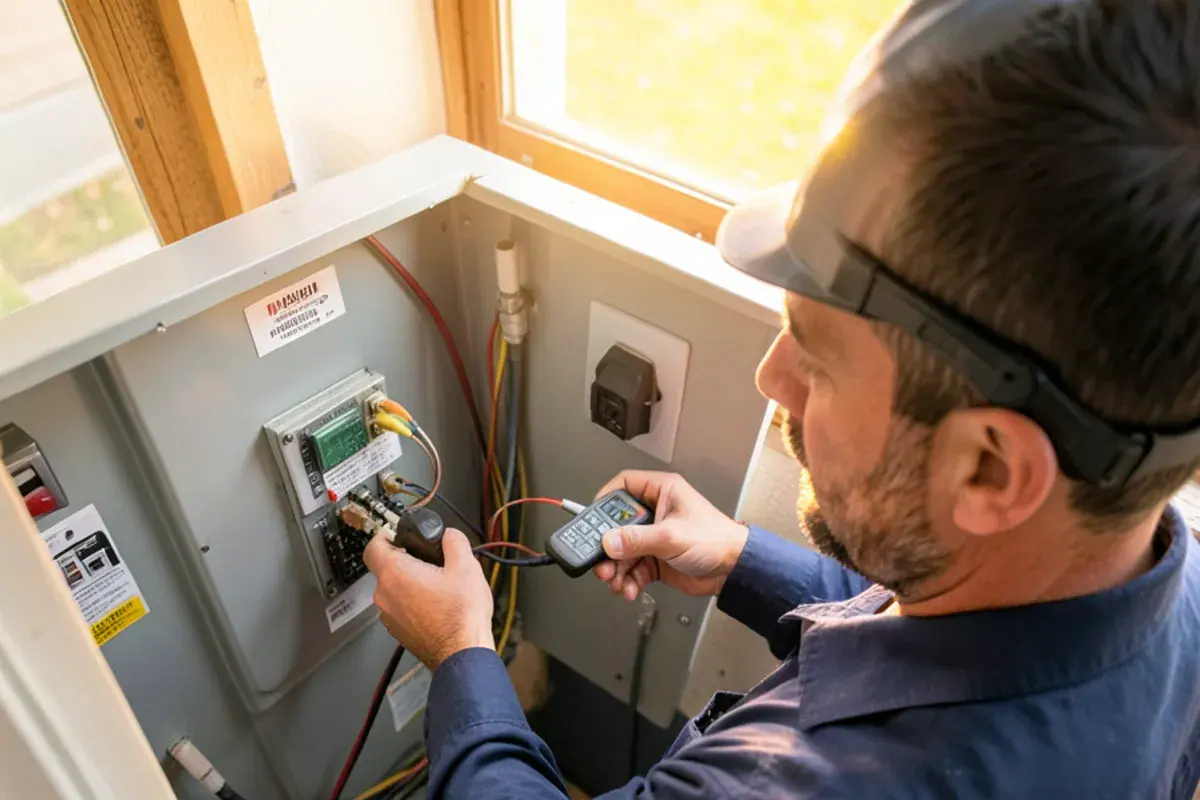
- A defrost control board, timer or sensor that no longer starts the cycle
- Low refrigerant from a leak, which makes the coil run colder than designed
- Restricted airflow from a dirty filter, debris, a collapsed duct or blocked vents
- Poor drainage, so meltwater pools and refreezes under the unit
- Freezing rain, sleet or wet snow that overwhelms the defrost system
- A failing reversing valve or outdoor fan motor
A dirty filter looks too small to matter, but it is on the list for a reason. Less warm air crossing the indoor coil means less heat for the system to move. If you need a refresher on filters, read our filter guide.
How does the defrost cycle decide when to run?
Lennox says defrost cycles should run about every 30 to 90 minutes while the unit is heating in frost-prone weather. The control board decides, using a timer, a coil sensor or both. If the sensor reads the coil as warm when it is actually iced over, the board never calls for defrost, and the frost keeps stacking up between cycles.
Two details help you judge what you are seeing:
- The outdoor fan stops during defrost, so the heat goes into the ice, according to Energy Vanguard.
- Indoor air can feel cooler for a few minutes, because the system briefly runs in cooling mode. Backup heat strips may switch on to soften that, according to the same source.
Cool air for a few minutes every hour or so is the design. Cool air that lasts, with ice that never clears, is the fault.
Outdoor coil or indoor coil: which one froze?
Everything above is about the outdoor coil in winter. A heat pump also cools in summer, and in that mode the indoor coil is the cold one. Ice on the refrigerant line at the air handler, water around it, or weak airflow from the vents in July points indoors. The usual culprits are a dirty filter, a blocked return or low refrigerant. The safe first step is the same: set the thermostat to Off, then run the fan alone so the coil thaws.
What can you safely do while it is iced over?
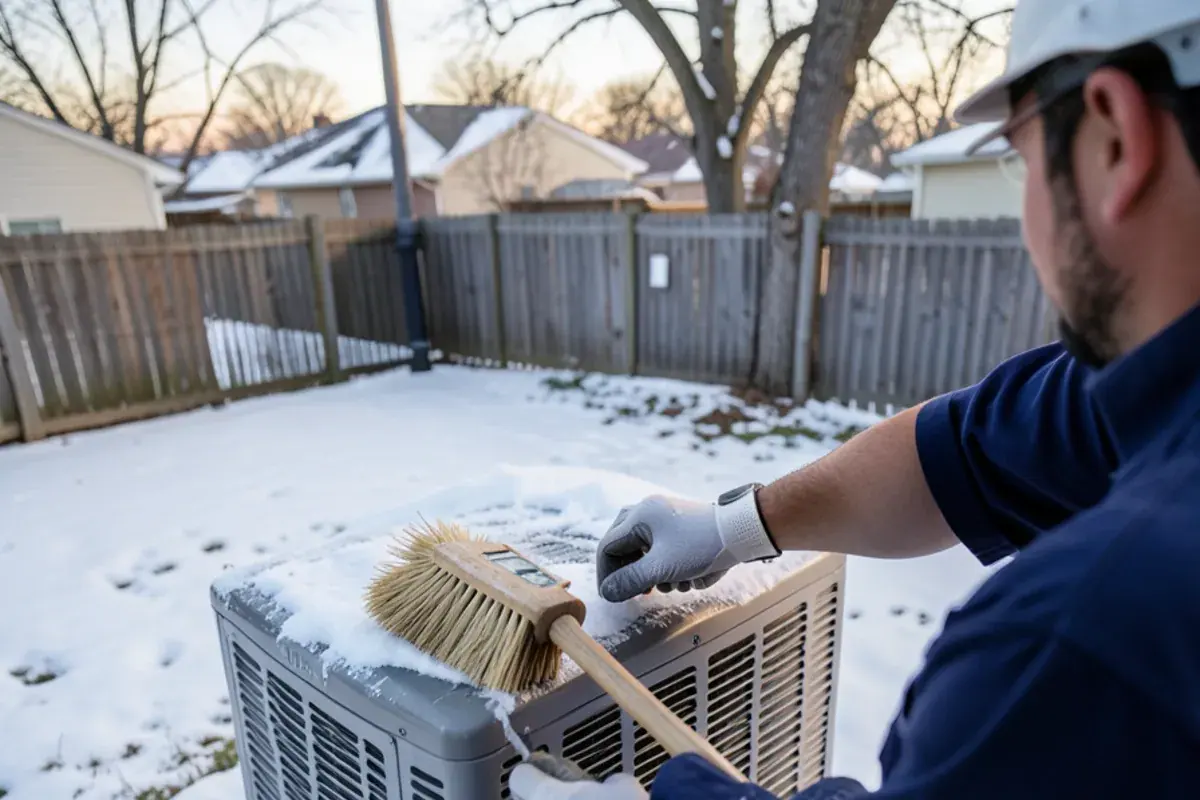
Switch the thermostat to Off so the compressor stops working against the ice. Then do the following.
- Clear snow, leaves and debris, and keep about two feet of open space around the unit.
- Check the indoor filter and replace it if it is dirty.
- Do not chip the ice or use hot water. Tools damage fins, and hot water can crack parts.
- Switch to emergency heat if the house is getting cold. It uses the backup heat, not the outdoor unit.
What should you write down before you call?
A technician can narrow the fault faster when you hand over specifics. Jot these down while the unit is still iced:
- Where the ice sits: all over, only at the base, on one side, or on the lines.
- What the fan is doing now, and whether it spins after the ice melts.
- The weather for the last day: damp and in the 30s, freezing rain, or dry and cold.
- How long it has been iced, and whether it thawed and came back.
- Any noise: grinding, squealing or banging.
Lennox lists ice on only one side of the unit and an outdoor fan that will not spin after the thaw as reasons to call.
If the unit is clear and still freezes again soon after thawing, that is a repair call. Our heat pump repair page covers how a frozen coil, a weak defrost cycle and a low charge are told apart.
From the field: what cold-night calls teach
Cold-weather failures are the ones people remember. One Google reviewer, Gaquan C., wrote that Kenan Corporation came out in 10-degree weather and the family had heat again after a furnace call. Calls like that are why a heat pump with a frozen coil should be treated as a heating emergency once the house starts to cool.
General trade knowledge adds one more point. The frost is usually the symptom, not the fault. A technician who only chips ice off has not fixed a bad sensor or a slow leak, and the unit will be back to ice by the next damp morning.
Can the way the unit is installed make it freeze?
Yes, in two ways, and both are fixable. Meltwater has to leave the base of the cabinet, so a unit sitting in a low spot, on a settled pad or under a roof edge or downspout will pool and refreeze overnight. Energy Vanguard shows how enough ice at the base can block drainage altogether.
| Fix | What it helps | Trade-off |
|---|---|---|
| Redirect the downspout or gutter drip | Stops extra water landing on the cabinet | Cheap, but check where the water goes next |
| Re-level or raise the pad or a wall bracket | Lets meltwater drain away from the base | Refrigerant lines may need work, so this is a technician job |
| Move plants, fences and storage back | Keeps the two feet of clearance Lennox recommends | Costs nothing, but it has to be maintained |
Raising a unit is rarely worth the cost if the freeze-ups come from a failed sensor instead of drainage.
Worked example: a damp 34-degree morning
Say you find a heat pump iced over at 7 am, with the house a few degrees below the thermostat setting.
- Turn the thermostat to Off, then to emergency heat if the house is cooling. Backup heat uses more electricity than the heat pump, so treat it as a short-term fix.
- Clear debris and check the filter. Lennox says an above-freezing thaw takes about two to four hours.
- If ice remains at six to eight hours, or comes back quickly, stop waiting and book the repair.
The trade-off is cost against risk. A day on emergency heat adds to the bill, while a compressor running into a blocked coil can cost far more.
When is a frozen heat pump a repair, and when is it a replacement?
Repair first, almost every time. A defrost board, a sensor or a fan motor are common, bounded repairs. A leak is different, because a coil leak on a unit near the end of its range changes the math. ENERGY STAR suggests having a professional evaluate a heat pump that is more than 10 years old, and contractor sources commonly put the working life of these systems at 15 to 20 years with routine maintenance.
If you are weighing it, our heat pump installation page explains how a new unit is sized, and ENERGY STAR cold climate models are tested down to 5°F. Keep in mind that St. Louis logged 4,100 heating degree days in 2025 against a normal of 4,433, according to the National Weather Service. A mild winter does not make a faulty defrost cycle safe.
Shrewsbury and Webster Groves: the next step
For homes around Shrewsbury and Webster Groves, the pattern is familiar: mid-century houses, aging equipment and a first hard freeze that exposes the weak part. Turn the system off, clear the unit, and call.
We are open 24 hours. Same-day service depends on the schedule, not a promise. You get a clear, upfront quote before work starts, and we check what else is working after the repair.
About the author
Kenan Perkins
Owner of Kenan Corporation. Studied at Ranken Technical College. The company, founded in 2010, is built on repairing systems honestly rather than pressuring people into new ones. More about us.
Sources
Why Your Heat Pump Is Freezing Up: common questions
Is it normal for a heat pump to have ice on it in winter?
A thin layer of frost is normal because the outdoor coil runs colder than the air. The unit reverses briefly, melts it and resumes heating. Steam during that cycle is normal too. Ice that covers the whole cabinet, or stays for hours, is not.
Should I pour hot water on my frozen heat pump?
No. Hot water can crack components and often refreezes within the hour. Turn the thermostat off, clear debris, and let the unit thaw. Manufacturer guidance says natural thawing takes a few hours above freezing, and not to chip at fins or coils with tools.
Can I use emergency heat if my heat pump is frozen?
Yes, as a stopgap. Emergency heat bypasses the outdoor unit and uses the backup strips or furnace. It costs more to run, but it keeps the house and pipes safe on a hard-freeze night while you schedule repair.
How long can a heat pump stay frozen before it is damaged?
Ice that persists past six to eight hours, or refreezes quickly, is the point where one manufacturer's guide says to call a technician. A compressor running against a blocked coil overheats. In a St. Louis cold snap, do not wait until morning.
Talk to an HVAC specialist
Tell us what your system is doing and where you are. Open 24 hours.
Kenan Corporation, 927 Broadhead Lane, St. Louis, MO 63138. Open 24 hours.
- 4.6★ on Google29 reviews
- A+ BBB ratingNot BBB accredited
- Founded in 2010Repair-first advice
- Open 24 hoursCall any time