Prevention checklists
How Often Should You Change Your HVAC Filter?
How often to change an HVAC filter depends on the type, the season and your household. ENERGY STAR says to inspect it monthly. Most 1-inch filters need replacing every one to three months, and thicker media filters last longer. Replace any filter you can no longer see light through.
Published October 30, 2026 · Updated October 30, 2026 · By Kenan Perkins, Owner

- 4.6★ on Google29 reviews
- A+ BBB ratingNot BBB accredited
- Founded in 2010Repair-first advice
- Open 24 hoursCall any time
Check your HVAC filter every month and replace it when it is visibly loaded, which for most 1-inch filters means every one to three months. ENERGY STAR gives the monthly inspection rule. The exact interval depends on the filter's thickness, your household and how hard the system works.
How often should you change each type of filter?
Use the filter maker's rating as the ceiling and your own inspection as the rule. The intervals below are common trade guidelines, so treat them as starting points.
| Filter type | Typical interval | Notes |
|---|---|---|
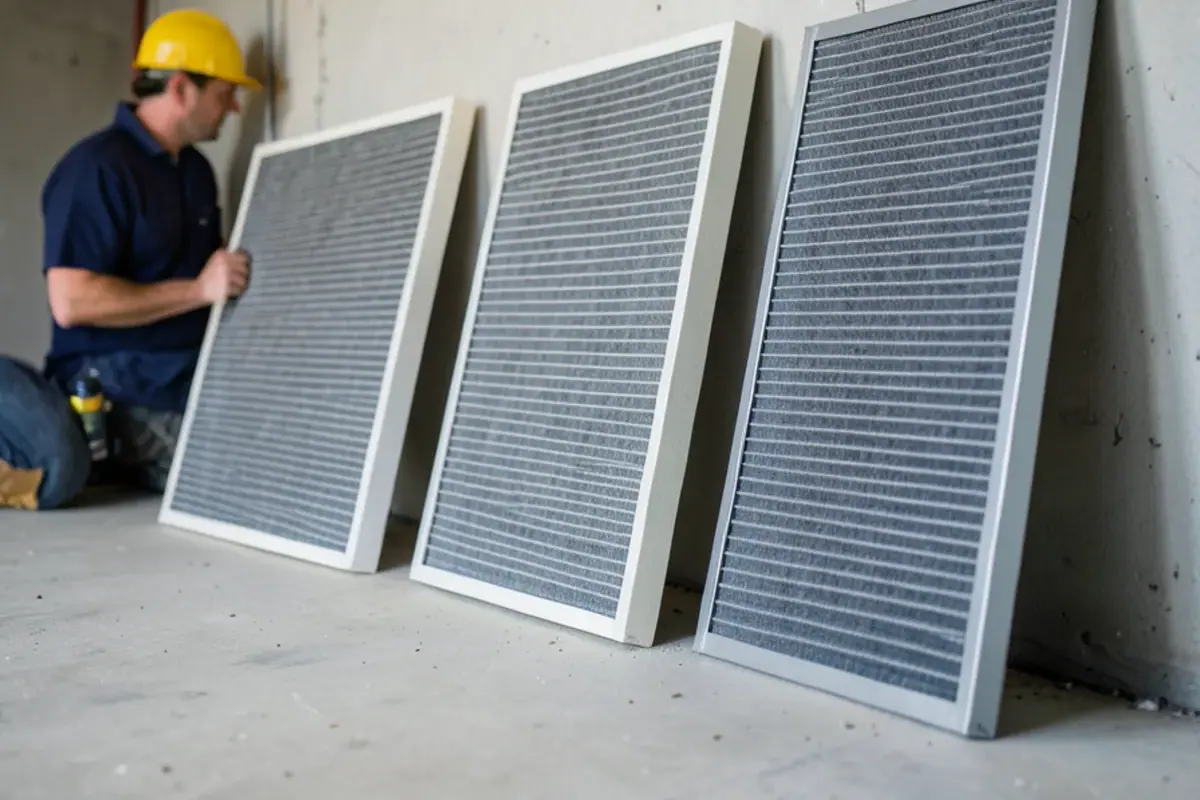
| 1-inch fiberglass (flat, blue or green) | About 30 days | Low filtration; protects the equipment only |
| 1-inch pleated | 1-3 months | The most common household filter |
| 4- or 5-inch media | 6-12 months | Needs a cabinet built for it |
| Washable | Wash monthly | Must be fully dry before reinstalling |
| Electronic or HEPA add-on | Per maker | Cells and prefilters need their own schedule |
Want a technician to take a look?
Call and tell us what the system is doing. You will get a clear, upfront quote before work starts.
- 4.6★ on Google29 reviews
- A+ BBB ratingNot BBB accredited
- Founded in 2010Repair-first advice
- Open 24 hoursCall any time
What shortens the interval?
Several things make a filter fill faster than the label suggests.
- Pets that shed, especially two or more
- Allergy or asthma concerns, where you want a fresh filter during pollen seasons
- Renovations, sanding or demolition, which can load a filter in days
- Smoke from a fireplace, a wildfire or indoor smoking
- A larger home with a system that runs most of the day
St. Louis adds its own load. In 2025 the National Weather Service recorded 49 days at or above 90°F, 1,904 cooling degree days against a normal of 1,713, and 4,100 heating degree days. A system that works hard in both seasons moves more air, and more air means more dust.
What does a dirty filter actually do?
It cuts airflow, and everything else follows. ENERGY STAR says a dirty filter can increase energy costs and damage equipment, leading to early failure. In summer, too little air across the indoor coil lets the coil freeze, and the AC blows warm air. In winter, the furnace overheats and its limit switch shuts the burners off while the blower keeps running.
Our guides on AC blowing warm air and furnace blowing cold air both start with the filter for this reason.

What MERV rating should you buy?
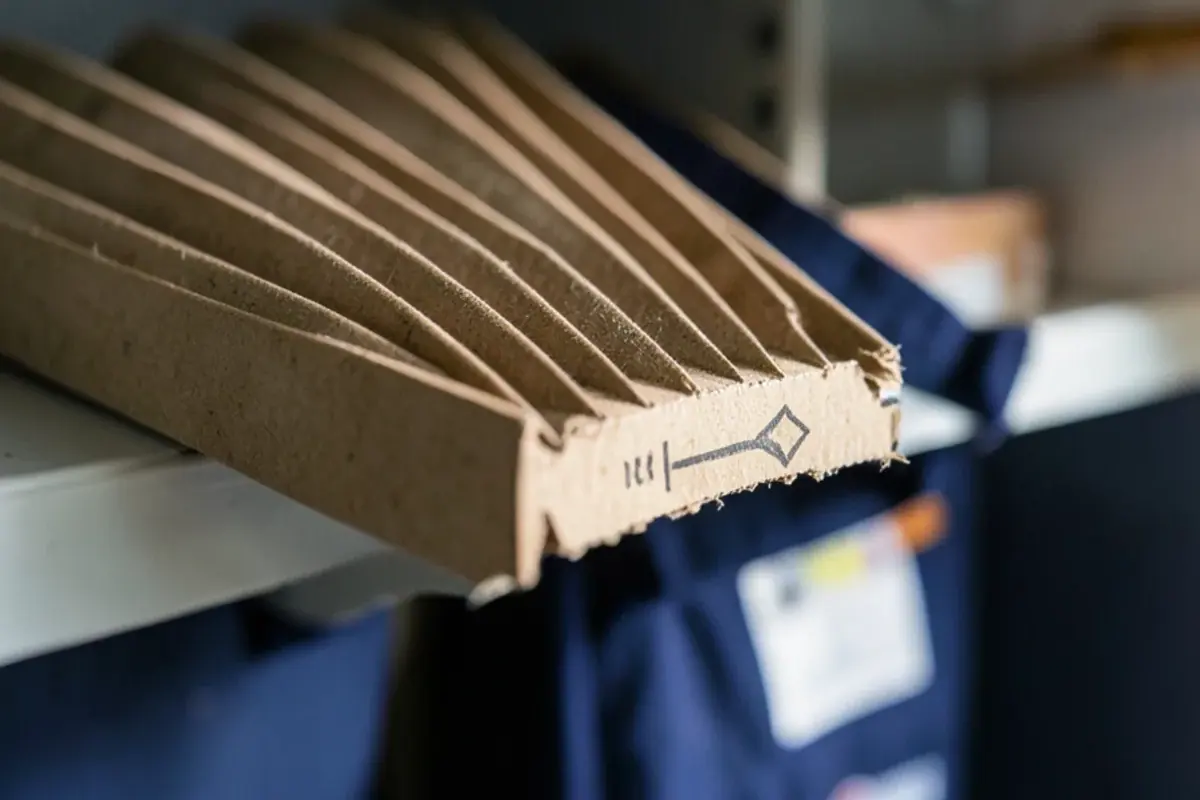
The EPA recommends MERV 13 or higher, or the highest rating your system's fan and filter slot can accommodate. The EPA scale shows that MERV 13 captures at least 50% of particles from 0.3 to 1.0 microns, while the lowest ratings capture less than 20% of larger particles. The EPA also says most furnaces and HVAC systems can use MERV 13 provided the filter is replaced frequently.
The catch is airflow. A denser filter puts more resistance in front of the blower. Because systems are rarely labeled with filter recommendations, the EPA advises consulting an HVAC technician. If your system struggles with a dense 1-inch filter, a deeper media filter and cabinet is the usual answer. Our air purifiers and filtration page covers those upgrades.
How do you know a denser filter is choking the system?
Look for symptoms within a week of a switch. Whistling at the return grille, weaker airflow at the farthest register, a blower that sounds strained and cooling or heating cycles that run longer than before all point to restriction. Ice on the refrigerant line in summer is the worst case, and the sign to stop and call.
A technician settles the question with a measurement. Static pressure across the filter and the blower is compared with the limit the equipment is built for. Ask for that reading at your next maintenance visit instead of guessing. If it comes back high, the options are a lower MERV rating, a deeper media cabinet or larger return ducting, in that order of cost.
Is a deep media filter cheaper than 1-inch filters?
Often, but not always, and the answer depends on your own prices. Count the filters you buy in a year, multiply by what you pay, and compare that with one media filter or two. Then add the one-time cost of a cabinet that holds it. A home that burns through a 1-inch pleated filter every 30 days in July will break even sooner than a home that stretches one across three months.
The trade-off is access. A media cabinet is fixed to the ductwork, so installing one is a job for a technician, and changing it takes a few minutes once or twice a year. Pair it with a reminder, because a 4-inch filter forgotten for two years is a very large dirty filter.
From the field: what the filter hides
This section rests on general trade knowledge, not reviews. Technicians see the same chain of events often: a loaded filter, a warm house, then a call that starts as a mystery and ends with a new filter. The dust that gets past a bad filter lands on the evaporator coil, where it holds moisture and cuts heat transfer.
Two details trip people up. A filter that is the wrong size lets air bypass around the edges, so the nominal size on the frame must match the slot. And the arrow on the frame points toward the blower, not away from it. Both are quick to check, and neither costs anything.

Does the size on the frame match the slot?
Buy by the nominal size printed on the frame, then confirm against the slot. A filter labeled 20x25x1 is actually about half an inch smaller in length and width and about a quarter inch thinner, so measuring the old filter with a tape gives numbers that do not match the label. Measure the opening, round up to the nominal size, and check the arrow. If a gap shows at the edge after installing, air is going around the filter, and it is the wrong size.
Where is the filter, and are there more than one?
Look in three places: a slot in the side of the furnace or air handler, a large return grille on a wall or ceiling, or a cabinet near the blower. Many homes have a filter in the grille and none at the unit, and some have both. Homes with two systems, such as a main floor and an upstairs unit, have at least two.
If you cannot find one, ask the technician at your next visit to show you, and photograph the size printed on the frame. A house with no filter at all is more common than it sounds, particularly after a remodel, and the equipment pays for it.
How do you build a filter routine?
Pick a date. Put a recurring reminder on the first of the month, pull the filter, hold it up to a light and either swap it or note the date. Write the install date on the frame in marker. Buy two or three at a time so a clean one is always in the closet.
Houses around Maplewood often have compact basement or closet air handlers where the filter slot is small and easy to forget. In larger homes near University City, there may be more than one system and more than one filter. Count the returns in your house, because each may hold a filter.
When should you check early?
A fixed monthly check works, but a few moments in the year deserve an extra look.
| When | Why check early |
|---|---|
| Late April to June | Spring pollen and cottonwood season load the filter fast |
| First hot week | The AC moves the most air all day |
| Right after any renovation | Drywall dust can clog a filter in days |
| First cold snap | The furnace runs long cycles on a dirty filter |
Start today
Check your filter today. If you cannot see light through it, replace it. If you are unsure what size or MERV rating your system can take, our furnace maintenance and AC maintenance pages explain what a seasonal visit covers. We are open 24 hours, and a clear, upfront quote comes before work starts.
About the author
Kenan Perkins
Owner of Kenan Corporation. Studied at Ranken Technical College. The company, founded in 2010, is built on repairing systems honestly rather than pressuring people into new ones. More about us.
Sources
How Often to Change Your HVAC Filter: common questions
How often should I change a 1-inch pleated filter?
Check it monthly, as ENERGY STAR advises, and expect to replace it every one to three months. Pets, allergies, construction dust, wildfire smoke and heavy use in July or January shorten that. Replace it as soon as you cannot see light through it.
What MERV rating should I use?
The EPA recommends at least MERV 13 or as high as your system's fan and filter slot can accommodate, and says most furnaces and HVAC systems can handle a MERV 13 if it is replaced frequently. Because systems are rarely labeled, ask a technician what yours can take.
What happens if I never change the filter?
Airflow drops. ENERGY STAR says a dirty filter can raise energy costs and damage equipment, leading to early failure. In summer, low airflow can freeze the evaporator coil. In winter, it can overheat the furnace, which then shuts down on its limit switch.
Can a high-MERV filter hurt my system?
It can if the system cannot pull enough air through it. A denser filter restricts airflow more than a coarse one, which is why the EPA advises checking with a technician. A thicker 4-inch or 5-inch media filter gets high filtration with less restriction than a 1-inch one.
Should I change the filter if the house is empty for a few weeks?
Check it before you leave and again when you return. A filter does not wear out while the system is off, but if you left it loaded, the first run after a vacation pushes air through restricted pleats. Replace a dusty one before leaving, and set the thermostat so the system is not running hard.
Talk to an HVAC specialist
Tell us what your system is doing and where you are. Open 24 hours.
Kenan Corporation, 927 Broadhead Lane, St. Louis, MO 63138. Open 24 hours.
- 4.6★ on Google29 reviews
- A+ BBB ratingNot BBB accredited
- Founded in 2010Repair-first advice
- Open 24 hoursCall any time