Emergency guides
Smell Gas Near Your Furnace? What to Do First
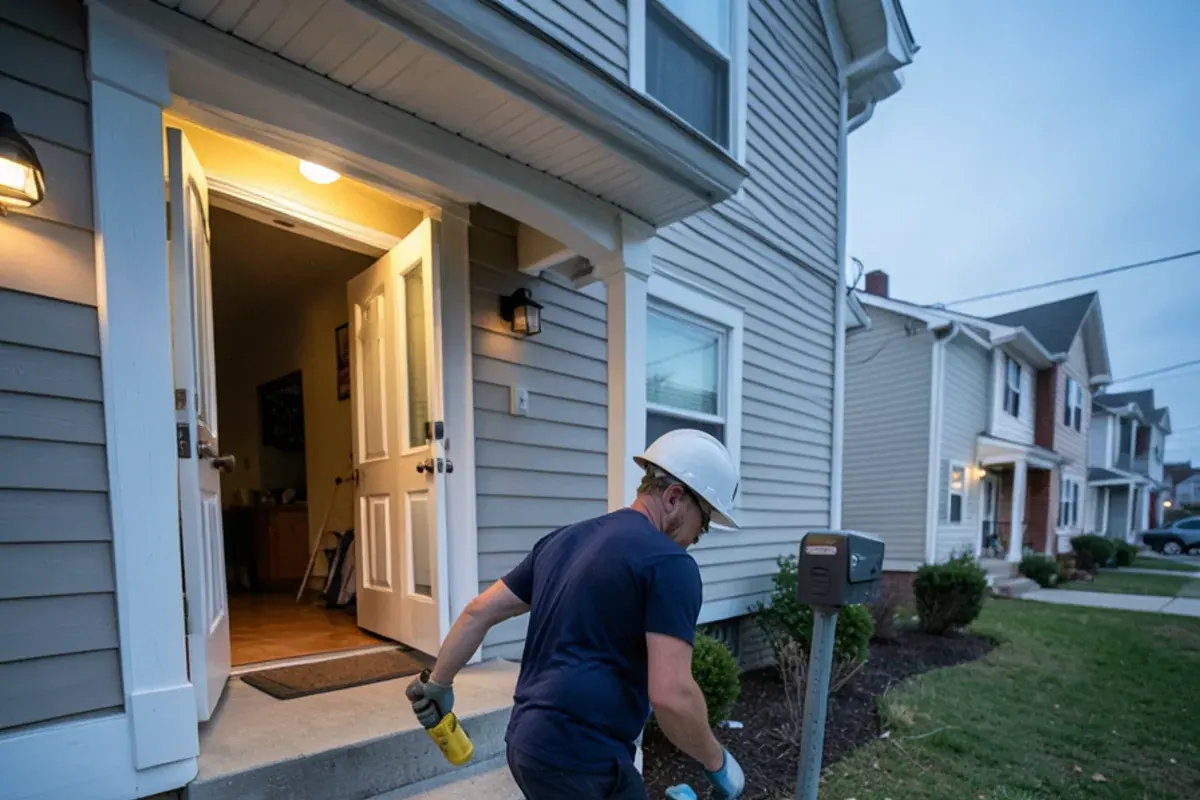
If you smell gas near your furnace, leave the building first and call from outside. Dial 911 or Spire's St. Louis emergency line, 800-887-4173. Do not flip switches, light anything or look for the leak yourself. Call a furnace technician only after the utility says it is safe.
Published October 30, 2026 · Updated October 30, 2026 · By Kenan Perkins, Owner
- 4.6★ on Google29 reviews
- A+ BBB ratingNot BBB accredited
- Founded in 2010Repair-first advice
- Open 24 hoursCall any time
Natural gas is odorless until a utility adds a smell to it, and that smell is your warning. When it reaches your nose near a furnace, the safe response is the same every time: get out, then call. Everything about the furnace itself comes after that.
What should you do the moment you smell gas?
Leave first and make every call from outside. Spire's page lists 800-887-4173 as its Eastern Missouri number for reporting gas leaks and other gas emergencies at any hour, and says to leave the area immediately before calling Spire or 911.
- Walk out of the building now. Take people and pets, but do not search for belongings.
- Do not flip light switches, use the garage door opener, light a match or start a car in an attached garage.
- Use a phone from outside, preferably away from the house, to call 911 or Spire at 800-887-4173.
- Stay outside until responders say the building is safe.
- Do not return to relight, test or repair anything.
After you are safe and the utility has cleared the building, you can call a specialist about the furnace.
Want a technician to take a look?
Call and tell us what the system is doing. You will get a clear, upfront quote before work starts.
- 4.6★ on Google29 reviews
- A+ BBB ratingNot BBB accredited
- Founded in 2010Repair-first advice
- Open 24 hoursCall any time
Should you shut off the gas before you leave?
No. Spire says only the utility should turn gas service back on once it has been shut off, and every second spent hunting for a valve is a second spent inside. The trade-off is real: a faint smell near a furnace shutoff tempts people to reach for it. Resist, because a valve handle is a surface that has to be touched near the leak, and the crew has tools to shut the service off safely.
What about neighbors and shared buildings?
Warn people by knocking with your hand, not by ringing a doorbell, because PHMSA notes a doorbell or metal knocker can spark. In an apartment or duplex, tell the other units on your way out and let the utility's call cover the whole building. Tell the landlord or manager after you are safe. If you use propane, call your propane supplier's emergency line and 911, and know that propane odor can fade, so a detector matters more.
What does a gas leak smell like, and what else should worry you?
Utilities add a chemical called mercaptan to natural gas so people can notice a leak. A September 2025 report from First Alert 4 notes that Spire described the rotten-egg smell as mercaptan, a harmless odorant added for safety. The odor is the signal, not a cause of harm.
Other signs call for the same caution:
- A hissing or whistling sound near a gas line or appliance
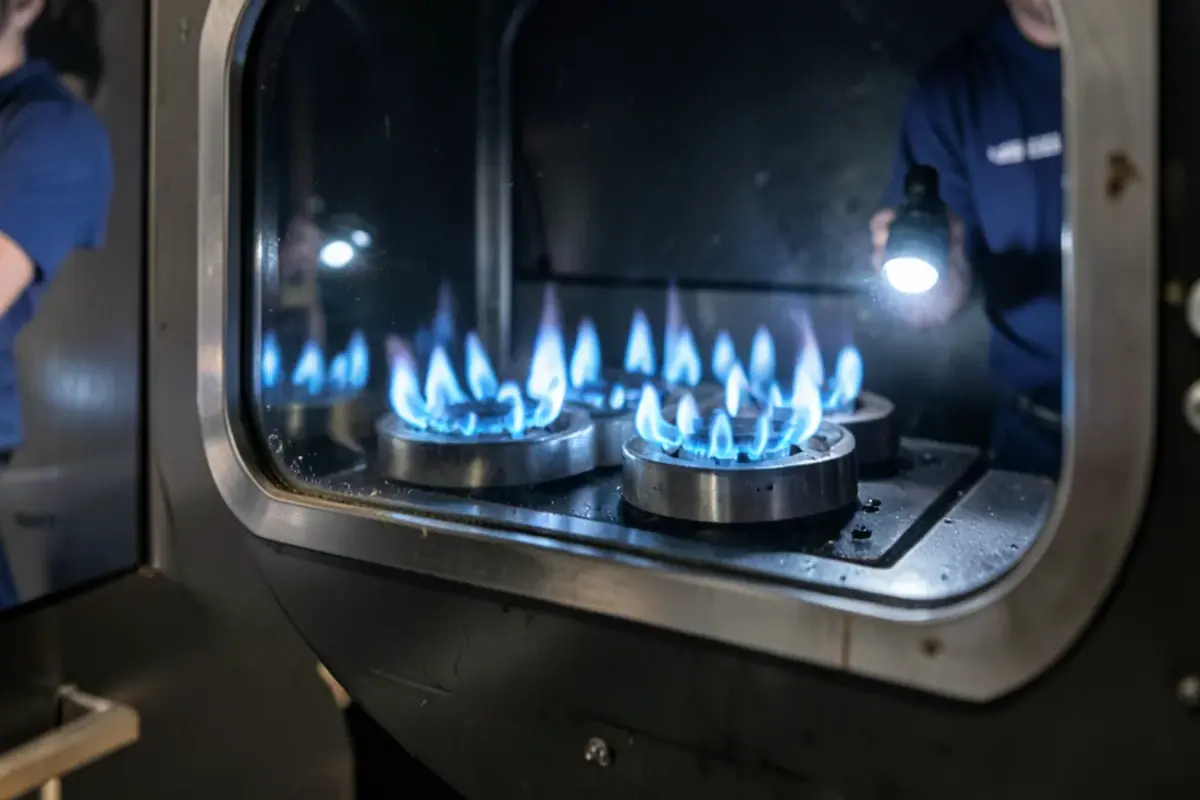
- A burner flame that burns yellow or orange instead of steady blue, which signals poor combustion and needs a technician
- A carbon monoxide alarm that sounds, which is a separate emergency handled the same way
Is every furnace smell a gas leak?
No, and the table below helps you sort them. When you are unsure, treat it as gas and leave.
| Smell | Likely cause | What to do |
|---|---|---|
| Rotten eggs or sulfur | Gas leak | Leave, call 911 or Spire from outside |
| Burnt dust on the first cold day | Dust burning on the heat exchanger | Ventilate, note if it lasts past a few hours |
| Hot metal or electrical burning | Overheated motor or wiring | Switch the furnace off, call a technician |
| Sharp, sooty or exhaust smell | Combustion problem, possible CO | Go outside if any alarm sounds or symptoms appear |
| No smell, but an alarm sounds | Carbon monoxide | Leave, call 911 |
Why can the smell be misleading?
Your nose gives you a yes or a maybe, never a no. Spire warns that escaping gas can migrate underground and through structures and collect far from the source. Natural gas also tends to collect at the highest point of a space, so a smell near a basement ceiling or an upstairs closet does not prove the leak is there. PHMSA's advice is to leave on foot and not try to locate the source. The practical rule is that any odor you cannot explain is reported, whether or not it fades.
Why would gas leak near a furnace?
Leaks near a furnace come from a short list of places. Gas valves, flexible connectors, threaded fittings and old pilot assemblies are the usual suspects. Appliances reconnected after a move or a remodel can be left with a loose union. Corrosion on old iron pipe in a damp basement can also open a pinhole.
A cracked heat exchanger is not a gas leak, but it can send carbon monoxide into the house, which is why a technician should check the furnace before it runs again after any shutdown. Our emergency furnace repair page explains the visit, and the furnace repair page covers ignition and valve faults. Homes with hot-water boilers have their own gas train; see boiler service.
How is a leak actually found and fixed?
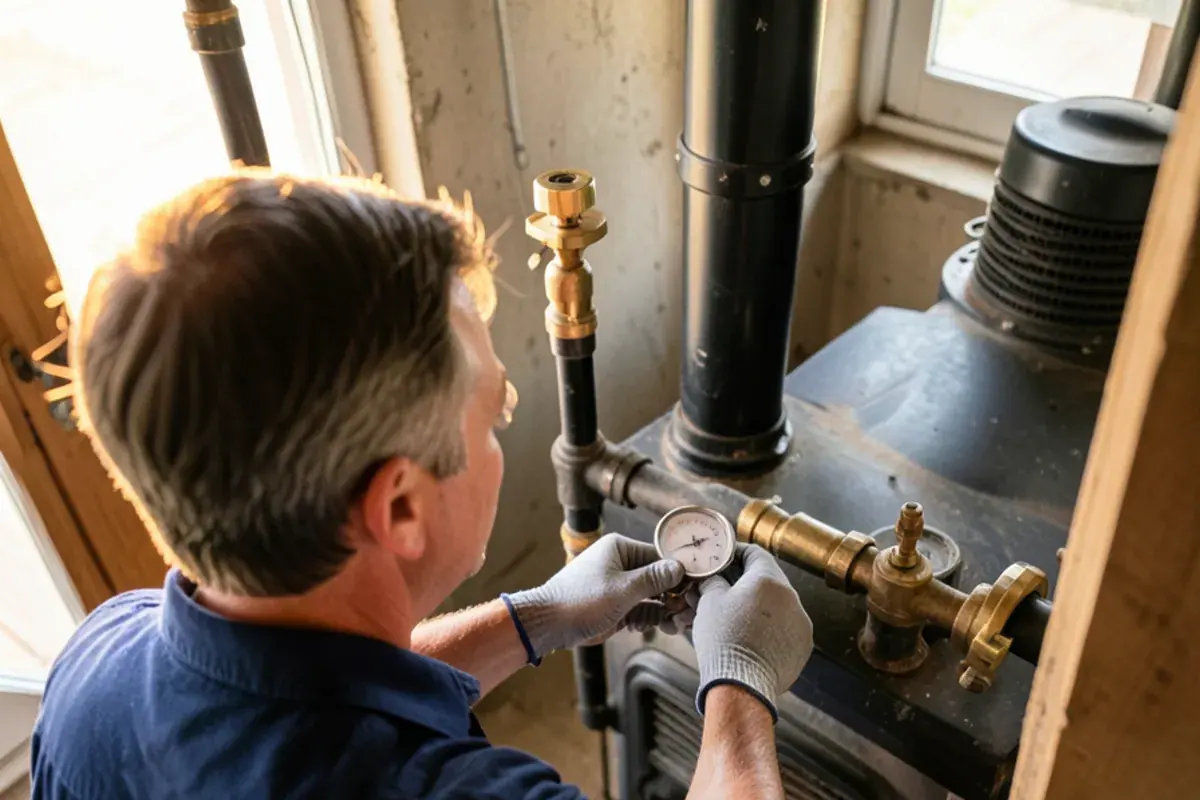
A technician typically checks suspect fittings with a combustible gas detector and a bubble solution, then isolates sections of piping and watches a gauge to see whether pressure holds. A gauge that drifts down means a leak somewhere in that section. Our guide to passing a gas inspection covers what an inspector looks for.
The repair choices carry trade-offs. A worn flexible connector or a loose union is a low-cost fix. A leaking gas valve or a corroded section of old iron pipe costs more, and on a furnace near the end of its commonly quoted 15-to-20-year life, a failed gas valve can tip the repair-or-replace question. Ask which fitting leaked, what was replaced, and what the pressure test showed.
How do you prepare before a gas smell ever happens?
Ten minutes now saves confusion at 2 am. Use this checklist.
- Save 800-887-4173 in every adult's phone and post it near the door.
- Pick a meeting spot at the curb or a neighbor's walk and agree who makes the call.
- Walk the exit routes from bedrooms and the basement, and teach children not to touch switches.
- Check that a CO alarm sits near each sleeping area and test it monthly.
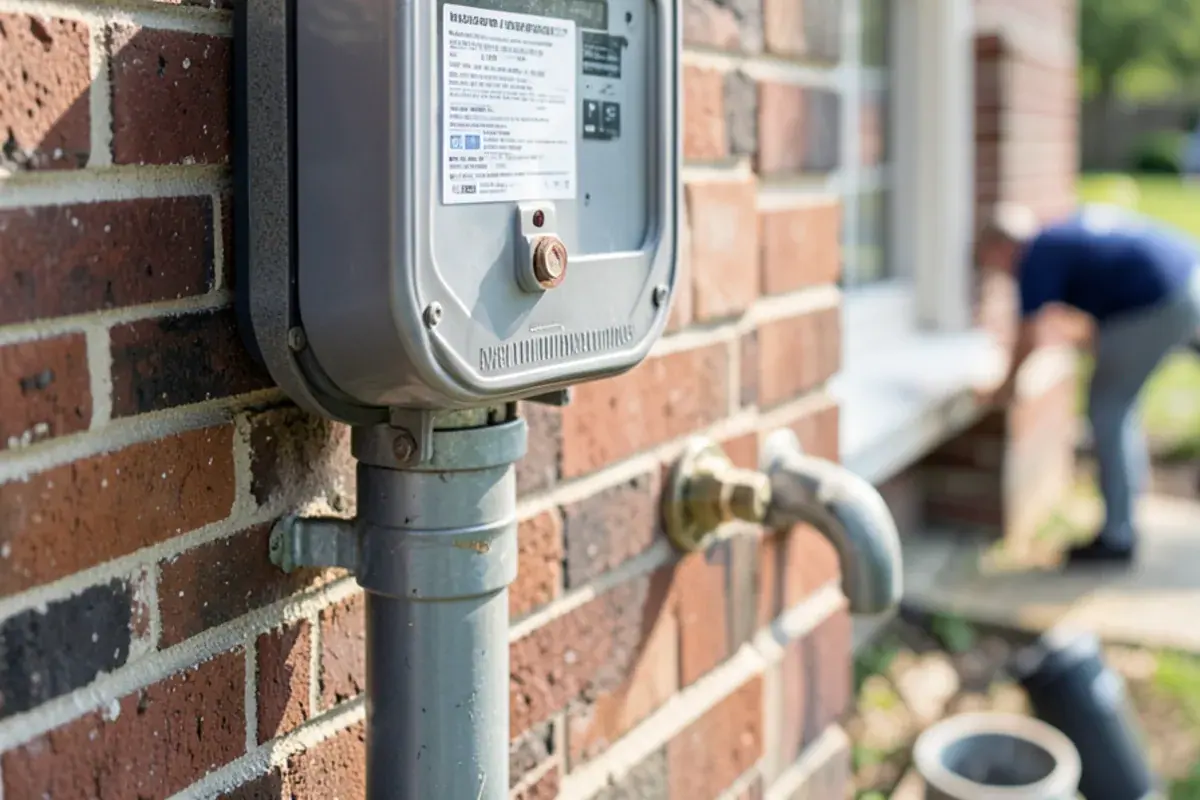
- Learn where the meter and appliance shutoffs are, for information only.
- Keep furnace and boiler service current, so valves and connectors get a look each year.
From the field: gas problems found and fixed
Two Google reviews describe gas work from the customer's side. Frederick E. wrote that after a gas inspection, the technician found the leaks, fixed them, tested the pressure and passed Spire's reinspection when the utility returned. A Google reviewer whose gas had been shut off for a leak wrote that Kenan Corporation arrived on the day of the call at the time promised and talked them through the process.
What to take from both: have the piping pressure-tested after a repair and ask what was found. We cannot promise an arrival time for your call, and these are individual stories, not guarantees.
What happens after the utility clears the home?
After the utility clears the home, a repair visit starts with the piping. The technician locates the leak, explains it in plain language, and gives a clear, upfront quote before work starts. After the repair, a pressure test shows whether the lines hold, and the utility may need to reinspect before service is fully restored.
If the leak was at an appliance, ask whether other gas appliances were checked. Once the home is cleared, Kenan Corporation can be reached at any hour, with same-day visits when the schedule allows. Keep any paperwork from Spire or a home inspection and give it to the technician. Ask for every gas appliance to be checked, including the water heater, range and dryer, not just the furnace. In Richmond Heights, the drive from our base near Spanish Lake is about 35 minutes in normal traffic, and Maplewood is about 40 minutes.
About the author
Kenan Perkins
Owner of Kenan Corporation. Studied at Ranken Technical College. The company, founded in 2010, is built on repairing systems honestly rather than pressuring people into new ones. More about us.
Sources
- Spire, contact and gas emergency information
- First Alert 4, Reports of natural gas odor in St. Louis County (September 2025)
- EPA, Protect Your Family and Yourself from Carbon Monoxide Poisoning
- PHMSA, Pipeline Leak Recognition and What to Do
- Propane Education & Research Council, What to Do If You Smell Gas
- Spire, Natural Gas Safety Handbook
Smell Gas Near Your Furnace: common questions
Should I open windows if I smell gas?
Do not stop to open windows. Leave at once, because the priority is distance from the building. If your path out passes an open door, take it. Open windows add little and cost time, and the utility or fire crew will ventilate the house once they arrive.
Does Spire charge to check a gas smell?
Spire says it does not charge to investigate a gas smell. Call 800-887-4173 from outside, or 911 if you cannot reach them. Do not try to inspect or tighten fittings on your own, since a spark or a poor repair can make the leak worse.
Can I relight my furnace after Spire checks it?
Only if the utility says the home is safe and you have the manufacturer's instructions. If the leak was at the furnace or in its gas line, a technician needs to repair it and pressure-test the piping first. When in doubt, wait for the repair visit.
What if the smell fades and I cannot find a leak?
Report it anyway. Gas odor can drift in from a neighbor's line or the street, and a smell that fades can return. If the odor shows up at the furnace, water heater or range, leave and have the utility test the house before anyone uses those appliances.
Talk to an HVAC specialist
Tell us what your system is doing and where you are. Open 24 hours.
Kenan Corporation, 927 Broadhead Lane, St. Louis, MO 63138. Open 24 hours.
- 4.6★ on Google29 reviews
- A+ BBB ratingNot BBB accredited
- Founded in 2010Repair-first advice
- Open 24 hoursCall any time