Local angles
Passing a Gas Inspection in St. Louis: What Homeowners Should Know
A gas inspection in St. Louis is not one thing. Spire, county and city occupancy inspectors and your own city each look at different items, and we found no uniform rule across every municipality. Here is what we could source and who to confirm with.
Published October 30, 2026 · Updated October 30, 2026 · By Kenan Perkins, Owner
- 4.6★ on Google29 reviews
- A+ BBB ratingNot BBB accredited
- Founded in 2010Repair-first advice
- Open 24 hoursCall any time
A gas inspection in St. Louis can mean four different things, and we could not find one municipal rule that applies to every home in the metro. Spire, St. Louis County, the City and individual suburbs each check different items. Confirm what applies to your address with Spire and your local building office before you spend money.
What counts as a gas inspection in St. Louis?
The phrase covers separate events that happen for separate reasons:
| Trigger | Who runs it | What it looks at |
|---|---|---|
| Spire's periodic safety inspection | Spire | Indoor gas equipment where the meter is inside; leaks, meter function, secure connections |
| A dangerous condition found on a visit | Spire | Customer-owned appliances, equipment or piping |
| Occupancy or re-occupancy inspection | County, City or your municipality | Minimum safety and maintenance items, which vary by city |
| A permit inspection after replacing equipment | The building authority | The replacement work itself |
Spire's inspections page says its indoor inspections take about 10 minutes, are free to the customer and are required about every three years. Its tariff adds that pipe and equipment beyond the meter belong to the customer and must be kept safe at the customer's expense.
Want a technician to take a look?
Call and tell us what the system is doing. You will get a clear, upfront quote before work starts.
- 4.6★ on Google29 reviews
- A+ BBB ratingNot BBB accredited
- Founded in 2010Repair-first advice
- Open 24 hoursCall any time
Is there a rule that applies in every St. Louis municipality?
Not one we could verify. St. Louis County runs residential occupancy permits for unincorporated areas and for municipalities that contract with it, triggered by a change of occupant. The City of St. Louis has its own Housing Conservation inspection, which the city describes as a basic code inspection. Other suburbs write their own checklists, and a few, such as Brentwood, publish them.
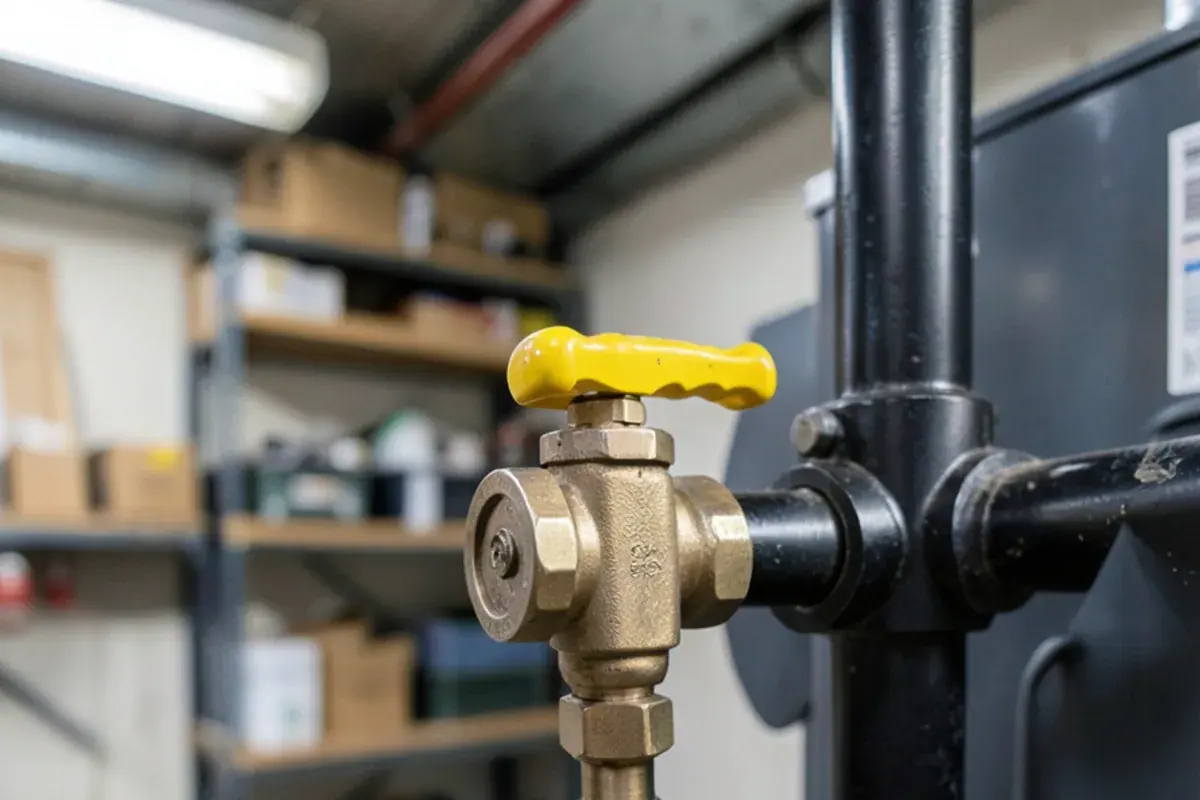
Treat Brentwood as one example, not a template. Its December 2021 guide asks for a visual furnace and water heater inspection, working utilities, a separate gas shutoff at each gas appliance outside the housing and before the coupling, and a carbon monoxide alarm where gas appliances exist. For Mehlville or any other address, ask your building office for its own checklist.
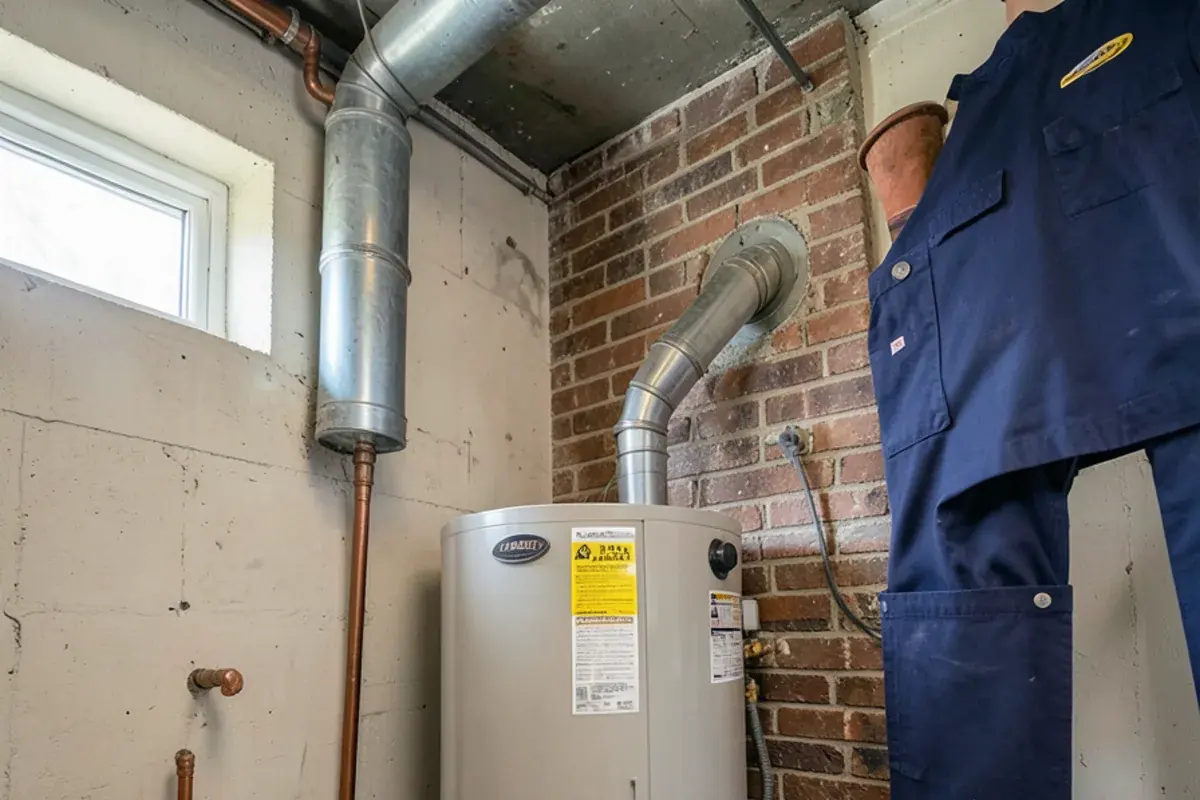
A sale adds another layer. Many general home inspectors check gas appliances by eye and by smell, and a visual check is not the same as a pressure test of the piping. If a buyer's inspector flags a smell, a loose connector or a missing shutoff, a technician can test and repair it before the closing date.
What tends to fail a gas-related check?
The same few items show up on local checklists and in the trade:
- A missing or hard-to-reach shutoff valve at the furnace, water heater, range or dryer
- A flue pipe that does not slope up toward the chimney
- A relief valve discharge pipe that stops short or points the wrong way
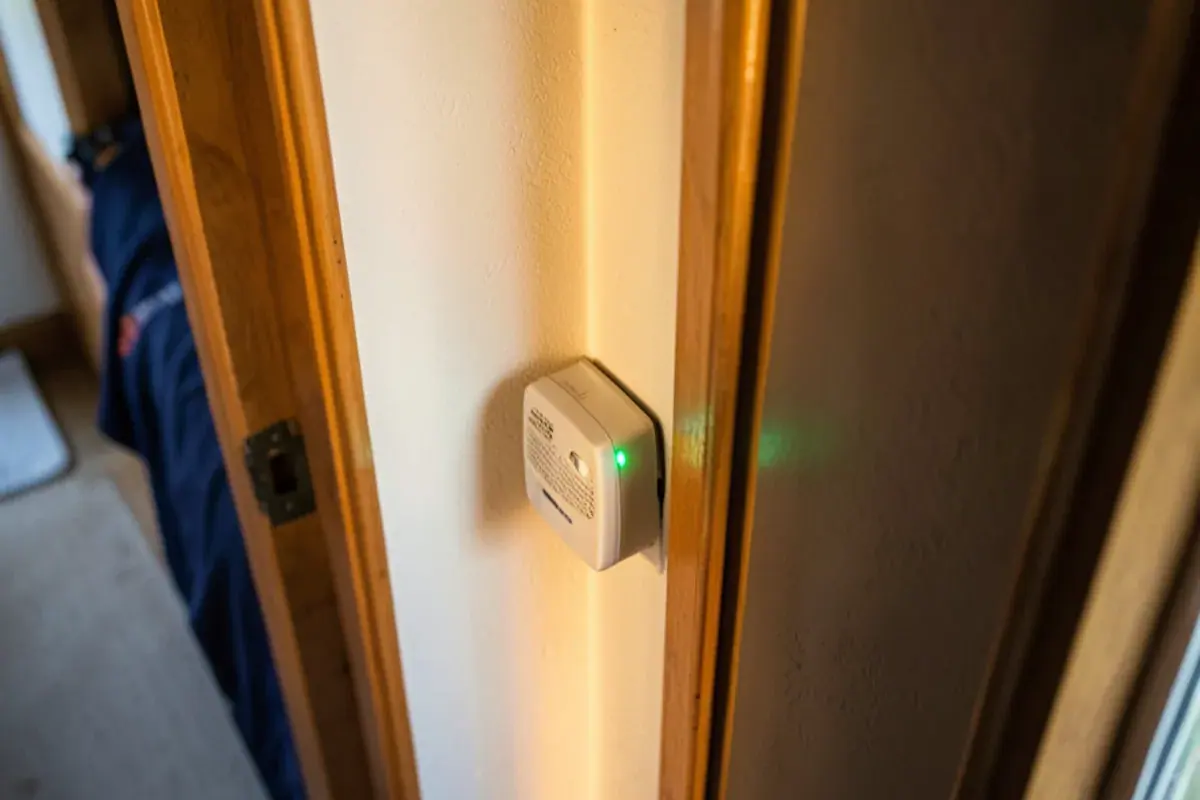
- No carbon monoxide alarm, or an expired one
- A gas smell or a leak at a union, flex connector or valve
The last item is a safety problem first and a paperwork problem second. Smell gas? Get out, avoid switches and flames, and phone 911 or Spire's emergency line, 800-887-4173, once you are outside. Spire says investigating a gas smell costs the customer nothing.
Why a sniff test and a pressure test find different leaks
A nose finds a leak that is active enough to put odorant into the air you breathe. A pressure test finds the slow ones. A pinhole at a union behind a basement wall or in a ventilated utility room can seep for months without a smell reaching the living space. That is why a buyer's inspector with a gas detector and a technician with a gauge can write up the same house differently.
How a gas piping pressure test runs
The exact pressure and hold time come from the fuel gas code your building office adopted, so ask what it requires instead of assuming. The sequence is the same almost everywhere:
- Isolate the house piping from the meter and close each appliance valve, so the test covers only the pipe.
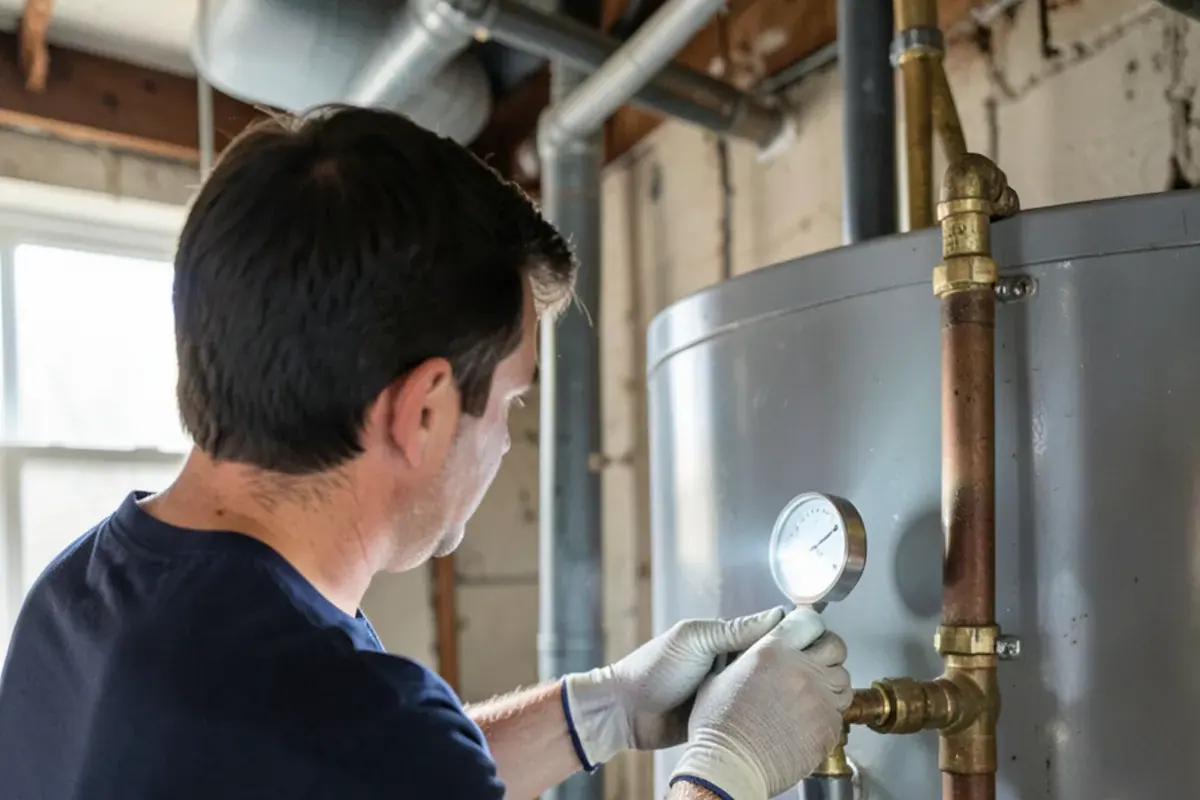
- Connect a gauge at a test tee or an open fitting.
- Bring the piping to the pressure the adopted code calls for.
- Watch the needle for the full hold time. A falling needle means a leak, though a big temperature swing in the space can nudge a reading.
- If it falls, check each joint, union, valve and connector with leak-detection solution or an electronic detector, then repair the fault and retest.
- Reopen the valves, relight any pilots, confirm every burner lights cleanly, and ask for the test result in writing.
Worked example: a flagged water heater before a closing
This is an illustration, not a real job. A buyer's report lists "gas odor at water heater" and "no accessible shutoff." Here is how those lines usually break down.
| Report line | Common cause | Typical fix | Who closes it |
|---|---|---|---|
| Gas odor at water heater | Weeping union or aged flex connector | Replace the connector or remake the union, then leak test | The inspector or building office, and Spire if service was shut off |
| No accessible shutoff | Valve missing, buried or seized | Add or replace a quarter-turn valve | Whoever wrote the item up |
| Flue sags or ends short | Disturbed during an earlier water heater swap | Re-pitch and re-secure the flue | The inspector who flagged it |
The honest trade-offs
Replacing an old flex connector is cheap and quick, but many connector makers say not to reuse one after an appliance has been moved, so do not let anyone just retighten it. Repairing a leaking union is usually enough; replacing a long run of aged piping is a bigger job and worth it only if a test keeps failing in several places.
Timing is the part people miss. A repair can happen quickly, but the reinspection depends on the building office's or Spire's calendar. Do not schedule a closing for the day after the repair.
Who can repair gas piping, and does it need a permit?
That is a licensing question, and the answer is local. Missouri has no statewide HVAC or mechanical contractor license. Cities and counties license these trades, and gas piping may fall under plumbing licensing in some jurisdictions, with a permit pulled by whoever does the work.
Do not assume. Ask any contractor, including us, for the license number that covers gas piping where you live, and ask who pulls the permit. Put the answer in the written quote. Our furnace repair page explains how we diagnose appliance problems, and furnace maintenance covers the annual safety check.
Questions to put to your building office
- Which inspection does my sale or move-in trigger, and is it a visual check or a pressure test?
- Which license covers gas piping repair here, and does the repair need a permit?
- Who pulls that permit, and is it in the written quote?
- How do I book the reinspection, and what does it cost?
From the reviews: leaks found, fixed and retested
Two Google reviewers describe gas problems. Frederick E. wrote that after a gas inspection, Kenan found the leaks, fixed them and tested the pressure, and the work passed Spire's inspection.
A second reviewer, a local business, wrote that their gas had been shut off because of a leak, that Kenan showed up on the day of the call at the promised time, and that the whole process was talked through with them. Neither review names a city, so treat them as customer experiences, not a promise about your address.
Before your inspection day
Clear access to the furnace, water heater and shutoffs. Check that the alarms work. Do not tackle gas fittings yourself, since a mistake there can leave a leak. If an inspector or Spire flagged a problem, a technician can find the source, repair it and test the pressure.
Talk to a specialist at (321) 478-0693 for a gas-related furnace or water heater check. We are open 24 hours, and we give you a clear, upfront quote before work starts. Mehlville is about 55 minutes from our base near Spanish Lake in normal traffic, so call first to confirm scheduling.
About the author
Kenan Perkins
Owner of Kenan Corporation. Studied at Ranken Technical College. The company, founded in 2010, is built on repairing systems honestly rather than pressuring people into new ones. More about us.
Sources
- Spire, Natural gas safety inspections
- Spire Missouri, Rules and Regulations tariff (2023)
- Spire, Contact information and natural gas user guide
- St. Louis County, Residential Occupancy Permits
- City of St. Louis, Residential Occupancy Permit (Housing Conservation Inspection)
- City of Brentwood, Residential Occupancy Inspection Guide (December 2021)
- Start Business By State, Missouri plumbing licensing (2026)
Gas Inspection Guide: common questions
Does Spire inspect the gas equipment inside my house?
Sometimes. Spire says it inspects indoor natural gas equipment where the meter is inside the property. The visit takes about 10 minutes, costs the customer nothing and is required about every three years, per Spire. If you are due, book through your Spire account or call the number on its inspections page.
What happens if Spire finds a dangerous condition?
Spire's tariff says it may shut off service without notice when it finds a dangerous condition in a customer's appliances, equipment or piping, and service does not resume until the condition is fixed. The customer owns and pays for piping beyond the meter, so repairs are the homeowner's job.
Do I need a gas inspection to sell a house in St. Louis?
It depends on where the house is. The County runs occupancy inspections in unincorporated areas and contracting municipalities, and other cities publish their own checklists. We could not source a uniform gas-specific rule. Ask the local building office and your agent what your sale triggers.
Who is allowed to repair a gas line in the St. Louis area?
That depends on the city or county, because Missouri licenses these trades locally, not statewide. Gas piping can fall under plumbing licensing in some places. Ask any contractor, including us, for the license number that covers this scope in your jurisdiction before work begins.
Talk to an HVAC specialist
Tell us what your system is doing and where you are. Open 24 hours.
Kenan Corporation, 927 Broadhead Lane, St. Louis, MO 63138. Open 24 hours.
- 4.6★ on Google29 reviews
- A+ BBB ratingNot BBB accredited
- Founded in 2010Repair-first advice
- Open 24 hoursCall any time