Local angles
Polar Vortex Prep for Missouri Homeowners
A furnace cold snap in Missouri is a stress test, because arctic air arrives fast and the weakest part fails first. Get the furnace checked, protect the pipes and know your gas and carbon monoxide steps before the forecast turns. Here is a short, sourced plan.
Published October 30, 2026 · Updated October 30, 2026 · By Kenan Perkins, Owner
- 4.6★ on Google29 reviews
- A+ BBB ratingNot BBB accredited
- Founded in 2010Repair-first advice
- Open 24 hoursCall any time
A furnace cold snap in Missouri exposes every weak spot a heating system has: a dirty filter, a tired igniter, a blocked vent or a pipe on a cold wall. The fix is mostly done in October and November, before the forecast changes. Below are the National Weather Service records and a short plan.
What is a polar vortex, and does it reach Missouri?
The National Weather Service defines the polar vortex as a large area of low pressure and cold air surrounding both of the Earth's poles. It is present year-round, stronger in winter and weaker in summer. When it is disturbed, arctic air can spill south into the United States, which is what Missouri feels.
The practical point is that cold snaps are real and fast. A furnace that carried you through mild weeks may not survive three days at its limit.
Want a technician to take a look?
Call and tell us what the system is doing. You will get a clear, upfront quote before work starts.
- 4.6★ on Google29 reviews
- A+ BBB ratingNot BBB accredited
- Founded in 2010Repair-first advice
- Open 24 hoursCall any time
How cold does St. Louis actually get?
Colder than most people plan for. The National Weather Service St. Louis office documents these examples:
| Event or record | What NWS St. Louis reports |
|---|---|
| January 5-8, 2014 | Lambert recorded a low of -8°F on January 6 and a wind chill of -33°F that morning |
| February 2021 | Below freezing for about a week, then lows below zero on Sunday and Monday with highs struggling to leave the single digits |
| February record low | -18°F on February 13, 1962 |
| Lowest wind chill on record | -48°F on January 20, 1985 |
| All-time record low | -22°F on January 5, 1884 |
Not every winter is like that. The NWS counted 4,100 heating degree days in St. Louis in 2025, against a normal of 4,433. A mild year can lull you, but the record entries above show what the house must be ready for.
What should you do to the furnace before the cold arrives?
Do these in order, and stop at anything involving gas:
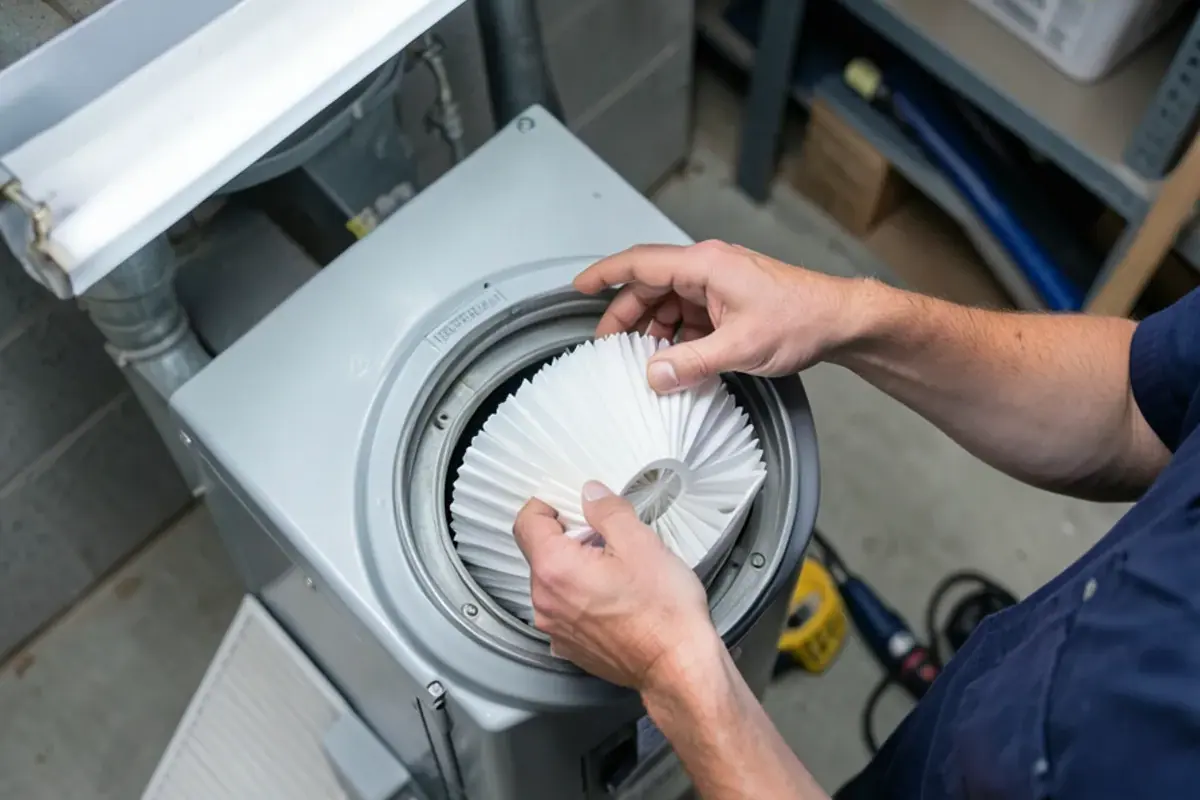
- Replace the filter, since airflow is the first thing to fail under long run times.
- Clear snow, leaves and ice from outdoor vent and intake pipes on high-efficiency furnaces.
- Test the thermostat in Heat mode and listen for a clean ignition.
- Schedule a professional check of the igniter, flame sensor and heat exchanger if you have not had one this year.
- Keep the area around the furnace clear of storage and anything flammable.
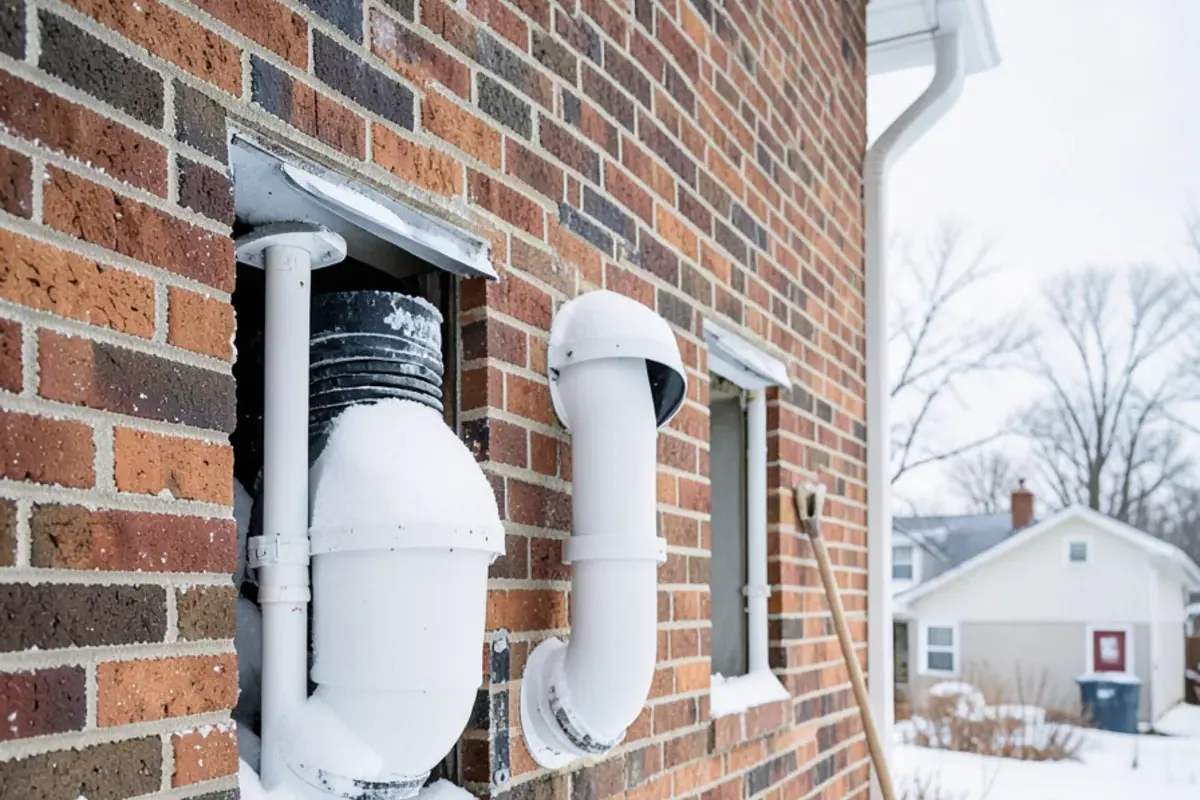
A fall visit is the cheapest way to find a part that is about to fail. Our furnace maintenance page covers what we check, and the fall furnace checklist gives a homeowner version. Contractor sources put furnace life at 15 to 20 years, so an older unit deserves a candid look now, while you can still compare options.
A countdown for the week the forecast turns
| When | Do this |
|---|---|
| October or November | Book the furnace check, change the filter, test the carbon monoxide alarms |
| A week out | Find the main water shutoff, disconnect outdoor hoses, clear snow gear from the vent area |
| 48 hours out | Set the thermostat to a steady, moderate temperature and open sink cabinets on outside walls |
| During the cold | Check outdoor vent terminations after each snowfall and keep the area around the furnace clear |
The part most people miss: condensate lines and power
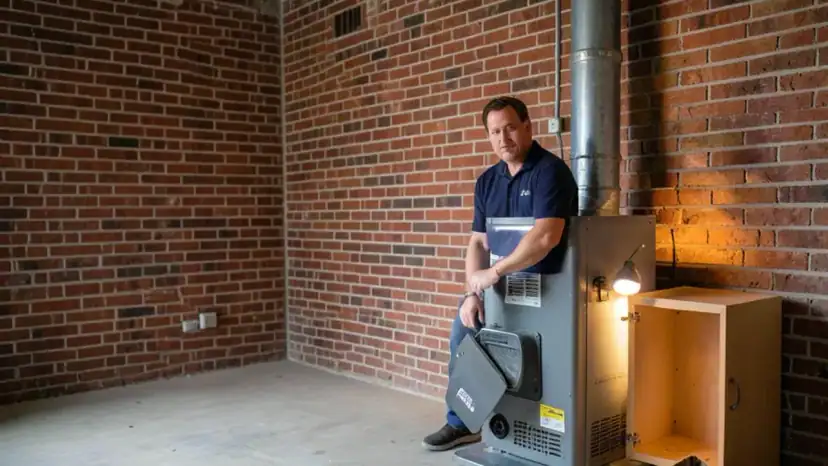
A condensing (high-efficiency) furnace makes water as it burns fuel, and that water leaves through a small drain line. If the line runs through an unheated space or outdoors, it can freeze, and many furnaces shut themselves off when the drain backs up. Look for a sagging, uninsulated or ice-lined line, and ask a technician about insulating or rerouting it.
Power is the other gap. A gas furnace still needs electricity for its igniter and blower, so an outage leaves it dead even with gas flowing. That is a common reason to plan for an alternative warm room, and a reason to keep generators outdoors and well away from the house, as Ready.gov advises.
Heat pumps and cold snaps: an honest trade-off
If your home has a heat pump, learn how its backup heat works before the cold. Many systems add electric resistance strips or a gas furnace when the outdoor temperature drops. The strips keep the house warm but use much more electricity, so a long cold stretch can show up on the bill. A dual-fuel setup that switches to gas at low temperatures avoids that, at the cost of owning and maintaining two heat sources. Our heat pump installation page explains how the options compare.
If pipes freeze anyway
Pipes in garages, crawl spaces, exterior walls and outdoor hose bibs freeze first, so those are the places to check when a faucet runs slow. Shut off the water at the main before you do anything else, then open the faucet on the frozen line so melting ice has somewhere to go. Warm the pipe slowly with a hair dryer or by raising the room temperature. Never use an open flame, which can start a fire inside a wall. If a pipe has already burst, leave the water off and call a plumber.
How do you protect the pipes and the people?
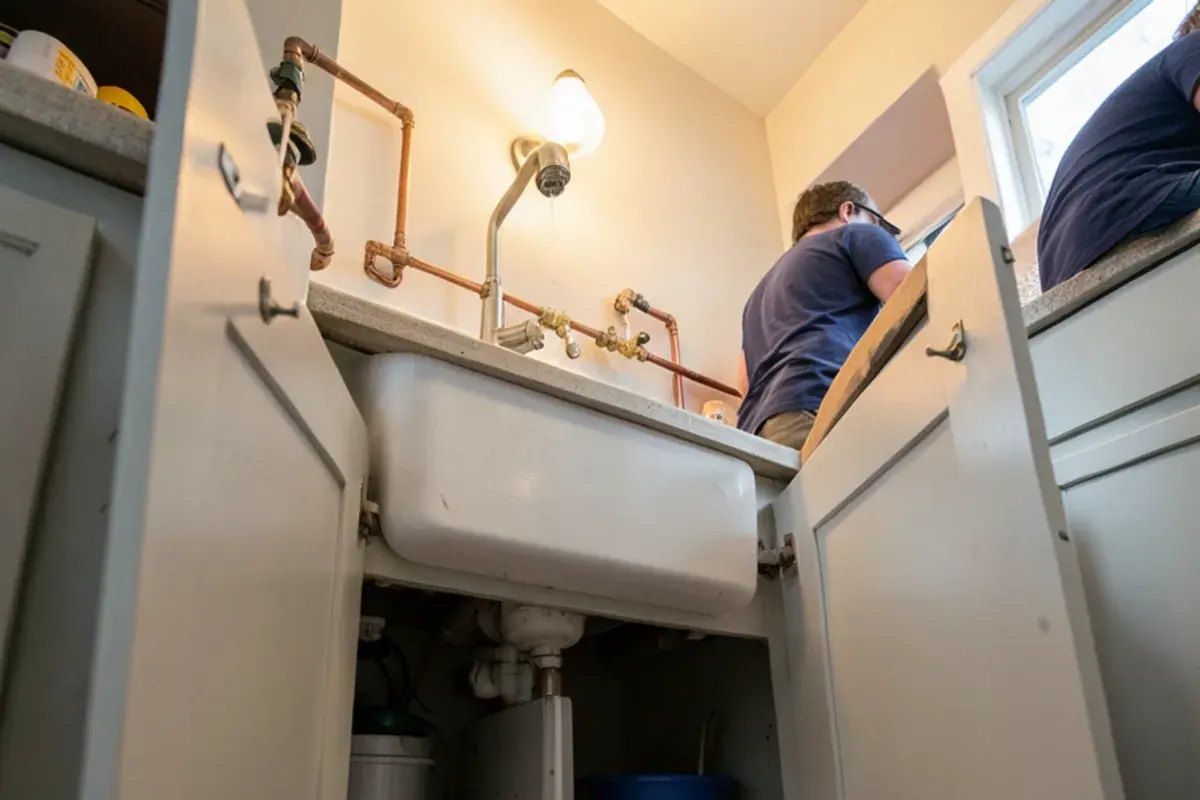
Heat first, then water, then air quality. Keep the thermostat steady, open the cabinet doors under sinks on exterior walls, and let a faucet drip on the coldest nights. Know where your main water shutoff is.
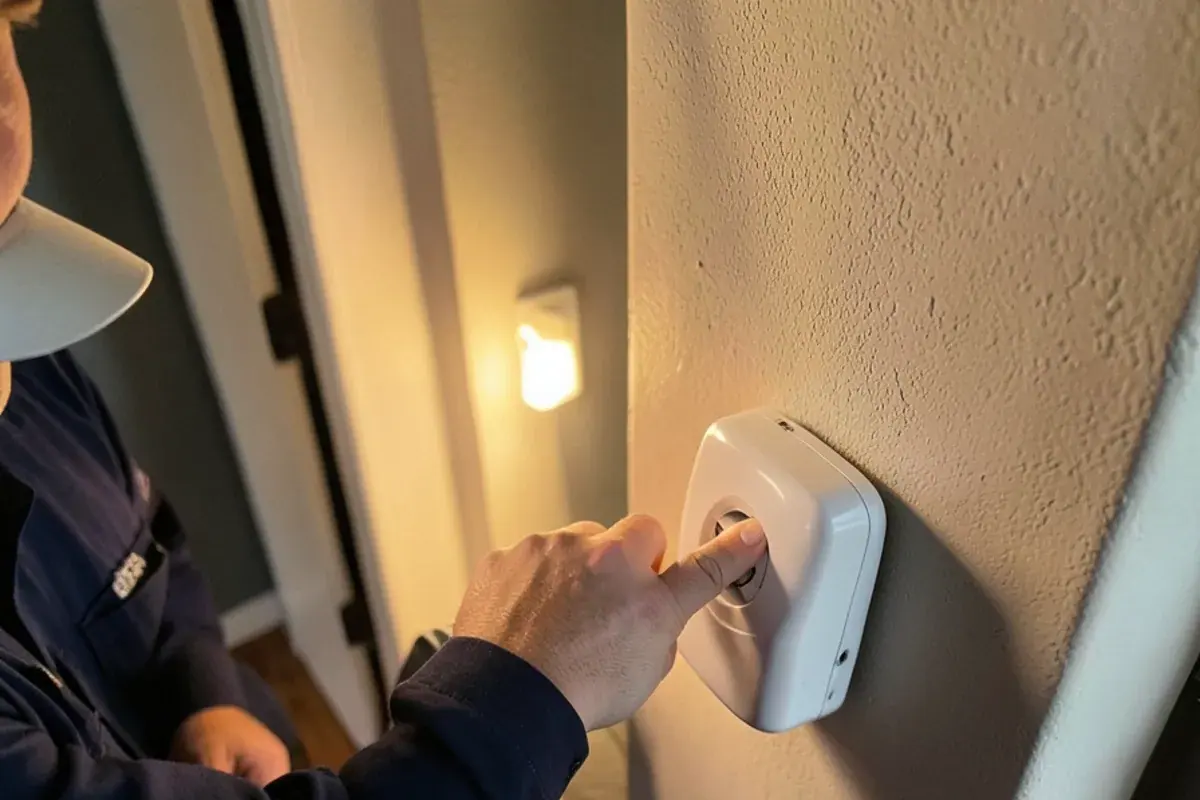
Then check the alarms. Ready.gov says to install working carbon monoxide detectors on every level of the home, to test them and to have battery backups. It also warns never to heat a home with a gas stovetop or oven, and to keep generators at least 20 feet from windows, doors and attached garages.
If you smell gas, leave the house, then call 911 or Spire's emergency line at 800-887-4173 from outside.
What if the furnace quits during the cold?
Check the thermostat, the filter and the power switch at the furnace once. If it still will not light, turn the unit off instead of cycling it, close doors to keep heat in one room, and call. If the house gets near freezing, leave for a warm place and shut off the water if pipes are at risk.
Our emergency furnace repair team takes calls at any hour, and the furnace repair page explains what we test. The no heat at night guide covers the safe steps in detail.
From the field: what cold calls look like
Customer reviews on Google show how these nights go. A reviewer, Gaquan C., wrote that Kenan came out in 10-degree weather and got the heat back on for their family. Another, Mary E., wrote that their furnace stopped around 5 pm, the call was returned right away and the fix came the next morning at 7 am.
Those are individual experiences, not a promise about timing. The lesson for you is simple: call early, because a furnace that fails at night in a deep freeze is a crowded day for every shop.
Get ready before the first freeze
Talk to a specialist at (321) 478-0693 to schedule a check or to talk through an older furnace. We are open 24 hours, we offer same-day service when the schedule allows, and you get a clear, upfront quote before any work. Homes in Clayton are about 35 minutes from our base near Spanish Lake in normal traffic.
About the author
Kenan Perkins
Owner of Kenan Corporation. Studied at Ranken Technical College. The company, founded in 2010, is built on repairing systems honestly rather than pressuring people into new ones. More about us.
Sources
- National Weather Service, Polar Vortex
- National Weather Service St. Louis, January 2014 winter storm and arctic cold summary
- National Weather Service St. Louis, Presidents Day 2021 winter storm
- National Weather Service St. Louis, January climate trivia
- National Weather Service St. Louis, February climate trivia
- Ready.gov, Winter Weather
Polar Vortex Prep: common questions
Is the polar vortex something that comes to Missouri?
Not exactly. The National Weather Service defines it as a large area of low pressure and cold air that sits around the poles year-round. In winter outbreaks, some of that cold air spills south into the United States. St. Louis feels the spill, not the vortex itself, as a stretch of unusually cold days.
Should I turn the thermostat way down while I am away in a cold snap?
Not far. A deeply set-back house loses heat in the walls, and pipes on exterior walls are the first to freeze. Keep the setting steady and moderate, open cabinet doors under sinks on outside walls, and ask a neighbor to check the house if the power or the furnace could fail.
Can I use the oven or a space heater if the furnace quits?
Do not heat with a gas oven or stovetop. Ready.gov says never to heat a home that way, and it warns about carbon monoxide from generators and grills used inside or near windows. Electric space heaters need clear floor space. If the furnace is out, call a technician, and leave for a warm place if the house gets very cold.
When should I schedule a furnace check before winter?
Before the first hard freeze. Technicians get busy once the cold hits, so a fall visit beats waiting. A fall check covers the igniter, flame sensor, filter, vent and carbon monoxide risks, and finding a weak part in October beats finding it on a 5-degree night.
Talk to an HVAC specialist
Tell us what your system is doing and where you are. Open 24 hours.
Kenan Corporation, 927 Broadhead Lane, St. Louis, MO 63138. Open 24 hours.
- 4.6★ on Google29 reviews
- A+ BBB ratingNot BBB accredited
- Founded in 2010Repair-first advice
- Open 24 hoursCall any time