Prevention checklists
Fall Furnace Checklist Before the First Cold Night
This furnace maintenance checklist covers the fall tasks a homeowner can do safely, such as the filter, clearances, alarms and a test run, and the safety inspection that only a technician should perform. Do your part before the first cold night, not on it.
Published October 30, 2026 · Updated October 30, 2026 · By Kenan Perkins, Owner
- 4.6★ on Google29 reviews
- A+ BBB ratingNot BBB accredited
- Founded in 2010Repair-first advice
- Open 24 hoursCall any time
Do the safe items on this furnace maintenance checklist in October: filter, clearance, alarms, vents and a test run on a mild day. Leave combustion, gas pressure and the heat exchanger to a technician. The goal is to find a problem when you can schedule it, not at 10 pm on the first freeze.
What can you safely check on your own?
Everything on this list can be done without opening the burner compartment.
- Replace the filter. ENERGY STAR says to inspect, clean or change filters monthly. A clogged filter can trip the limit switch and cause a furnace to blow cold air between cycles.
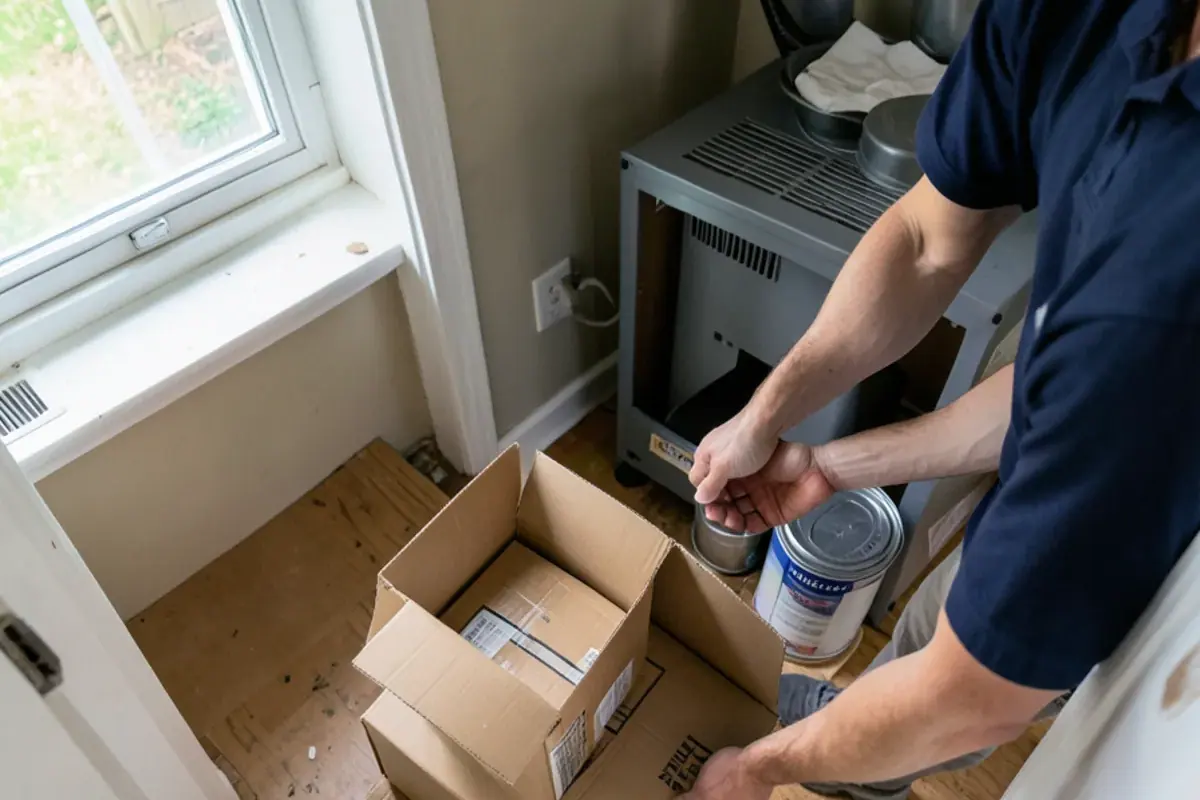
- Clear the furnace area. Move boxes, paint, cleaners and anything flammable away from the cabinet, keeping a clear path to the access panel.
- Open vents and returns. Furniture and rugs block airflow to rooms, and a blocked return starves the blower.
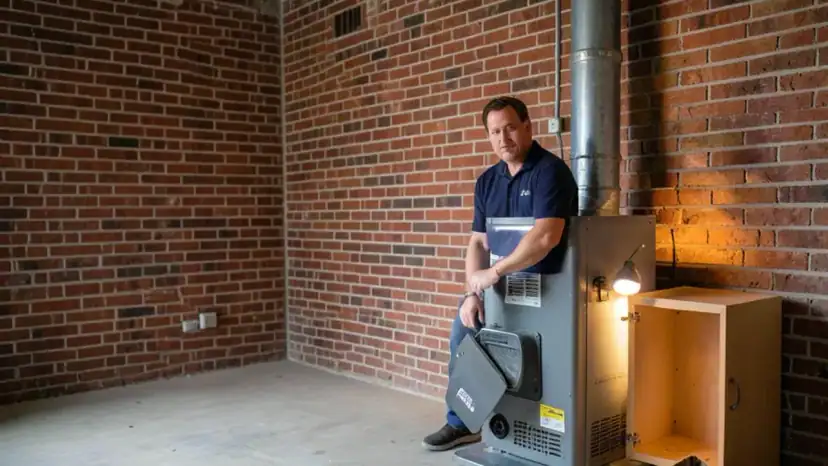
- Look at the vent pipe. From the floor, check for rust streaks, gaps at joints or sagging sections. Do not touch or adjust it.
- Test the thermostat. Replace weak batteries, set it to Heat, and confirm the furnace starts.
- Check the CO alarms and replace dead batteries or alarms past their listed age.
Want a technician to take a look?
Call and tell us what the system is doing. You will get a clear, upfront quote before work starts.
- 4.6★ on Google29 reviews
- A+ BBB ratingNot BBB accredited
- Founded in 2010Repair-first advice
- Open 24 hoursCall any time
What should a technician inspect?
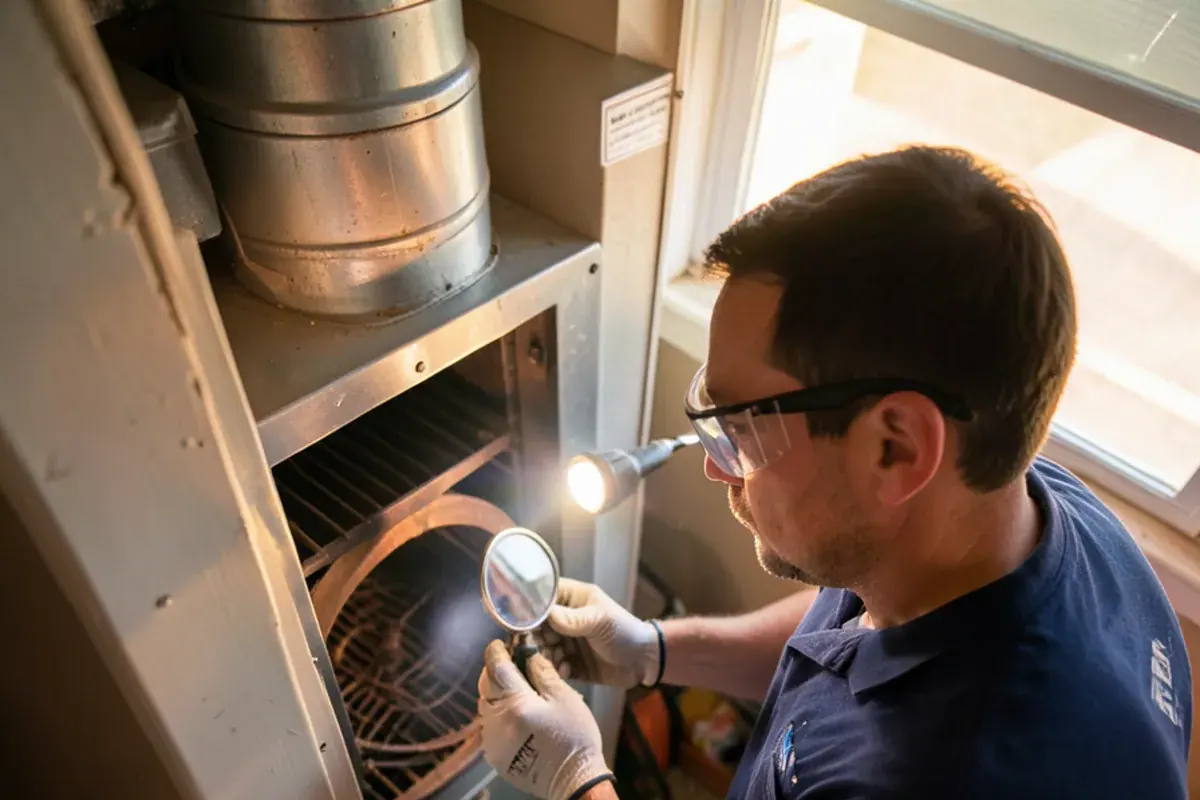
The inspection items are the ones you cannot see or measure safely. ENERGY STAR lists gas or oil connections, gas pressure, burner combustion and the heat exchanger, and warns that a dirty burner or cracked heat exchanger makes equipment less safe and efficient.
| Item | Why it matters |
|---|---|
| Heat exchanger | A crack can leak combustion gases into the airstream |
| Burners and ignition | Delayed ignition or uneven flame signals dirt or wear |
| Flame sensor and igniter | A coated sensor shuts the burners off after a few seconds |
| Gas pressure and connections | Wrong pressure damages parts; leaks are a safety issue |
| Draft inducer and venting | Weak draft can pull exhaust back into the house |
| Blower, motor and capacitor | Weak motors fail first on the coldest nights |
| Safety controls and limit switch | They shut the furnace off when something is wrong |
What if the inspection finds something expensive?
A failed part does not automatically mean a new furnace. Replace a worn igniter, flame sensor or capacitor and keep the furnace running. A cracked heat exchanger is the hard case. Contractor sources put furnace life at 15-20 years with routine maintenance, so on a unit past 15 the repair quote may rival a new furnace, and a furnace under ten years old is usually worth keeping.
The honest trade-off is cost against safety. Do not run a furnace with a confirmed cracked heat exchanger while you decide. Ask for the repair and replacement options priced side by side, along with what the technician measured. Our furnace installation page covers what a replacement quote should list.
How do carbon monoxide alarms fit in?
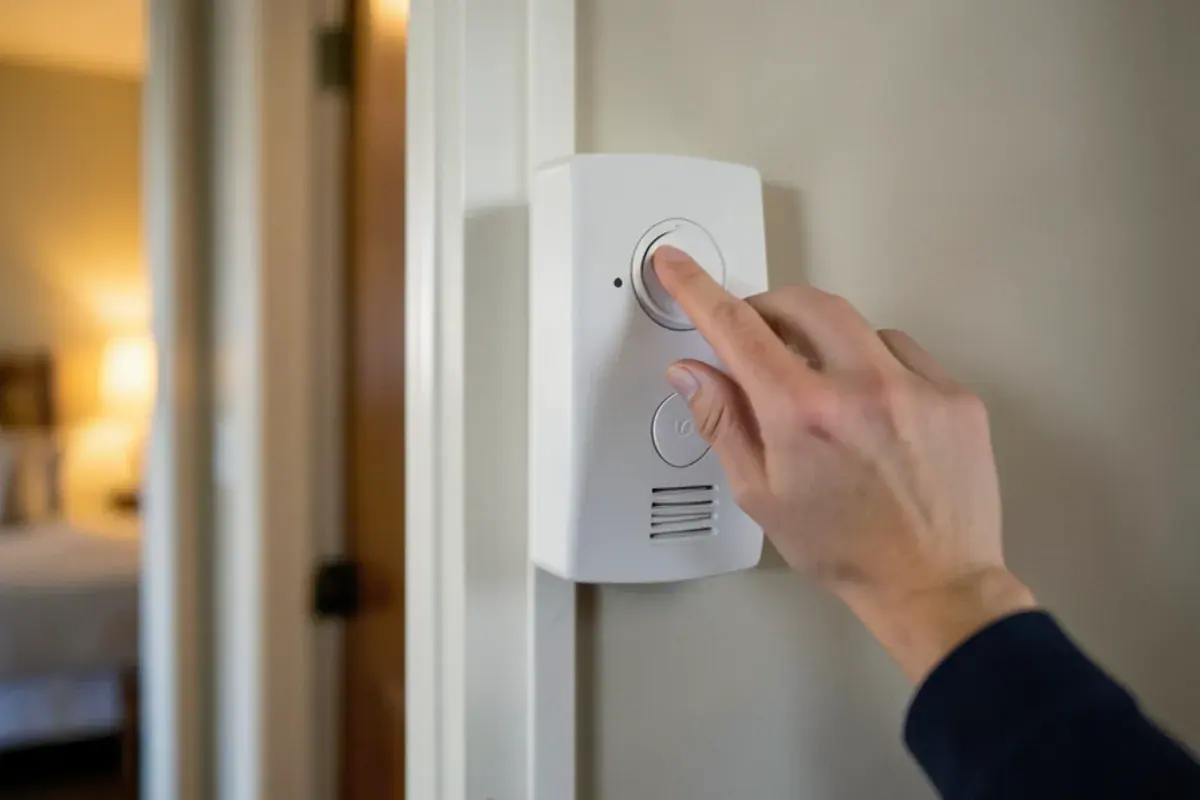
They are the backstop for the parts of the furnace you cannot inspect yourself. The CPSC says to place alarms on every level and outside sleeping areas, keep them away from vents and furniture, and avoid putting them in kitchens or directly above fuel-burning appliances. The test button checks the circuit, not the sensor, so follow the manufacturer's replacement age.
When one sounds, do not search for the source. Go outside, call 911, count heads and stay out until responders clear the house. If it sounds again within 24 hours of returning, have a technician check every fuel-burning appliance.
Do a test run on a mild day
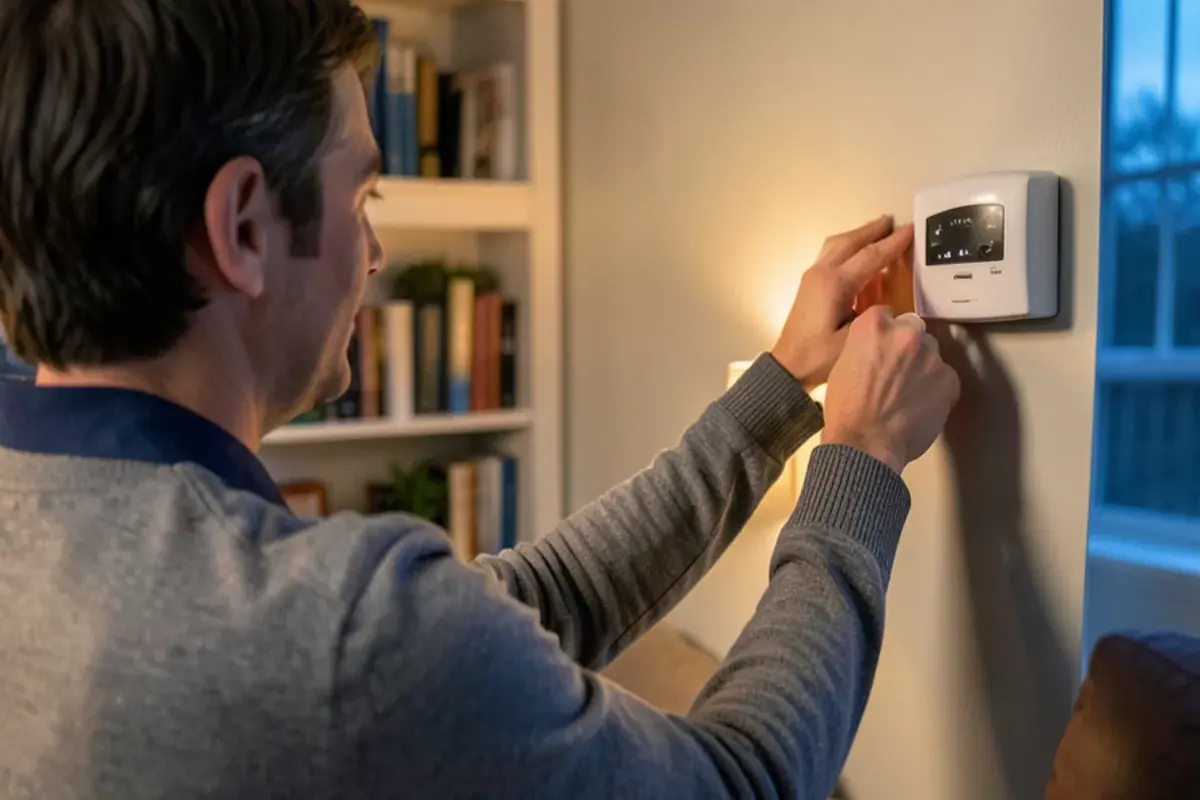
Set the thermostat to Heat and raise it five degrees above the room. The furnace should start, the burners should light and warm air should arrive at the registers in a few minutes. A light burning-dust smell is normal for a few minutes after months of rest. Anything that smells like gas is not.
If you smell gas, leave first. Do not touch switches or light any flame, and call 911 or Spire's St. Louis emergency line at 800-887-4173 from outside. Spire says it does not charge to investigate a gas smell. If the furnace fails the test run, our furnace repair page explains how we diagnose it, and our blowing cold air guide covers a common cause.
Which sounds and smells are normal on the first run?
Most first-run oddities fade in minutes. A few mean you should shut the furnace off.
| What you notice | Usually normal | Stop and call |
|---|---|---|
| Dusty, warm smell | Fades within about ten minutes | Lingers, or turns acrid or oily |
| Click, then a soft whoosh | Igniter and burners lighting | A loud bang at ignition |
| Flame color, if visible | Steady blue | Yellow, orange or lazy flame; soot |
| Clicking with no flame | A retry or two | Repeats until the unit locks out |
| Water near a high-efficiency unit | Nothing, if the drain line is dry | A pool under the cabinet |
Never open the burner compartment to look. If the furnace starts and quits before the room warms, note how many seconds it ran, because that detail points a technician toward a flame sensor, a limit switch or a venting problem.
From the field: the calls that start at 5 pm
Furnaces rarely fail on a convenient day. One Google reviewer, Mary E., wrote that the furnace stopped heating around 5 pm, the call was returned immediately and the technician came the next morning at 7 am. Gaquan C. wrote that Kenan Corporation came out in 10-degree weather.
Those reviews describe emergency calls, not maintenance, but the lesson is the same. A tune-up in October looks for the weak parts, such as a flame sensor, a capacitor or an igniter, before they decide the schedule for you. Frederick E. also wrote that gas leaks found after an inspection were fixed, pressure-tested and passed Spire's reinspection, which is a reminder that gas piping belongs on the inspection list.
Which homes need the extra look?
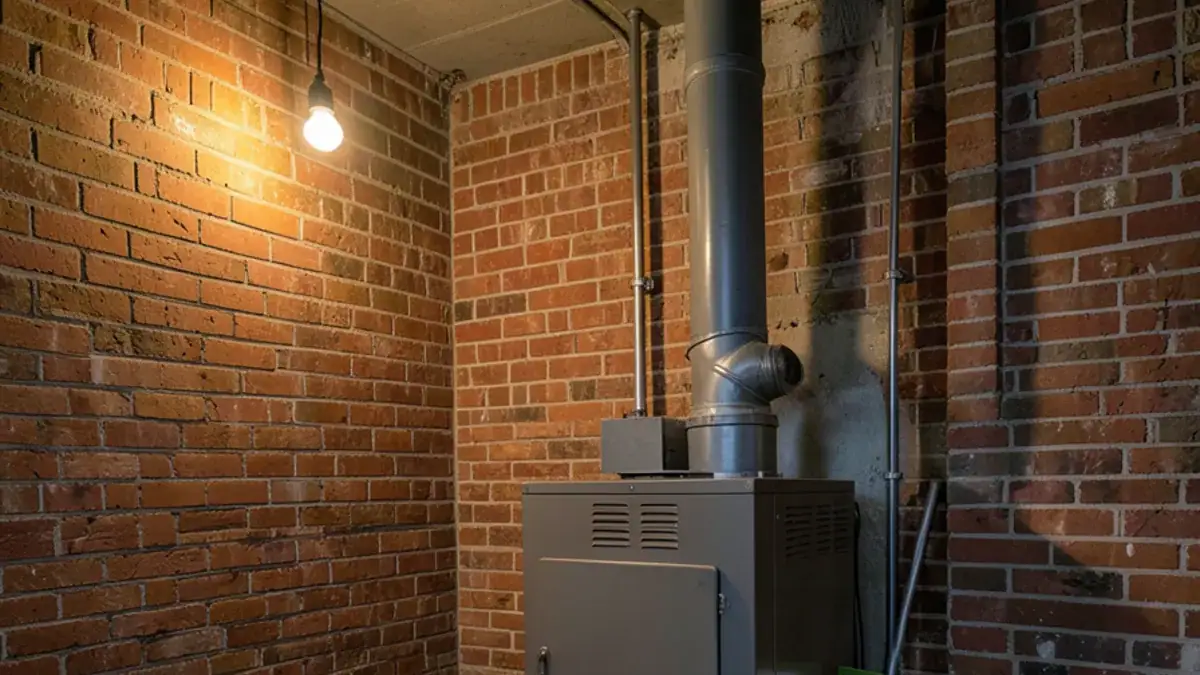
Older houses around Richmond Heights often have furnaces in tight basement corners or closets, with ductwork added decades after the house was built. Tight spaces make clearance and venting more important. Richmond Heights is about 35 minutes from our base near Spanish Lake in normal traffic, and homes in Spanish Lake itself are the closest to us.
Our furnace maintenance page lists what a fall visit covers.
What changes in a home with a boiler?
If the house heats with radiators, the fall list shifts. Hot water and steam heat are still common in City of St. Louis homes built before 1940, and census figures put the typical City house at 1938. Radiators that stay cool at the top may hold trapped air. Check that the boiler's pressure gauge sits inside the range marked on it, look for damp spots at valves and pipe joints, and keep towels and boxes off the pipes. A boiler also needs its own professional inspection, which our boiler service page covers.
What should be ready the day before a freeze?
Spend ten minutes on the things nobody can find at midnight.
- Find the furnace's gas shutoff valve and the wall switch that cuts its power.
- Save Spire's St. Louis emergency line, 800-887-4173, in your phone.
- Put a spare filter and a flashlight on the shelf next to the furnace.
- Write the furnace's model and serial number where you can read them to a dispatcher.
Finish the list this week
Finish the six safe tasks this week, then call to schedule the inspection. If the heat fails after hours, our emergency furnace repair page explains the process. We are open 24 hours day or night. Same-day service is available when the schedule allows.
About the author
Kenan Perkins
Owner of Kenan Corporation. Studied at Ranken Technical College. The company, founded in 2010, is built on repairing systems honestly rather than pressuring people into new ones. More about us.
Sources
Fall Furnace Checklist: common questions
When should I schedule furnace maintenance?
Early fall, before the first hard cold. ENERGY STAR advises a contractor check of the heating system each fall. St. Louis logged 4,100 heating degree days in 2025 according to the National Weather Service, and the first cold night is a poor time to learn a part has failed.
How do I test my furnace before winter?
On a mild day, set the thermostat to Heat and raise it five degrees above the room. The burners should light within a minute or two, the blower should start, and warm air should reach the registers. A faint burning-dust smell for a few minutes is common. A gas smell is not.
Where should carbon monoxide alarms go?
The CPSC says to put alarms on every level of the home and outside sleeping areas, away from vents and fuel-burning appliances. Interconnected alarms are preferred. If one sounds, move outside, call 911 and do not re-enter until responders say it is safe.
What does a furnace safety inspection cover?
ENERGY STAR lists gas connections, gas pressure, burner combustion and the heat exchanger for heating systems. A technician also checks controls, the igniter and flame sensor, the blower, and the vent or flue path. A dirty burner or cracked heat exchanger makes the system less safe.
Talk to an HVAC specialist
Tell us what your system is doing and where you are. Open 24 hours.
Kenan Corporation, 927 Broadhead Lane, St. Louis, MO 63138. Open 24 hours.
- 4.6★ on Google29 reviews
- A+ BBB ratingNot BBB accredited
- Founded in 2010Repair-first advice
- Open 24 hoursCall any time