Prevention checklists
Spring AC Maintenance Checklist for Homeowners
This AC maintenance checklist splits spring prep into what a homeowner can safely do and what belongs to a technician. You can replace the filter, clear the outdoor unit and test the thermostat. Coil cleaning, refrigerant and electrical checks need the right tools and training.
Published October 30, 2026 · Updated October 30, 2026 · By Kenan Perkins, Owner
- 4.6★ on Google29 reviews
- A+ BBB ratingNot BBB accredited
- Founded in 2010Repair-first advice
- Open 24 hoursCall any time
A good spring AC maintenance checklist has two columns. The first lists what a homeowner can safely do: filter, outdoor clearance, thermostat test, drain check and a short test run. The second lists what a technician should do: coil cleaning, refrigerant and electrical measurements. Do the first column in April and schedule the second before the first hot week.
What can a homeowner safely do in spring?
These tasks take under an hour and need no tools beyond a screwdriver and a garden hose.
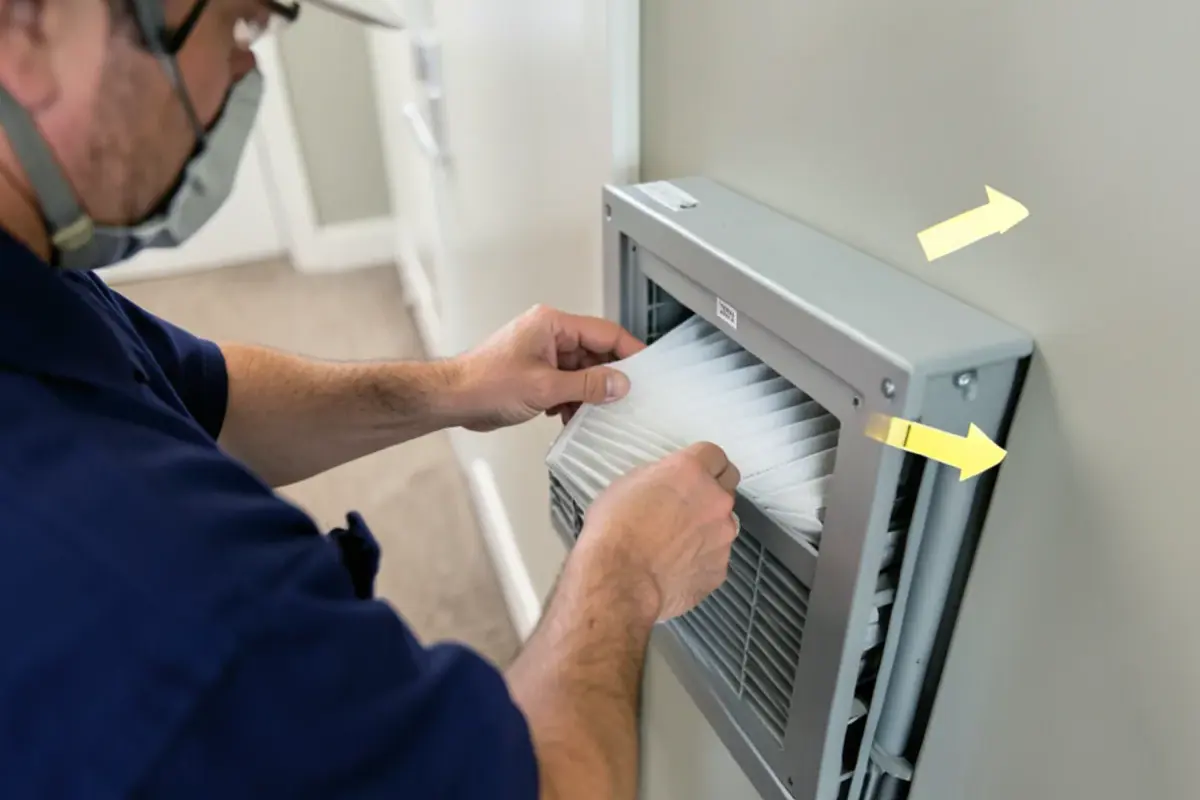
- Replace the filter. ENERGY STAR says to check filters monthly during the season. Start the season with a fresh one, arrow pointing toward the air handler.
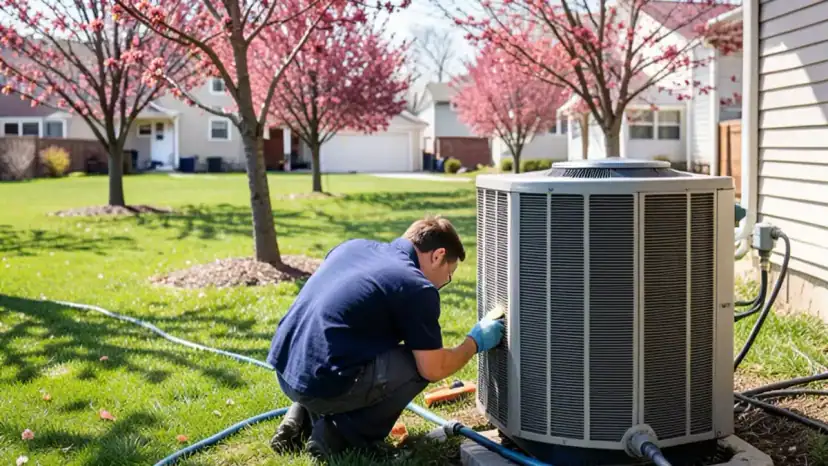
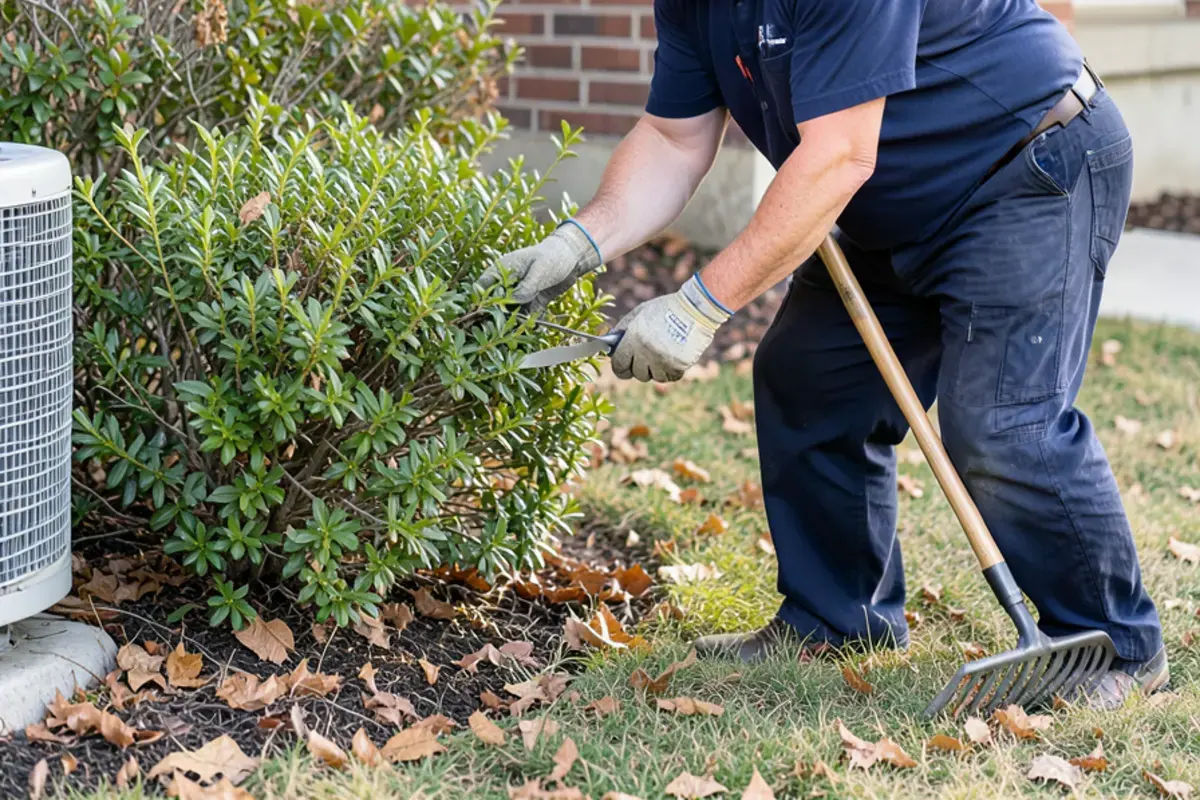
- Clear the outdoor unit. Remove leaves and cottonwood fluff, trim shrubs back and keep about two feet of open space on every side.
- Test the thermostat. Switch to Cool, set the temperature below the room, and confirm the outdoor unit starts within a few minutes.
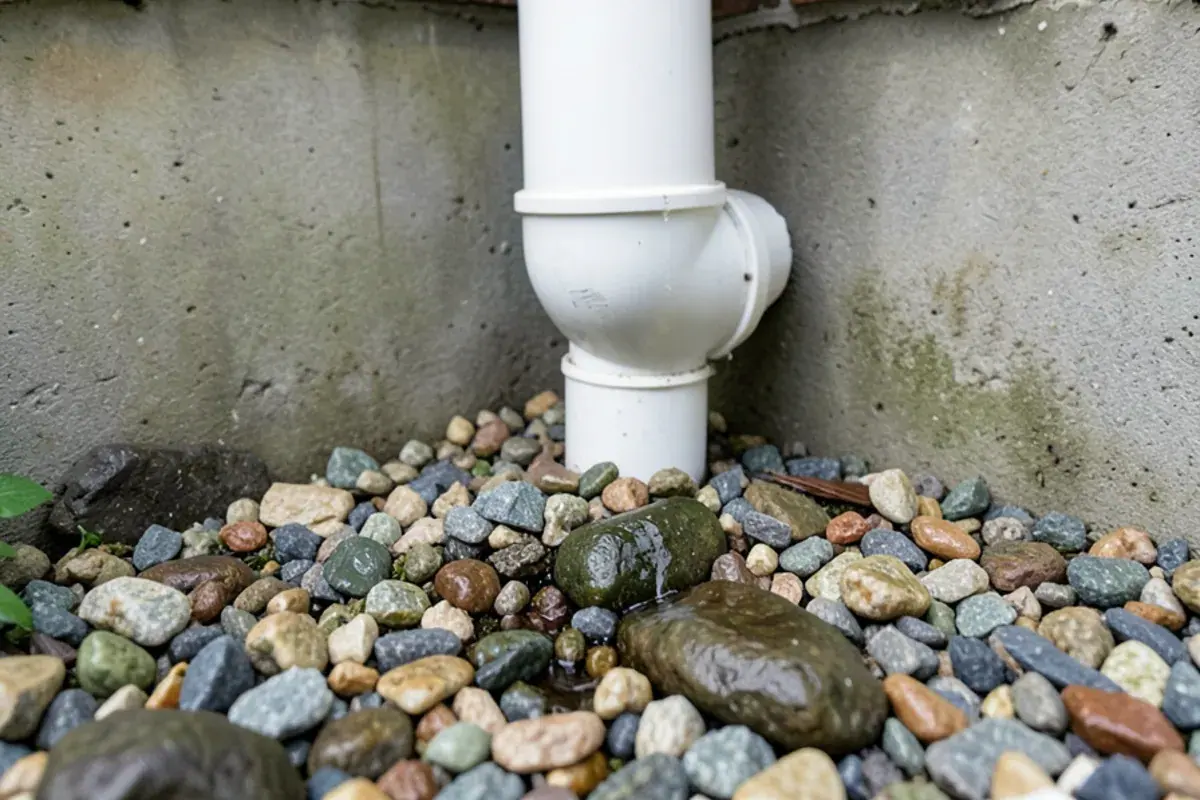
- Check the condensate drain. Find the drain line outlet outside, or the pan inside, and confirm water leaves without pooling.
- Walk the registers. Open any closed vents you do not need closed, and confirm furniture is not blocking returns.
Want a technician to take a look?
Call and tell us what the system is doing. You will get a clear, upfront quote before work starts.
- 4.6★ on Google29 reviews
- A+ BBB ratingNot BBB accredited
- Founded in 2010Repair-first advice
- Open 24 hoursCall any time
How do you clear the outdoor unit the right way?
Turn the thermostat to Off and switch off the outdoor disconnect first. Then pull leaves and matted debris away from the fins by hand, and trim any shrub that has grown within two feet of the cabinet. Rinse the outside of the fins gently from the top down with a garden hose, and let the unit dry before restoring power.
Do not wedge anything against the cabinet for the summer, such as a trellis, a storage box or a grill cover. The outdoor unit rejects heat into the air around it, and anything that recirculates that air makes it run longer for less cooling.
What should you leave to a technician?
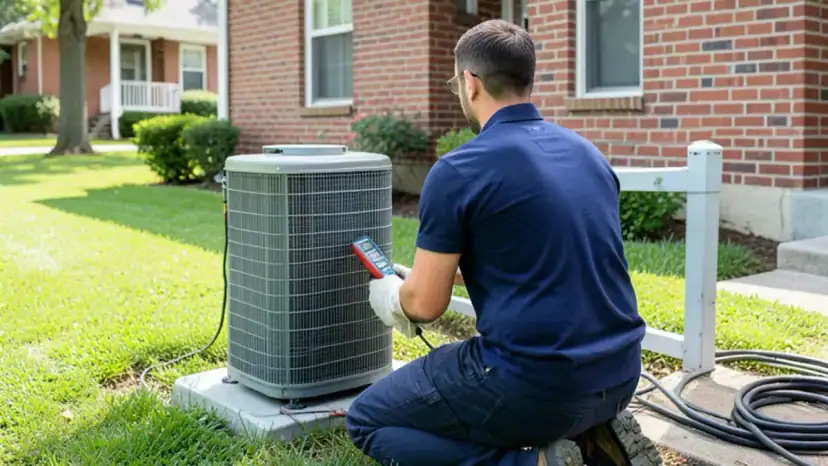
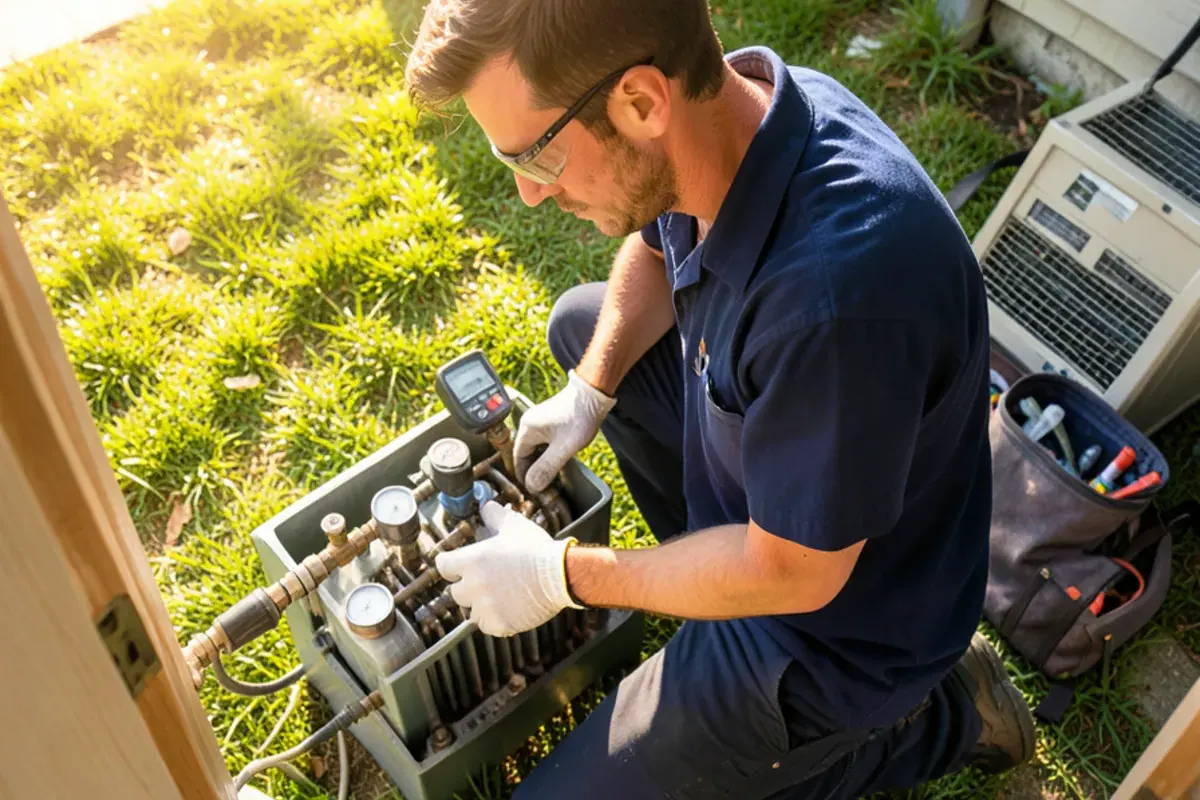
Anything that involves live electrical parts, refrigerant or the inside of the unit. ENERGY STAR's professional list for cooling includes cleaning the evaporator and condenser coils, checking the refrigerant level and adjusting it if needed, cleaning blower components, tightening electrical connections and measuring voltage and current on motors.
| Task | Homeowner | Technician |
|---|---|---|
| Replace filter | Yes | |
| Clear debris and shrubs | Yes | |
| Rinse outside of condenser fins, power off | Yes | |
| Test thermostat and short run | Yes | |
| Deep coil cleaning | Yes | |
| Refrigerant pressures and leak check | Yes | |
| Capacitor, contactor and motor readings | Yes | |
| Blower cleaning and drain service | Yes |
The EPA says only Section 608-certified technicians can buy and add refrigerant, so a recharge is never a homeowner task.
What do the technician's readings mean for your system?
A tune-up ends with numbers, and a few of them decide whether you repair or replace.
| Reading | What it suggests | Sensible next step |
|---|---|---|
| Capacitor outside the tolerance on its label | A part wearing out before it fails | Replace it now, while the schedule is open |
| Motor drawing more amps than its nameplate | A tiring motor or restricted airflow | Find the cause before the first hot week |
| Low refrigerant | A leak, since refrigerant is not used up | Locate the leak before adding any |
| Weak temperature drop across the indoor coil | Dirty coil, low airflow or low charge | Clean and re-measure, then decide |
Low refrigerant is where the honest trade-off sits. Topping off a leaking system buys a season at best, and on an old R-22 unit it relies on reclaimed supply, because production ended in 2020. Ask for the leak repair priced next to a replacement quote, then compare them. Our AC replacement page explains what that second quote should contain.
How do you test the AC before it gets hot?
Run it for fifteen minutes on a mild day. Listen at the outdoor unit for grinding, rattling or a hum without a fan turning. Feel the air at a supply register and compare it with the air at the return, because a working system drops the air temperature noticeably. Look for ice on the larger copper line at the outdoor unit.
If anything seems off, stop and note what you saw. A technician can use that information, and you avoid running a faulty system into a heat wave. Our AC blowing warm air guide walks through what each symptom usually means.
What should you watch for once the season starts?
A checklist does not end in April. Weak signs show up in June if you know them. Longer run times on days that are no hotter than last year's, a thermostat that never quite reaches the setpoint, a musty smell at the registers and a new rattle or hum at the outdoor unit are all early warnings.
Water is the other one. A damp floor near the indoor unit or a wet spot beneath the drain line suggests a clogged condensate path. Switch the system off if water is leaking and call, because a full pan can damage a ceiling or a subfloor. Ice on the lines is a stop-and-call sign, too, as is a breaker that trips twice.
Why did the AC shut off when nothing looks broken?
A full condensate pan can trip a float switch that cuts power to protect your ceiling. Spring is when the drain line, idle all winter, clogs with algae and dust. If the system will not start and the pan is full, leave it off and do not bypass the switch. Clearing the line is quick for a technician, and a bypassed switch is how a small clog becomes a stained ceiling.
From the field: the first hot weekend
Spring maintenance is boring until it fails. One Google reviewer, Kiesha C., wrote that the AC went out over a weekend with the house temperature rising, and that it was running again less than 20 minutes after Kenan's arrival. Another, Kristie S., woke at 1 am to a 90-degree house and had service at the home within 12 hours.
Both stories are from reviewers, not promises, and neither would have been avoided by a checklist alone. The point is that the first hot day is a poor time to learn a capacitor is weak. A pre-season check finds weak parts while the schedule is open.
How do you book a spring tune-up around Clayton and Maplewood?
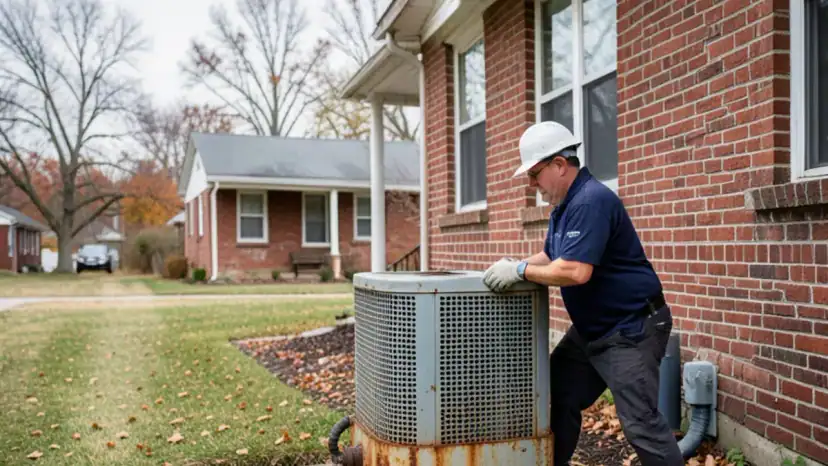
Older brick homes in Clayton and Maplewood often have condensers squeezed into side yards, close to fences and foundation plantings. That limits airflow, so clearance matters even more. Our AC maintenance page explains what a seasonal visit covers, and our AC repair page covers what happens if the check turns something up.
If the unit is old, a check can also surface the repair-or-replace question early. Our repair or replace guide covers how that decision works.
How should you prepare for the visit?
A few minutes of prep shortens the appointment and gets better answers.
- Note the model and serial numbers from the outdoor and indoor labels.
- Write down symptoms with dates, such as a short cycle on the warm afternoon of the 14th.
- Show the technician where the outdoor disconnect and the breaker are.
- Clear a path to the air handler, whether it sits in a closet, attic or basement.
- Keep last year's invoice, so readings can be compared year to year.
What to do next
Do your five tasks this weekend, write down any oddities and call to schedule the technician items. We give you a clear, upfront quote before work starts. We are open 24 hours, and same-day service is available when the schedule allows.
About the author
Kenan Perkins
Owner of Kenan Corporation. Studied at Ranken Technical College. The company, founded in 2010, is built on repairing systems honestly rather than pressuring people into new ones. More about us.
Sources
Spring AC Maintenance Checklist: common questions
When should I do spring AC maintenance in St. Louis?
April or early May, before the first stretch of heat. The National Weather Service counted 49 days at or above 90°F in St. Louis in 2025, and a unit that has not run since September should be tested when you still have time to schedule repairs.
Can I clean my outdoor AC coil myself?
You can clear debris and gently rinse the outside of the fins with a garden hose after turning off the outdoor disconnect. Do not use a pressure washer, pry panels off or reach inside. Deep coil cleaning on the inside faces and the indoor coil belongs to a technician.
How often should I change the AC filter?
ENERGY STAR says to inspect, clean or change air filters once a month during the cooling season. Replace it when you cannot see light through it. Pets, shedding, construction and cottonwood season shorten the interval, so check more often than the label.
What does a professional AC tune-up include?
ENERGY STAR lists cleaning evaporator and condenser coils, checking the refrigerant level, cleaning blower components, tightening electrical connections, measuring motor voltage and current, lubricating moving parts and inspecting the condensate drain. A tune-up that skips the electrical and charge checks is a clean-up.
Talk to an HVAC specialist
Tell us what your system is doing and where you are. Open 24 hours.
Kenan Corporation, 927 Broadhead Lane, St. Louis, MO 63138. Open 24 hours.
- 4.6★ on Google29 reviews
- A+ BBB ratingNot BBB accredited
- Founded in 2010Repair-first advice
- Open 24 hoursCall any time